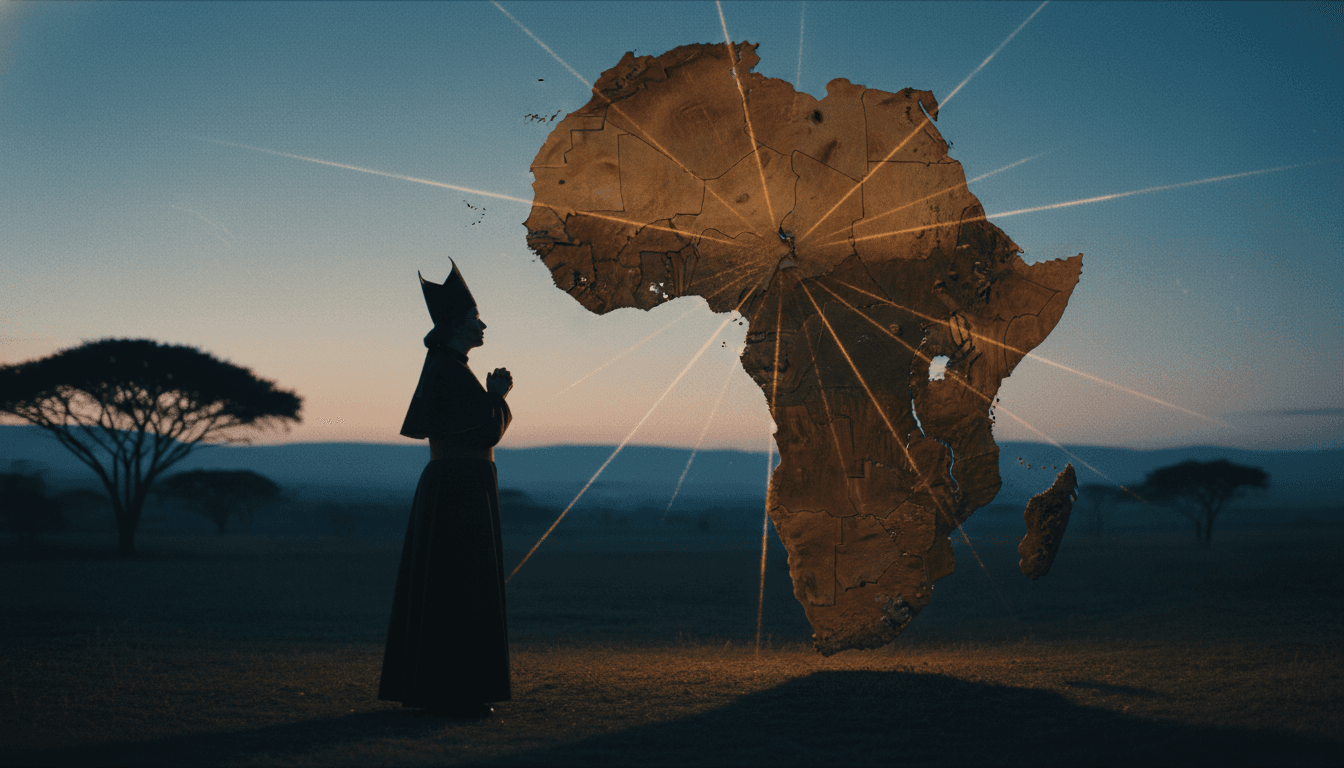
The Pope Leo XIV Africa tour is underway, marking a pivotal moment for the Catholic Church as it strategically prioritizes the world’s fastest-growing Catholic region. Pope Leo XIV embarked on a significant 10-day journey across the continent today, April 13, 2026, an ambitious undertaking that represents his longest pontifical trip to date. This extensive tour, covering over 11,000 miles and involving 18 flights across 11 cities, underscores the Vatican’s deep commitment to Africa, a continent increasingly central to the future of global Catholicism.
The Pope’s itinerary, meticulously planned to highlight themes of peace, interfaith dialogue, reconciliation, and hope, spans four nations: Algeria, Cameroon, Angola, and Equatorial Guinea. This strategic prioritization comes as Africa continues to experience an unprecedented surge in its Catholic population. Latest figures reveal that the number of baptized Catholics in Africa soared to 288 million in 2024, up from 281 million in 2023, representing a remarkable 3.3% increase. This demographic shift means that one out of every five Catholics globally now resides in Africa, fundamentally altering the geographical center of the world’s largest Christian faith.
The Continent’s Growing Influence
Africa’s burgeoning Catholic population is not merely a numbers game; it’s a profound shift in the Church’s global landscape. Beyond the growth in congregants, the continent is also a vital source of vocations, a stark contrast to trends observed in other parts of the world. In 2023, Africa witnessed an increase of 1,285 priests, a 2.7% rise, even as the global number of priests declined. The continent now boasts 54,944 Catholic priests and 34,924 major seminarians, accounting for approximately one-third of the global total. This dynamic growth positions Africa not just as a recipient of faith, but as a critical contributor to its vitality and future direction.
The initial leg of the Pope Leo XIV Africa tour holds particular personal and historical resonance in Algeria (April 13-15). As the first Augustinian pope, Leo XIV will walk in the footsteps of Saint Augustine of Hippo, a pivotal figure in Christian theology born in what is now Algeria. Here, the pontiff will emphasize interfaith dialogue with Islam, including a significant visit to the Great Mosque of Algiers, a powerful symbol of coexistence and mutual respect.
Addressing Regional Challenges and Hopes
In Cameroon (April 15-18), the Pope’s focus will pivot to unity and peace, specifically addressing the deeply entrenched Anglophone crisis. This separatist conflict has tragically displaced over 600,000 people and claimed more than 6,000 lives since 2017. Pope Leo XIV is scheduled to lead a crucial “peace meeting” in Bamenda, aiming to foster healing and resolution in a nation where Catholicism accounts for 29% of the population.
Angola (April 18-21) will see the Pope champion themes of reconciliation and peace. A visit to the Sanctuary of Mama Muxima, a significant Marian shrine, is planned, alongside an address to young people, a demographic vital to the nation’s future. With over 17.9 million Catholics, approximately 49% of its population, Angola represents a strong Catholic presence on the continent.
The final stop of the Pope Leo XIV Africa tour is Equatorial Guinea (April 21-23), where the message will center on hope. In a country where about 81.6% of the population is Catholic, the Pope will visit a psychiatric hospital and a prison, embodying the Church’s commitment to works of mercy. He will also pray at a memorial for victims of a devastating 2021 military base explosion that killed over 100 people, offering solace and spiritual support to a nation in mourning.
“This visit aims to help turn the world’s attention to Africa and ensure it’s not forgotten amidst other global concerns,” stated Cardinal Michael Czerny, a close advisor to the Pope, underscoring the strategic importance of this journey.
Experts universally view this extensive trip as a clear signal from Pope Leo XIV that Africa is not just a destination but a priority for his papacy. The Pope’s itinerary, punctuated by visits to orphanages, hospitals, nursing homes, and prisons, also powerfully highlights the Church’s unwavering commitment to tangible works of mercy and social justice.
Global Impact and Future Implications
While the direct economic market impact of a papal visit is not its primary objective, the Pope Leo XIV Africa tour is expected to bring increased global attention to the continent. This heightened visibility could indirectly influence international discussions around development, humanitarian aid, and responsible investment in the region, particularly as Africa grapples with challenges exacerbated by the withdrawal of aid from some donor nations. The Pope’s consistent emphasis on peace and justice serves as a powerful moral compass, potentially encouraging greater stability, which is an indispensable prerequisite for sustainable economic growth.
The rapid growth of Catholicism in Africa presents both immense opportunities and complex challenges. The continent offers a vibrant and expanding faith, yet it concurrently grapples with the enduring legacy of colonialism, the exploitation of natural resources, pervasive corruption, significant migration flows, and various regional conflicts. The Pope is anticipated to address these multifaceted issues, including sensitive topics like the debate over polygamy, which remains more prevalent in some African nations. His engagement is expected to foster dialogue and offer pastoral guidance tailored to the unique cultural and societal contexts of the continent.
As the Pope Leo XIV Africa tour unfolds over the next ten days, the world will be watching closely. This journey is more than a series of diplomatic visits; it is a profound spiritual pilgrimage that seeks to reaffirm faith, foster reconciliation, and shine a global spotlight on a continent that is increasingly defining the future trajectory of the Catholic Church. The implications for interfaith relations, social justice, and the Church’s evolving identity will be crucial themes to observe.