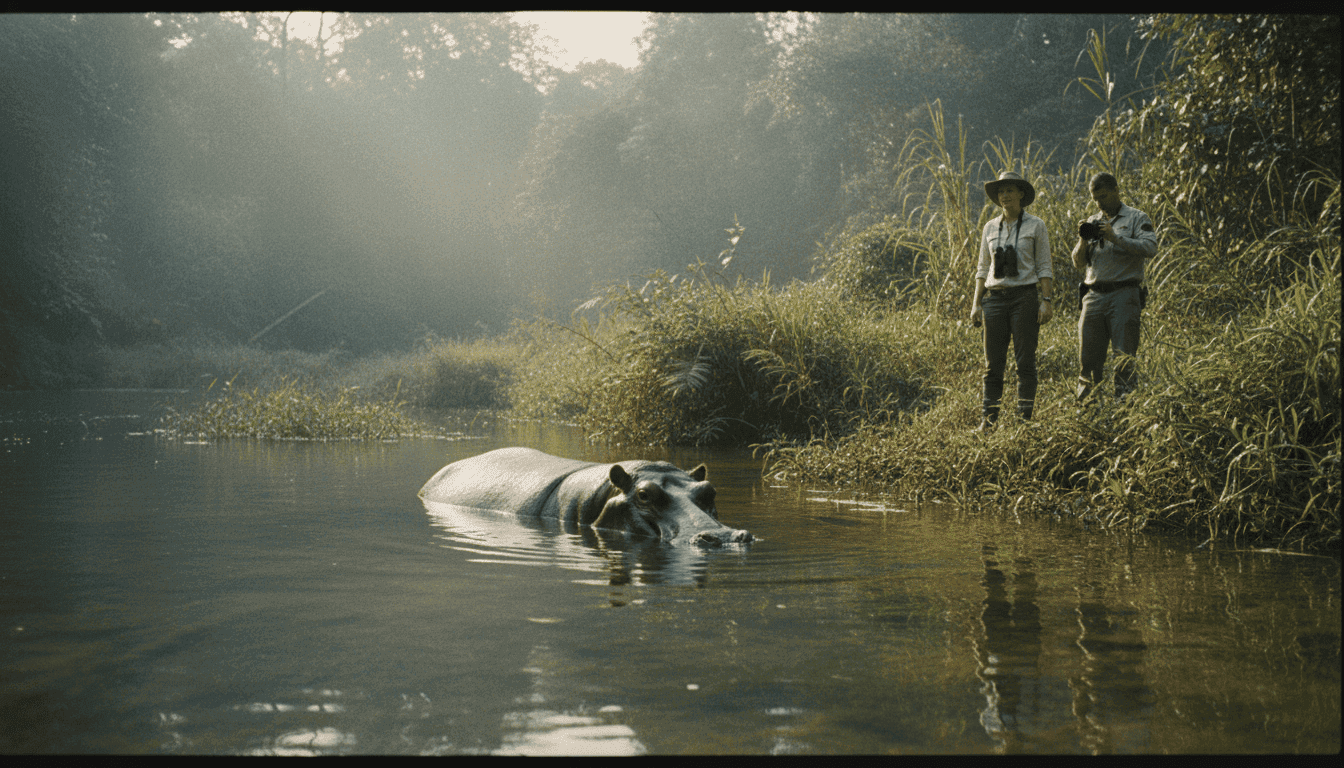
An unusual international conservation effort is underway as Indian tycoon Anant Ambani has offered to provide sanctuary for 80 of Pablo Escobar’s “cocaine hippos” from Colombia, sparking a global conversation on invasive species management and humane animal translocation. This dramatic intervention comes as the Colombian government, facing an escalating ecological crisis, had recently approved a plan to euthanize a significant portion of the hippo population, a move that drew sharp criticism from animal welfare advocates worldwide.
The Legacy of Escobar’s Invasive Hippos
The saga of Colombia’s hippos began in the 1980s when notorious drug lord Pablo Escobar illegally imported four hippos – three females and one male – for his lavish private zoo at Hacienda Nápoles, his sprawling estate between Medellín and Bogotá. Following Escobar’s death in 1993, these four animals escaped their unattended enclosure and found an ideal new home in the Magdalena River basin, Colombia’s largest river. With no natural predators and an abundance of resources, their population exploded. By 2022, estimates placed their numbers between 170 and 200 individuals. Projections paint a stark picture: the population could reach 500 by 2030 and a staggering 1,000 by 2035 if left unchecked.
Colombia has officially declared these hippos an invasive species, recognizing the severe threat they pose to native ecosystems. The ecological impact is profound: hippos consume around 70 kg of vegetation daily, producing vast amounts of waste that poison rivers and degrade water quality. They displace native wildlife such as manatees, otters, and turtles, fundamentally altering the local flora and fauna. Beyond environmental damage, these aggressive animals have attacked fishermen and are increasingly sighted in urban areas, posing a direct threat to human communities.
Colombia’s Dilemma and the Search for Solutions
Faced with this escalating crisis, the Colombian government announced a plan in April 2026 to euthanize approximately 80 hippos. This controversial decision came with a budget of around $2 million, which also included provisions for confinement and relocation. Previous attempts to control the population, such as sterilization programs and experimental contraceptives, proved costly and insufficient to stem the tide of growth.
“The immediate concern remains the ecological damage and danger to human life. While some scientists have explored the idea that these large invasive herbivores could, in some ways, restore ecological traits lost since the Late Pleistocene extinctions of megafauna, the current situation demands urgent intervention.”
Conservation biologists and environmental experts largely agree on the necessity of intervention to control the hippo population due to their detrimental impact as an invasive species. However, the method of intervention has remained a contentious point, pitting ecological necessity against animal welfare concerns. This is where the offer from India has introduced a dramatic new alternative.
Indian Tycoon Offers Refuge to Pablo Escobar’s Condemned Hippos
Enter Anant Ambani, son of Indian billionaire Mukesh Ambani and founder of the Vantara wildlife rescue, rehabilitation, and conservation center in Gujarat, India. Ambani formally requested the Colombian government to allow the “safe, scientifically-led translocation” of 80 hippos to his facility. Vantara, which touts itself as one of the world’s largest wildlife centers, already boasts an astonishing collection of animals, including hundreds of elephants, 50 bears, 160 tigers, 200 lions, 250 leopards, and 900 crocodiles. Ambani’s proposal emphasizes a humane solution, stating that the hippos “did not choose where they were born, nor did they create the circumstances they now face” and that there is a responsibility to save them if possible.
The estimated cost of relocating the hippos is around $3.5 million, a significant financial burden that Ambani’s offer potentially addresses. While the Colombian government has not yet issued an official response to Ambani’s request, the proposal has undoubtedly introduced a new dimension to the conservation effort, offering a high-profile alternative to euthanasia that has been met with opposition from animal welfare activists in Colombia and beyond.
Global Implications and Future Watch
The market impact of such a large-scale international animal transfer would be considerable, involving highly specialized logistics, intensive veterinary care, and the establishment of suitable habitats. Vantara claims to possess the infrastructure and expertise for such an undertaking. However, some experts have raised concerns about Vantara’s massive animal intake and the implications of importing critically endangered and rare species on such a grand scale.
This evolving story highlights the complex challenges of managing invasive species, particularly when they are charismatic megafauna with a compelling backstory. The decision by Colombia will set a precedent for future invasive species management, balancing ecological imperatives with ethical considerations and the potential for private philanthropic intervention. The global spotlight is now firmly on Bogotá as it weighs the fate of Pablo Escobar’s hippos, and the ambitious offer from India. For more trending stories, stay tuned to The Financial Standard.
What’s next for these animals, and for the broader field of international conservation efforts, hinges on Colombia’s response. Will the Indian tycoon’s offer provide a new model for humane invasive species management, or will the logistical and ethical complexities prove too great? The world watches to see if these ‘cocaine hippos’ will find a new home, far from the legacy of their controversial origin.