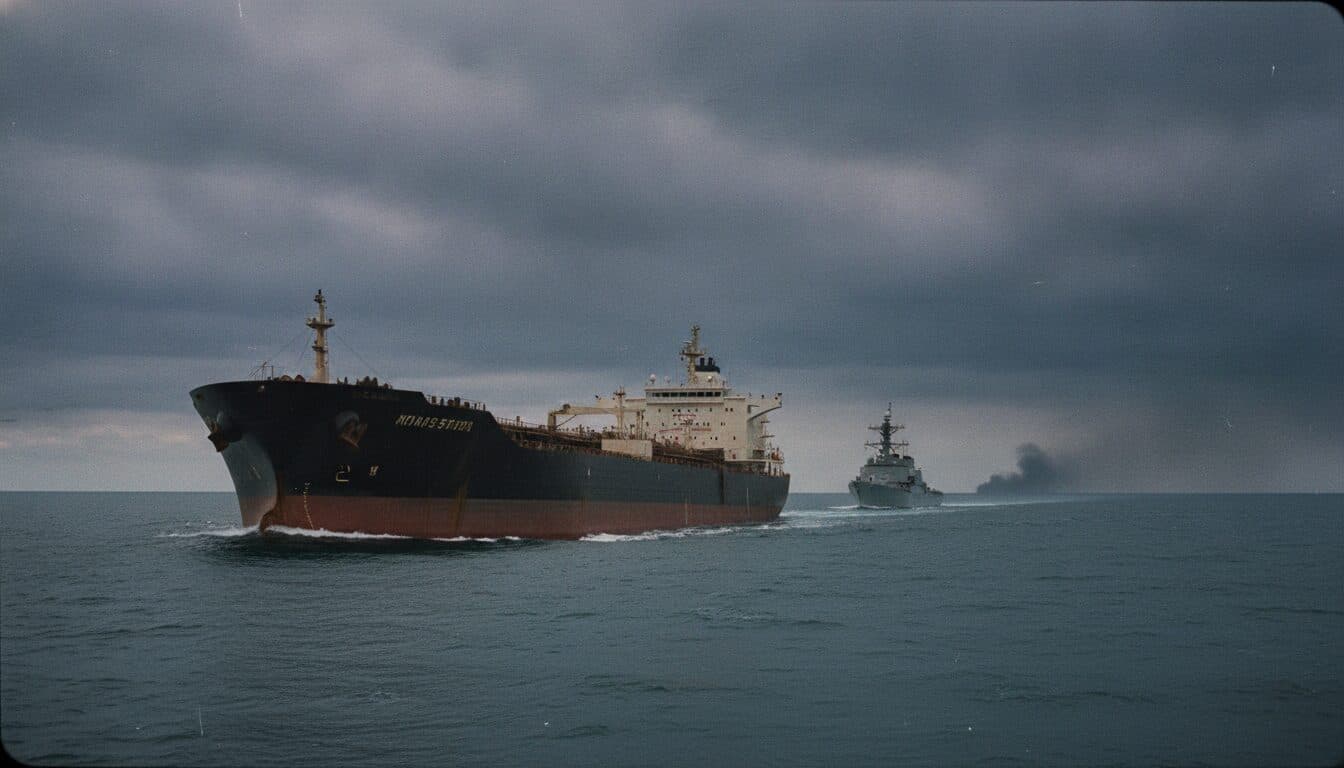
Global oil prices have surged, with Brent crude briefly topping $100 a barrel for the first time in four years, as a new US strategy employing an economic blockade in the Strait of Hormuz escalates tensions with Iran. This shift from previous military-focused approaches has sent shockwaves through the global economy, driving concerns about inflation and slower growth.
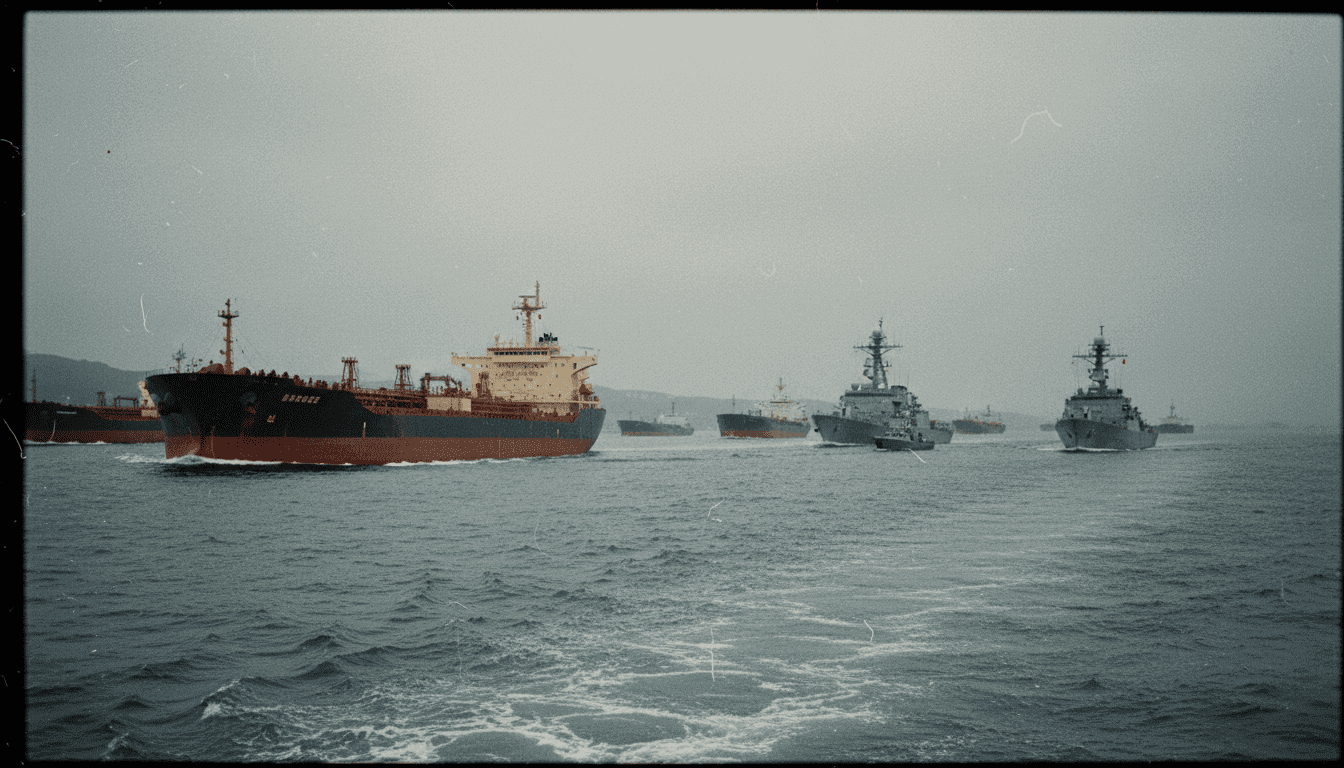
The US naval blockade on Iranian ports officially commenced on Monday, April 13, 2026, at 10 a.m. ET, following the collapse of peace talks mediated by Pakistan. A grace period for neutral vessels to depart Iranian ports concluded at 14:00 UTC on April 15, 2026. As of April 22, 2026, US Central Command (CENTCOM) reported directing 31 vessels to turn around. However, contradictory reports on April 23, 2026, indicated that at least 34 Iran-linked vessels, including 19 outbound tankers and 15 inbound ships, had transited the Strait of Hormuz despite the blockade.
Brent crude oil prices surpassed $100 per barrel on March 8, 2026, reaching a peak of $126 per barrel, with the largest monthly increase occurring in March. As of April 22, 2026, Brent crude stood at $98.48 per barrel, and West Texas Intermediate (WTI) at $92.13 per barrel. President Donald Trump, who announced the blockade, stated on Truth Social that if any ships approached the blockade, “they will be immediately ELIMINATED.” He further claimed on April 22, 2026, that the naval blockade is costing Iran $500 million daily, and on April 23, 2026, ordered the US military to “shoot and kill” small Iranian boats deploying mines.
The Strait of Hormuz, a critical chokepoint, typically handles about 25% of the world’s seaborne oil trade and 20% of its liquefied natural gas (LNG). Before the current crisis, approximately 20 million barrels of oil and gas transited the strait daily. The ongoing closure has triggered the largest disruption to world energy supply since the 1970s energy crisis, with current supply disruptions estimated at 4 million barrels per day, potentially rising to 5 million barrels, or 5% of global supply. Exports from the region have been cut by about 10 million barrels a day.
Global Economic Impact of the Oil Prices Surge
The economic ramifications of this crisis are profound and far-reaching. The International Monetary Fund (IMF) has downgraded its forecast for global growth to 3.1% in 2026 from an earlier 3.3% and increased its expectation for global inflation to 4.4% from 3.8%. Pierre-Olivier Gourinchas, IMF Chief Economist, wrote in a blog post that “War in the Middle East has halted this momentum” regarding global economic growth, adding that the IMF’s “adverse scenario” for the global economy looked increasingly likely. In a “severe scenario” where energy disruptions extend into next year and oil prices average $110 a barrel, global growth could plummet to 2% in both 2026 and 2027, with inflation exceeding 6%.
Beyond oil, other commodity markets, including aluminum, fertilizer, and helium, are experiencing supply disruptions and price increases. China, which relies on the Strait of Hormuz for about 33% of its imported crude oil, faces significant impacts, although long-term planning has provided some buffer. War-risk ship insurance premiums for the strait have surged from 0.125% to between 0.2% and 0.4% of the ship insurance value per transit, translating to an additional quarter of a million dollars for very large oil tankers.
The current crisis, which began on February 28, 2026, is part of the broader 2026 Iran war involving Iran, the United States, and Israel. Iran had previously signaled potential disruptions to the Strait of Hormuz in response to threats, including a temporary partial closure earlier in March as a warning. Iranian Parliament Speaker Mohammad-Bagher Ghalibaf stated on X that Iran would not accept a lasting ceasefire as long as the US maintains a naval blockade, adding:
“A full ceasefire only makes sense if it is not violated by the naval blockade and the hostage-taking of the world’s economy.”
Iranian Foreign Minister Abbas Araghchi has called the US blockade an “act of war.” In retaliation for the US seizing an Iranian ship, Iran announced on April 18, 2026, that it had again closed the Strait of Hormuz. The standoff has led to a sharp decline in maritime transit, with tanker traffic initially dropping by about 70% and then to almost zero. Approximately 20,000 mariners and 2,000 ships are currently stranded in the Persian Gulf due to the closure.
Looking ahead, the situation remains highly volatile. Max Boot, military historian and senior fellow for national security studies at the Council on Foreign Relations, observed, “It’s really a question now of which country, the U.S. or Iran, has a greater pain tolerance.” The ongoing crisis has created significant volatility in oil markets, reaching levels not seen since the 2020 COVID-19 pandemic. The potential for further escalation or prolonged disruption poses a significant threat to global economic stability and energy security. Investors and policymakers alike are closely monitoring developments, as the related trending articles indicate, with the world bracing for potential further impacts on inflation and economic growth.
The central takeaway for readers and investors is the precarious balance between geopolitical strategy and global economic stability. The US-Iran standoff over the Strait of Hormuz is not merely a regional conflict; it is a global economic accelerant, with the potential to reshape energy markets, drive inflation, and significantly impede worldwide economic recovery. The sustained high oil prices surge underscores the fragility of global supply chains and the profound interconnectedness of international relations and financial markets.