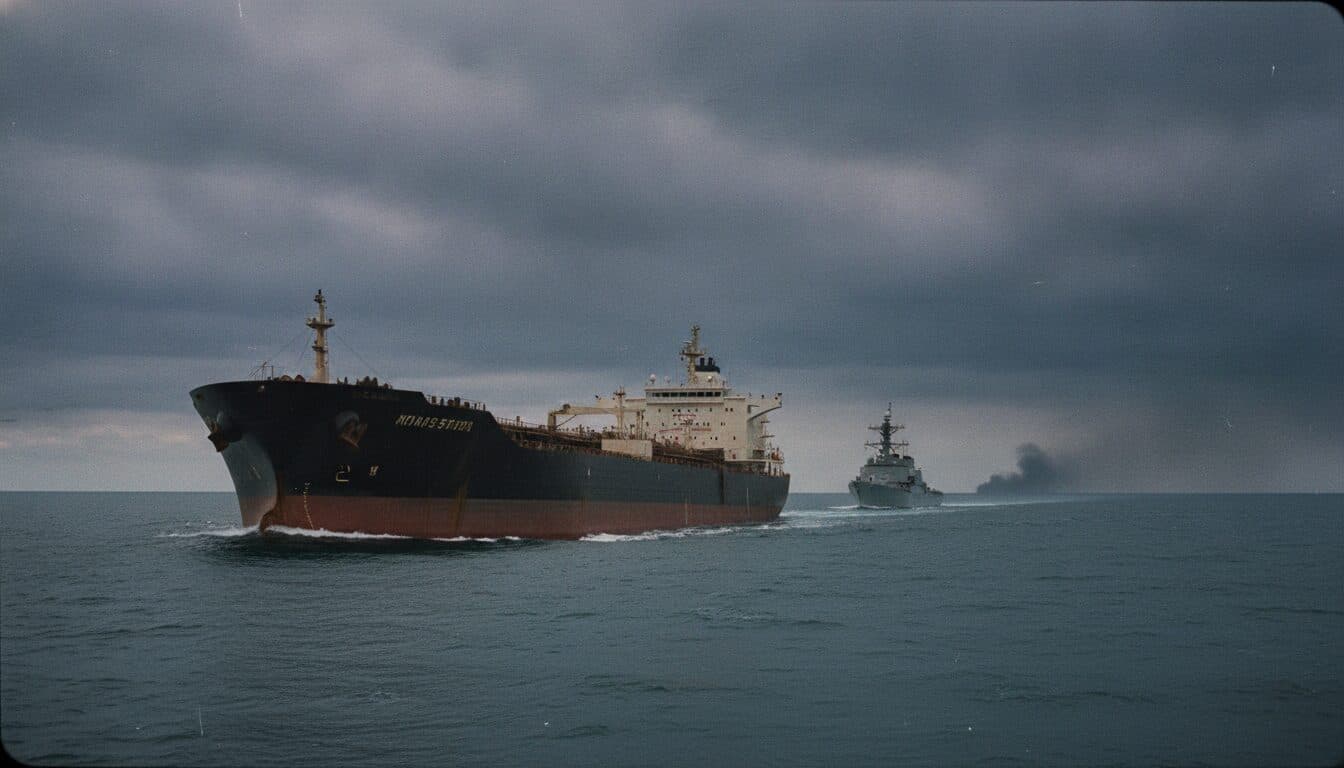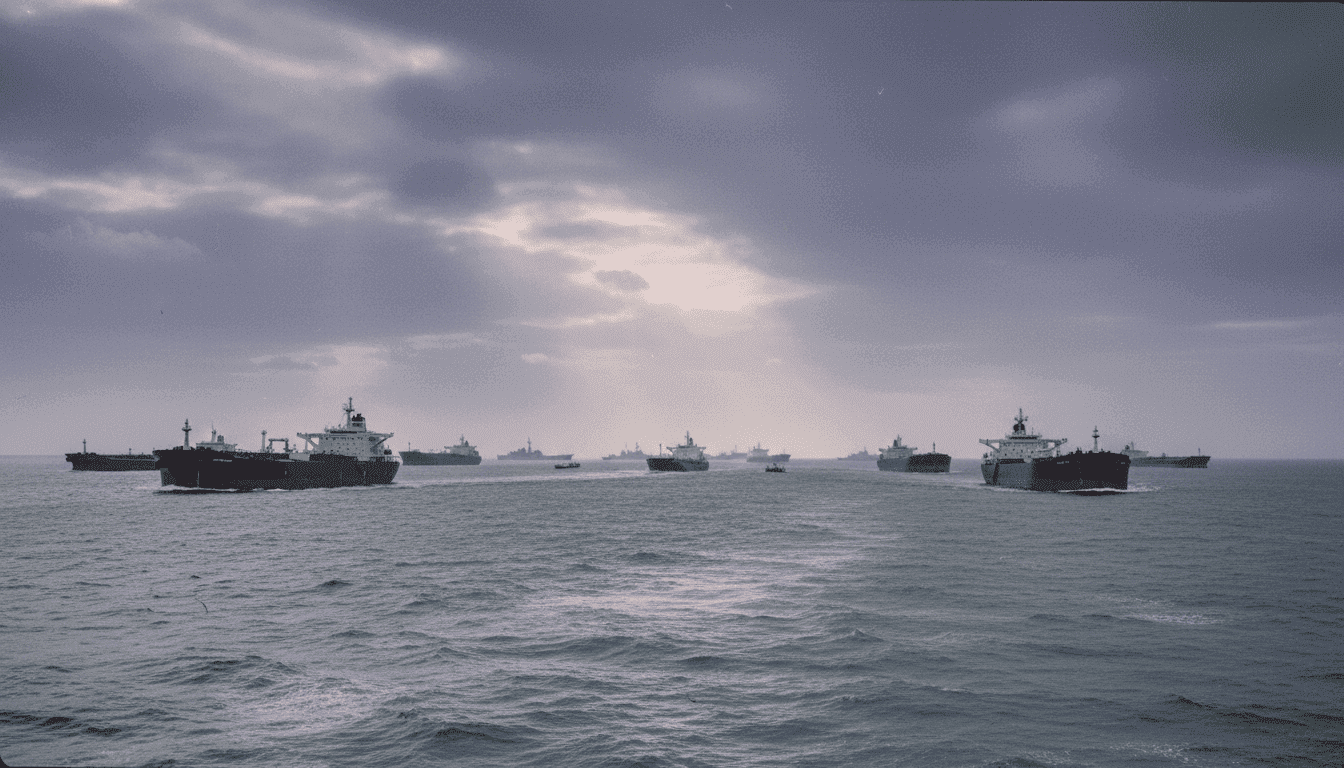
Global oil prices have surged dramatically as escalating tensions between the United States and Iran in the critical Strait of Hormuz continue to disrupt world energy supplies. This ongoing conflict has led to substantial economic repercussions, particularly for American consumers, who are now facing significantly higher costs at the pump and broader inflationary pressures.
The Strait of Hormuz, a vital waterway through which approximately 20% of the world’s oil and a significant portion of liquefied natural gas (LNG) typically pass, has been largely blocked by Iran since February 28, 2026. This action followed US and Israeli airstrikes on Iran, marking what experts describe as the largest disruption to world energy supply since the 1970s energy crisis and the most significant in the history of the global oil market.
Strait of Hormuz Closure Drives Market Volatility
The immediate impact on energy markets was stark. Brent crude oil prices surpassed $100 per barrel on March 8, 2026, for the first time in four years, eventually peaking at $126 per barrel. March 2026 saw the largest ever monthly increase in oil prices. As of May 5, 2026, Brent crude was trading above $111, while West Texas Intermediate (WTI) prices exceeded $100. This oil prices surge has translated directly to the consumer level.
The national average price for a gallon of regular gasoline in the US reached $4.483 on May 5, 2026, up from $4.457 the previous day and $4.176 on April 28. This represents a staggering 50% increase since the conflict with Iran began, with gas prices crossing $4 a gallon in late March 2026 for the first time since August 2022. American consumers are now estimated to be spending an additional $1 billion per day in higher fuel costs.
The economic impact extends beyond the gas pump. The Bureau of Labor Statistics reported that energy prices rose 10.9% in March, with gasoline alone jumping 21.2%, marking the largest monthly increase since 1967. This inflationary pressure is felt across the economy, as energy costs are embedded in nearly every sector.
“There’s a fundamental shortfall that will exist globally or fundamental struggle to meet that demand that will drive up price… No matter what a government says or what any market person thinks, there is a true kind of upward pressure that’s being exerted on prices every day the Strait of Hormuz is constrained. And it is still severely constrained.”
Rob Smith, director of global fuel retail at S&P Global Energy, highlighted this persistent upward pressure. The effective closure or severe limitation of passage through the Strait has led to oil tankers being stranded and a sharp decline in maritime transit, with tanker traffic initially dropping by about 70% and then to near zero.
This disruption is not confined to oil. Global LNG prices also increased by 25% between February 28 and March 3, 2026. The ripple effect extends to other commodity markets, impacting the supply and pricing of goods such as aluminum, fertilizer, and helium.
The current crisis evolved from escalating tensions between the US and Iran in the lead-up to 2026, rooted in failed nuclear negotiations and a prior air conflict in 2025. The spark for the current situation ignited on February 28, 2026, with US and Israeli airstrikes on Iran, prompting Iran’s retaliation and subsequent blocking of the Strait of Hormuz.
Subsequent developments have done little to ease concerns. On March 6, 2026, US President Donald Trump stated there would be no agreement with Tehran “except unconditional surrender.” By March 21, 2026, Trump set a deadline for Iran to guarantee the opening of the Strait, threatening to target Iran’s energy infrastructure. Despite a temporary ceasefire agreed upon on April 8, 2026, mediated by Pakistan, the Strait of Hormuz has effectively remained closed or extremely limited to passage due to “dueling blockades.” Iran began controlling traffic and charging tolls, while the US Navy blockaded Iranian ports from April 13.
Even with Iran’s Foreign Minister Abbas Araghchi stating on April 17, 2026, that the Strait would remain open for the remainder of the ceasefire, the US continued its blockade. Most recently, on May 4, 2026, Trump launched “Operation Project Freedom,” a US Navy mission to escort merchant ships out of the Gulf, a move the Iranian military warned would breach the ceasefire.
“time is not the ally of the American economy,”
Joe Brusuelas, chief economist at RSM US, warned, emphasizing the pervasive impact of energy costs. The prolonged disruption in the Strait of Hormuz poses a significant threat to the global economy, risking demand destruction, increased inflation, and potential recession.
Looking ahead, experts anticipate continued volatility. Priyanka Sachdeva, senior market analyst at Phillip Nova, noted that “until diplomacy translates into actual barrel flows, not just statements, oil markets will remain volatile with an upward bias through May.” Even if tensions ease, it is expected to take months for oil supplies and shipping routes to return to normal, meaning consumers and businesses will likely contend with elevated energy costs for the foreseeable future. The global economy faces a critical period as it navigates this unprecedented energy supply shock.