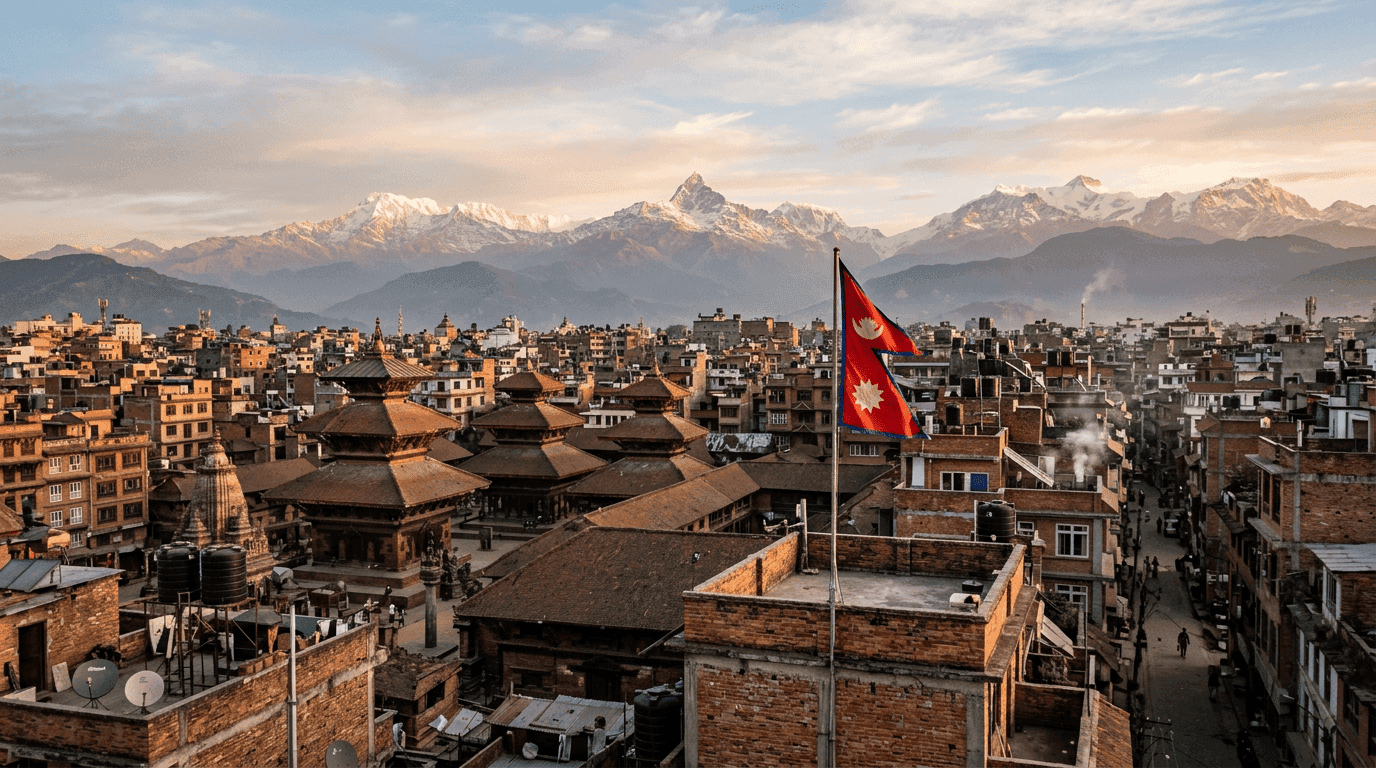
Nepal election landslide results have sent shockwaves across South Asia and the global political landscape today, as the Rastriya Swatantra Party (RSP) secured a historic mandate that effectively dismantles the country’s long-standing political establishment. Led by 35-year-old structural engineer and hip-hop artist Balendra “Balen” Shah, the RSP has achieved what many analysts deemed impossible: a two-thirds majority in a parliament previously defined by fractured coalitions and chronic instability. As of March 8, 2026, the Election Commission of Nepal has confirmed a sweeping victory that signals a fundamental shift in the democratic fabric of the Himalayan nation.
The scale of the victory is unprecedented in Nepal’s modern history. The RSP has secured 122 of the 165 directly elected seats in the House of Representatives. With the proportional representation counting nearing completion, the party is projected to hold between 183 and 190 seats in the 275-member parliament. This marks the first time since 1959 that a single party has commanded such a dominant majority, ending eighteen years of “musical chairs” governance that saw 14 different administrations rise and fall. For more insights into shifting global political tides, see more trending stories.
Anatomy of the Nepal Election Landslide
The most significant individual contest took place in the Jhapa-5 constituency, a traditional stronghold for the established elite. In a symbolic passing of the torch, Balen Shah defeated the four-time Prime Minister and CPN-UML chairman, KP Sharma Oli. Shah’s victory was not merely a win but a total eclipse; he secured 68,348 votes—the highest ever recorded for a parliamentary candidate in Nepal—while the 74-year-old Oli trailed significantly with 18,724. The concession by Oli, who wished Shah an “uninterrupted five-year term,” marks the end of an era for the communist-dominated old guard that has steered the country since the 2008 transition to a republic.
“This is not merely a change in government; it is a people’s revolt. The electorate has used the ballot box to punish the established parties for decades of stagnation and systemic corruption.”
The rise of Balen Shah is a study in modern political mobilization. Before entering the national stage, Shah served as the Mayor of Kathmandu, where his tenure was defined by aggressive urban reform and a zero-tolerance policy toward corruption. His transition from a popular rapper to the presumptive Prime Minister—expected to be the youngest in Nepal’s history and the first from the Madhesi community—has been propelled by a youth-led movement that demands professionalized governance over ideological rhetoric. This Nepal election landslide is the culmination of years of frustration among a population that felt increasingly alienated by the traditional political class.
The roots of this political earthquake can be traced back to the “Gen Z-led revolution” of September 2025. What began as a protest against a social media ban quickly transformed into a nationwide uprising against economic mismanagement. The unrest, which resulted in at least 77 deaths, eventually forced the resignation of the previous coalition government and led to the formation of an interim administration. The magnitude of this Nepal election landslide suggests that the energy of those street protests has been successfully channeled into a legitimate democratic mandate for reform.
From a market perspective, the stability offered by the Nepal election landslide is expected to provide a significant boost to investor confidence. For years, the lack of a consistent policy framework has deterred foreign direct investment in critical sectors such as hydropower and infrastructure. With a two-thirds majority, the RSP will have the legislative power to enact sweeping economic reforms without the need for the debilitating compromises required by coalition politics. Economists are already predicting a surge in interest from international development partners who have long sought a stable partner in the region.
The geopolitical implications are equally profound. Historically, Nepal has been a theater of influence for both India and China. While the previous administration often leaned toward the unified communist forces favored by Beijing, Shah has signaled a more pragmatic, domestic-first foreign policy. Notably, his campaign platform dropped pledges related to industrial parks tied to the Belt and Road Initiative (BRI), focusing instead on internal infrastructure and transparency. India has already issued a warm statement of support, signaling a desire for a predictable developmental partnership. Check back for more trending stories as this story develops.
However, the road ahead is not without challenges. The RSP must now transition from a movement of opposition to a party of governance. Fulfilling the high expectations of a Gen Z electorate will require more than just anti-corruption slogans; it will require the systematic overhaul of the bureaucracy and the delivery of tangible economic opportunities. The world will be watching closely to see if a rapper-led government can maintain its momentum and deliver on the promises that led to this historic outcome.
As the dust settles on this Nepal election landslide, the message from the voters is clear: the old guard is out, and a new generation is in charge. The 2026 election has not just changed the faces in the House of Representatives; it has fundamentally rewritten the rules of Nepali politics for the 21st century.