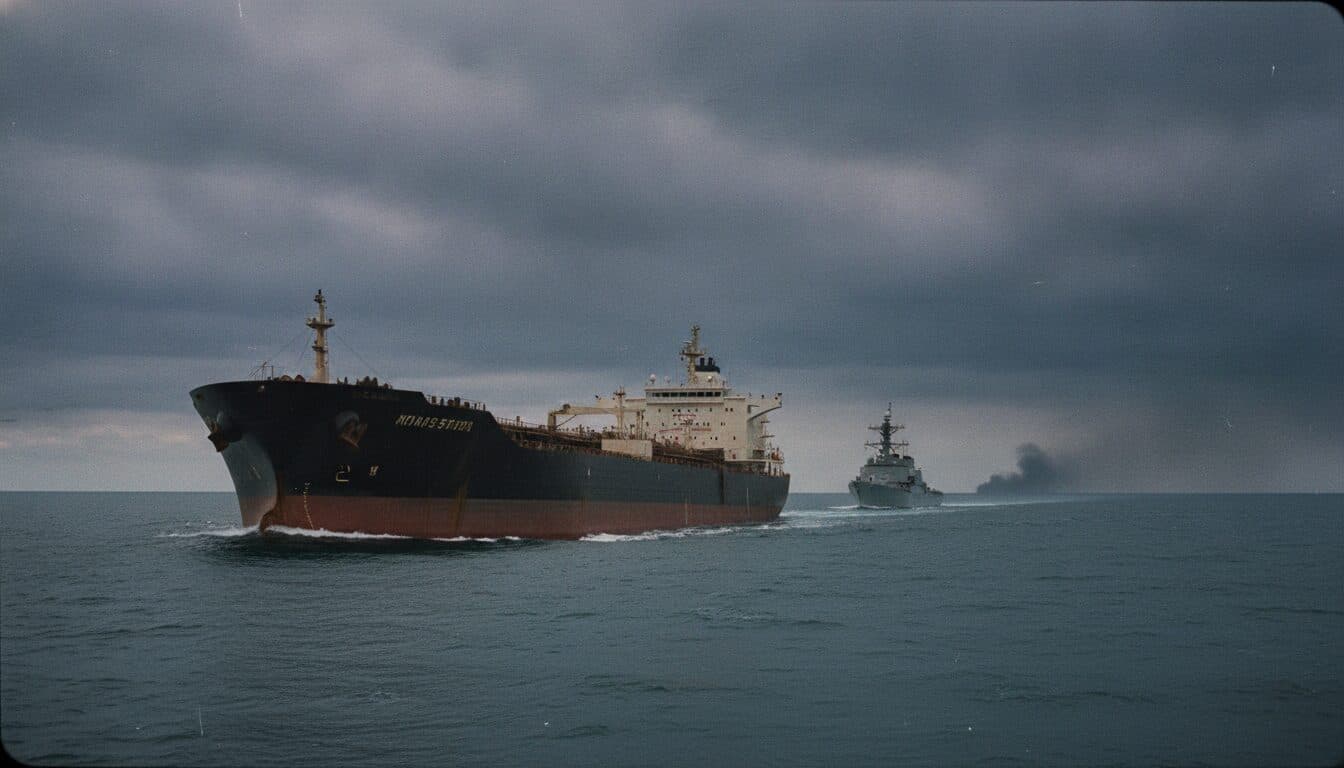
Middle East commercial shipping attacks are escalating at an alarming rate, with new reports indicating commercial ships are being hit by projectiles beyond the immediate scope of the Iran-US conflict. This development signals a broadening of threats to global shipping, impacting vital trade routes and raising profound concerns among experts and industry leaders worldwide. The latest incidents, occurring just today, Wednesday, March 11, 2026, paint a grim picture of a rapidly deteriorating maritime security landscape in one of the world’s most critical economic arteries.
A Broadening Front of Aggression
The past 24 hours have seen a dramatic intensification of hostilities. Iran reportedly launched widespread attacks on commercial ships across the Persian Gulf, simultaneously targeting Dubai International Airport. A container ship off the coast of Oman in the Strait of Hormuz was struck by a projectile, igniting a fire and forcing most of its crew to abandon the vessel. Kuwait reported successfully downing eight Iranian drones, while Saudi Arabia intercepted five drones heading towards its vital Shaybah oil field. Further reports confirm a cargo ship in the Persian Gulf was hit by a projectile, and another container ship off the UAE sustained damage. These incidents alone bring the total number of attacked ships to at least 14 since the conflict began on February 28, 2026.
These recent events follow earlier attacks on March 4, 2026, when the UK Maritime Trade Operations (UKMTO) reported two separate incidents. One vessel experienced a loud explosion near Muscat, Oman, while another was struck by an unknown projectile near Fujairah, UAE, resulting in damage to its steel plating. These attacks closely followed US and Israeli strikes on Iran, highlighting a dangerous tit-for-tat escalation.
The Chokepoint Under Siege: Global Impact
The Strait of Hormuz, a critical chokepoint through which approximately 20% of global oil and gas supplies pass, has witnessed a rapid and alarming drop in traffic since the conflict escalated on February 28, 2026. Major global carriers such as Maersk, CMA CGM, MSC, and Hapag-Lloyd have already temporarily suspended or restricted transit through certain Gulf routes due to the heightened security risks. The effective closure of the Strait of Hormuz has stalled a fifth of global oil supply and significantly disrupted air cargo operations, with over 150 tankers reportedly waiting outside the Gulf for security clearance.
This situation compounds the existing Red Sea crisis, driven by Houthi attacks since October 2023. While the Houthis had paused large-scale maritime attacks in mid-November 2025, they signaled an imminent return to targeting commercial vessels in late February 2026, explicitly linking their actions to US-Israeli military strikes on Iran. The Red Sea crisis alone has already led to a 1.3% decrease in global trade between November and December 2023. By March 2024, over 2,000 ships had diverted routes, adding 10-20 days to transit times and significantly increasing freight costs. Vincent Clerc, CEO of Maersk, warned that these rising shipping costs, amounting to roughly $200 for a standard 20-foot container or a 15% to 20% increase in freight charges, will inevitably be passed on to consumers. Port operations in regional locations like Bahrain and Jebel Ali Port have also experienced temporary disruptions or precautionary suspensions.
Middle East Commercial Shipping Attacks: Expert Analysis and Context
Maritime security experts are unequivocal about the gravity of the situation. Jakob Larsen, Chief Safety & Security Officer for BIMCO, stated that the US/Israeli attack on Iran has “dramatically increases the security risk.” He cautioned that while ships with US or Israeli links are more likely targets, other vessels could also be hit deliberately or in error. Experts from Castor Vali emphasize the highly dynamic and challenging maritime security landscape, which now encompasses the ongoing Houthi and Red Sea conflict, escalating tensions involving Iran in the Persian Gulf, and the broader Israel/Gaza conflict. Navigating these complexities demands deep expertise.
“The underlying incentive structure for renewed maritime disruption in the Red Sea persists due to several factors: the geographic leverage of the Bab el-Mandeb chokepoint, the asymmetric cost structure of Houthi attacks (low-cost drones and missiles versus high-cost Western defense), and the political signaling value of generating global headlines.”
The current surge in Middle East commercial shipping attacks extends maritime security risks beyond the Red Sea and into the broader Persian Gulf and Strait of Hormuz, directly implicating Iran. This escalation is intrinsically linked to the ongoing military conflict between the United States, Israel, and Iran, which intensified on February 28, 2026. The Houthis have explicitly tied their renewed maritime actions to broader regional developments, particularly US-Iran and Israel-related escalation scenarios. The situation is characterized not as a de-escalation, but as a “structured pause under tension,” with various actors maintaining institutionalized readiness for future confrontation. The targeting of commercial vessels serves as a potent political signaling tool, allowing actors to exert leverage and capture global attention. For more trending stories, visit our news section.
What’s Next: A Volatile Horizon
The immediate future for global shipping in the Middle East appears fraught with peril. The interconnectedness of global supply chains means that continued disruptions in these vital waterways will have far-reaching economic consequences, from increased consumer prices to potential supply shortages. The willingness of Iran and its proxies to directly target commercial vessels signals a dangerous new phase in regional conflicts, one that prioritizes strategic disruption over avoiding economic fallout. The international community faces the daunting challenge of de-escalating a multi-front maritime conflict while ensuring the free flow of vital global trade.
Key Takeaways
Readers should understand that the Middle East commercial shipping attacks are not isolated incidents but part of a broader, escalating regional conflict with direct global economic implications. The Strait of Hormuz is effectively under siege, impacting oil and gas supplies, while the Red Sea remains a high-risk zone. The financial burden of rerouted ships and increased insurance premiums will translate into higher costs for consumers worldwide. The confluence of Iranian actions, Houthi aggression, and US-Israeli responses creates an unpredictable and highly volatile environment that demands constant monitoring and decisive diplomatic action to prevent a full-blown economic crisis.