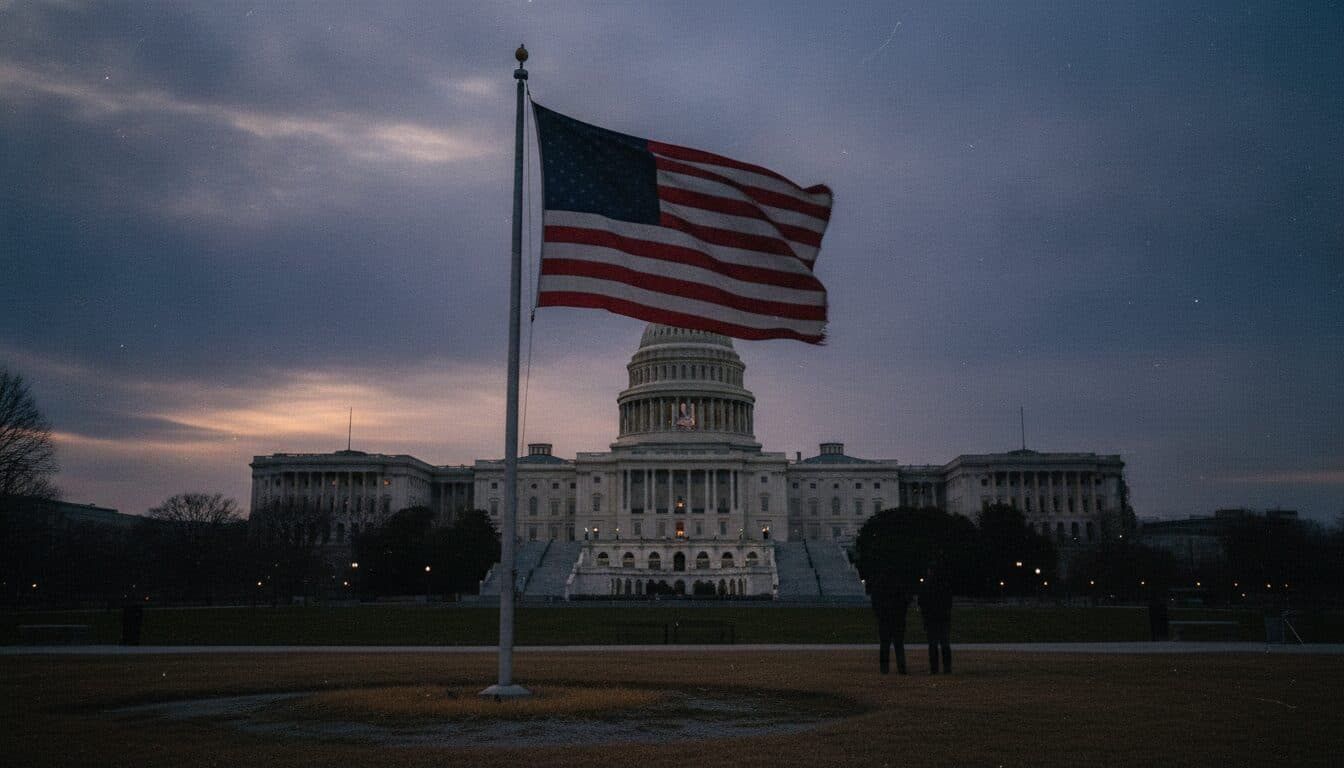
Major UFO files released by the Pentagon this week mark a pivotal moment in the public’s understanding of unidentified aerial phenomena (UAPs), formerly known as UFOs. This unprecedented initiative, driven by President Donald Trump’s February 2026 directive for “Complete and Maximum Transparency,” has unleashed decades of previously classified government documents, reigniting both public fascination and scientific scrutiny into these unexplained sightings.
On Friday, May 8, 2026, the initial tranche of 162 files hit the digital public domain. These documents, sourced from a diverse array of agencies including the FBI, Department of Defense, NASA, and the State Department, encompass a fascinating collection of eyewitness testimonies, photographs, and detailed reports of sightings from across the globe, spanning several decades. The sheer volume and historical breadth of this release underscore a significant shift in government posture toward a topic long shrouded in secrecy and speculation.
Among the revelations are “unresolved cases” – incidents where government investigators could not definitively determine the nature of the observed phenomena. A particularly intriguing FBI case file from 1947 to 1968 details “flying discs” and “high-profile incident accounts,” offering a glimpse into early government grappling with these mysterious objects. More recently, reports include a football-shaped object observed over the East China Sea in 2022 and erratic “dots” sighted over Iraq, Syria, and the United Arab Emirates in recent years, demonstrating the ongoing nature of these unexplained events.
The Global Impact of UAP Disclosures
The ongoing UAP disclosures are not merely a curiosity; they are already influencing significant shifts in global investment, particularly within the space technology and defense sectors. Since 2020, the incremental release of declassified UAP reports has acted as a catalyst, accelerating capital deployment into critical areas such as surveillance, advanced propulsion systems, and orbital security technologies. Projections indicate a substantial surge in global space investment, anticipated to reach over $160 billion annually by 2030 – a sevenfold increase from 2020 levels. A significant portion of this, an estimated $140 billion annually, is expected to come from the private sector.
Defense spending on aerospace is also poised for significant growth, projected to climb from $50 billion in 2020 to a staggering $220 billion by 2030. This financial redirection suggests a strategic re-evaluation of national security priorities in light of persistent, unexplained aerial phenomena. While a limited disclosure, confirming unknown aerial phenomena without outright confirming extraterrestrial intelligence, is expected to cause minimal to low market volatility, the implications of a full confirmation of non-human intelligence are profound. Such an event could trigger “extreme price volatility,” banking system stress, and an “ontological shock” – a fundamental psychological disruption to humanity’s understanding of its place in the universe. This could manifest as widespread economic decision-making paralysis or, conversely, reckless speculative investment.
“The release of these files marks a turning point, not just for transparency, but for how nations approach defense, technology, and our understanding of the unknown.”
Companies like Lockheed, Northrop Grumman, General Dynamics, Raytheon, and SpaceX are widely speculated to be significant beneficiaries if the disclosure of advanced technologies were to occur, particularly if the government were to seize non-human technologies under the proposed Unidentified Anomalous Phenomena Disclosure Act. This potential future scenario underscores the deep economic and technological implications of what began as a quest for transparency.
Context, Analysis, and What Lies Ahead
Government interest in UFO reports is not new, tracing back to the U.S. Air Force’s Project Sign in 1947, followed by Project Grudge and Project Blue Book. While early CIA interest was substantial, it largely waned after the 1950s. However, public interest surged anew in 2017 with the release of Pentagon UAP videos, creating a groundswell that led to congressional mandates. A 2021 preliminary assessment from the Office of the Director of National Intelligence highlighted national security and pilot safety concerns, further legitimizing the inquiry.
The establishment of the All-domain Anomaly Resolution Office (AARO) in 2022 and NASA’s independent study team underscore a more scientific and transparent approach. However, expert perspectives urge caution. Many UAPs can be attributed to known phenomena such such as airborne clutter, natural atmospheric occurrences, or even classified conventional aircraft. The challenge lies in the quality and limited data for the truly unexplained cases. A 2024 military report, echoed by a 2023 NASA study, reiterated that there is currently no evidence confirming extraterrestrial life or recovered alien technology, a conclusion also reached by AARO in an earlier 2024 report.
The new “UFO” website promises ongoing releases, with additional documents posted “every few weeks.” Out of the initial 162 files, 108 contain redactions, primarily to protect eyewitness identities or sensitive military information, but this transparency initiative is clearly designed for the long haul. The adoption of the term “Unidentified Aerial Phenomena” (UAP) by the Department of Defense in 2022, and its subsequent expansion to “unidentified anomalous phenomena,” reflects a deliberate move toward a more neutral, scientific lexicon, shedding the cultural baggage of “UFO.”
As the Pentagon continues to release major UFO files, the world watches with bated breath. The implications for defense, technology, and our collective understanding of the universe are vast. The coming weeks and months will undoubtedly bring more data, more analysis, and perhaps, more questions, as humanity grapples with what truly lies in our skies and beyond.