A fatal LaGuardia Airport collision kills two pilots, marking a devastating start to the week and sending shockwaves through the global aviation industry. The incident, which occurred late Sunday night, March 22, 2026, at New York’s LaGuardia Airport, involved an Air Canada Express regional jet and a Port Authority fire-rescue vehicle, resulting in the immediate deaths of both pilots on board the aircraft. This tragic event has prompted an immediate closure of one of the nation’s busiest airports and launched an intensive federal investigation, intensifying scrutiny on critical aviation safety protocols.
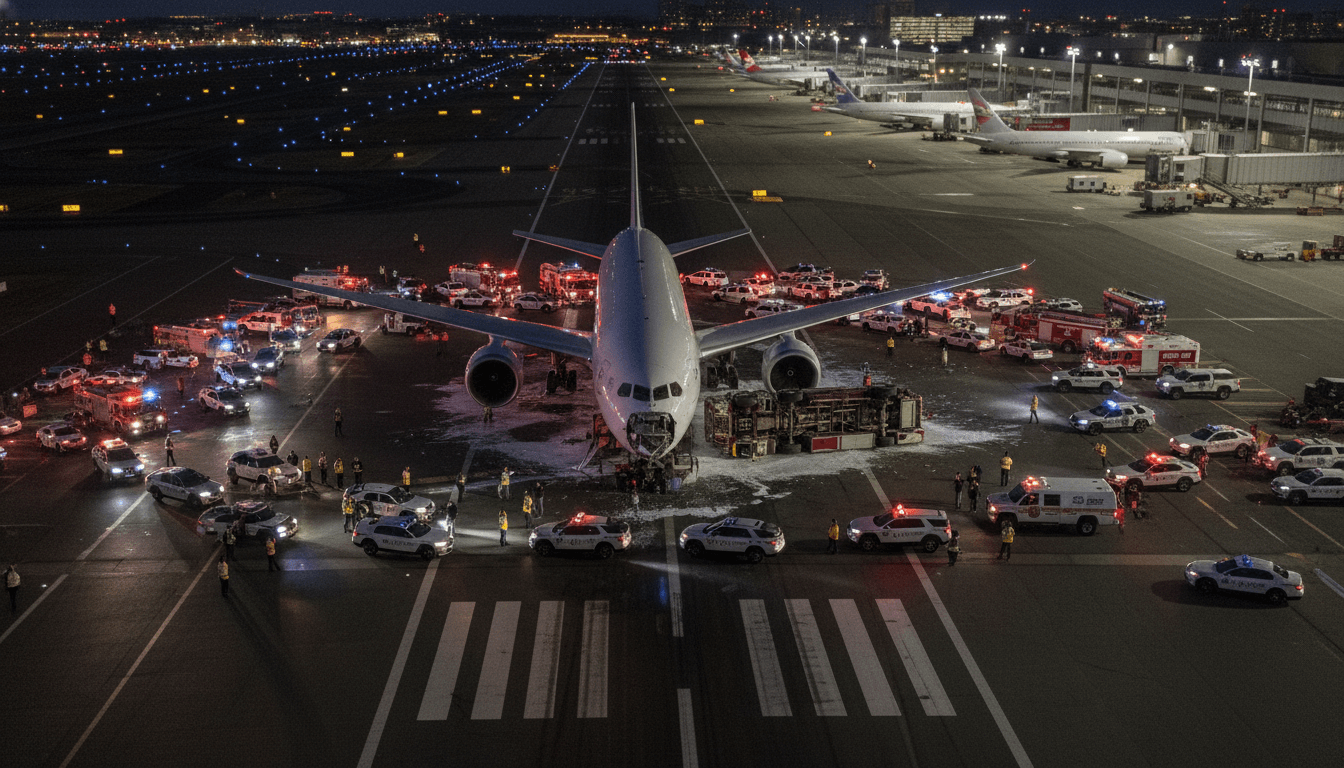
The collision, which unfolded around 11:40 p.m. local time, involved Air Canada Express flight AC8646, a CRJ-900 operated by Jazz Aviation, Air Canada’s regional partner. The jet was arriving from Montréal-Pierre Elliott Trudeau International Airport when it struck the fire-rescue vehicle on Runway 4 shortly after landing. Initial reports confirm that the aircraft was traveling at approximately 24 miles per hour (39 kph) at the time of impact. Photos from the scene depict severe damage to the nose of the plane, which was crushed and tilted upward, while the fire vehicle was found tipped on its side. The names of the deceased pilot and co-pilot have not yet been released, adding to the somber mood surrounding the investigation.
Beyond the tragic fatalities, the incident led to a significant number of injuries. Forty-one people were transported to hospitals, including 39 flight passengers and two Port Authority Aircraft Rescue and Firefighting officers from the truck. While 32 individuals were initially reported released, some sustained serious injuries. The two officers in the fire truck are currently in stable condition with non-life-threatening injuries. The plane was carrying 72 passengers and four crew members at the time of the collision.
The Immediate Aftermath and Global Travel Disruption
The immediate consequence of the LaGuardia Airport collision kills two pilots has been the complete closure of LaGuardia Airport. The airport, a crucial hub serving over 30 million passengers in 2024, was expected to remain closed until at least 2 p.m. ET on Monday, March 23, 2026, to facilitate the ongoing investigation. This closure has triggered a cascade of disruptions, with over 500 flights at LaGuardia canceled on Monday alone. Passengers globally have been advised to check with their respective airlines for updated flight information, as delays and diversions ripple across the North American air travel network. The incident is poised to place further pressure on an aviation sector already grappling with recent lapses and heightened demand.
The presence of the fire truck on the active runway has emerged as a central point of inquiry. The vehicle was responding to a separate incident involving United Airlines flight 2384, which had aborted takeoff due to an anti-ice warning light and reported an odor issue in the cabin, with flight attendants feeling ill. Air traffic control recordings from LiveATC.net reportedly captured a controller clearing the fire vehicle to cross a part of the runway, then urgently instructing it to stop moments before the collision. This sequence of events will undoubtedly be a primary focus for investigators.
“This tragic incident underscores the critical importance of robust communication and stringent safety protocols in complex airport environments. Every detail, from air traffic control clearances to vehicle positioning, will be meticulously examined to prevent future occurrences.”
The National Transportation Safety Board (NTSB) has swiftly launched a “go team” to investigate the crash, with federal investigators already on site. Transportation Secretary Sean Duffy confirmed that the FAA is deploying a team to support the NTSB investigation. While early indications suggest the collision was an accident, with no foul play or terrorism suspected, the investigation will delve deep into the sequence of events, focusing particularly on communication between air traffic control and the fire-rescue vehicle, and the protocols governing vehicle movement on active runways.
Intensified Scrutiny on Aviation Safety
The implications of this incident extend far beyond the immediate travel disruptions. The LaGuardia Airport collision kills two pilots is expected to intensify scrutiny on aviation safety protocols across the industry, especially given a backdrop of recent aviation lapses. Regulators and airlines will face renewed pressure to review and potentially revise procedures for runway operations, emergency response coordination, and air traffic control communications. The findings of the NTSB investigation will not only determine the precise cause of this tragedy but will also likely inform future safety enhancements designed to prevent similar catastrophic events. The financial markets will also be watching closely for any long-term impacts on airline stocks and airport operations.
As the NTSB continues its meticulous work on site, the aviation world awaits answers. The focus will remain on understanding how a series of events culminated in such a devastating collision and what measures can be implemented to safeguard against future tragedies. The coming weeks will reveal more details as investigators piece together the complex puzzle, offering crucial insights into the vulnerabilities and strengths of modern air travel safety systems. The incident serves as a stark reminder of the inherent risks in aviation and the continuous need for vigilance and improvement.