A significant shift in North Korean leadership succession is now firmly underway, with Seoul’s spy agency, the National Intelligence Service (NIS), asserting that Kim Jong Un’s teenage daughter is being groomed as his successor. This marks the strongest assessment yet from the NIS regarding her rising political status and the potential for a fourth generation of Kim family rule, signaling profound implications for regional stability and the future trajectory of the reclusive state.
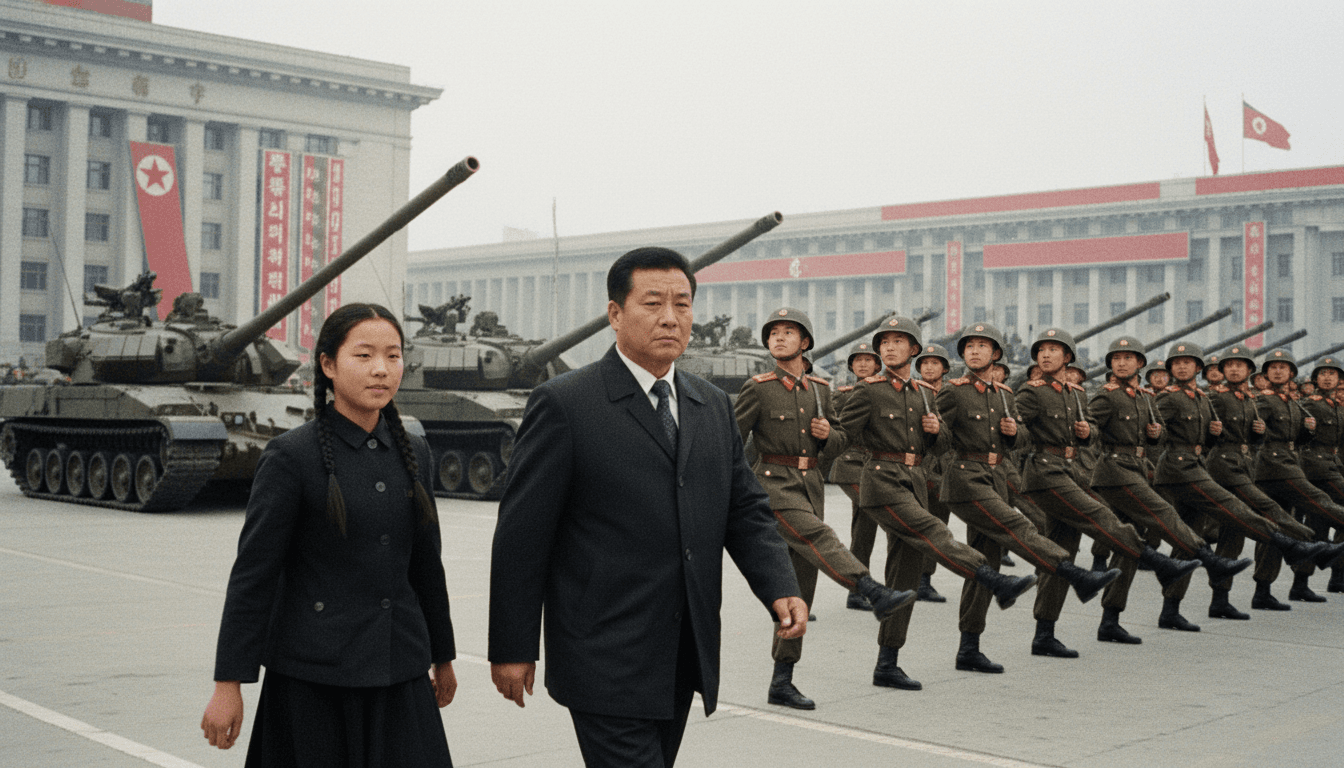
The daughter, widely believed to be named Kim Ju Ae and around 13 years old, has moved from a shadowy figure to a central character in North Korean state media. Her name first surfaced in 2013 via former NBA player Dennis Rodman, but it wasn’t until November 2022 that she made her inaugural public appearance alongside her father at a missile launch. Since then, her presence has become a recurring feature at high-profile events, including weapons tests, military parades, and factory openings, a clear indication of a carefully orchestrated public relations campaign.
North Korean state media’s evolving portrayal of Kim Ju Ae further underscores her ascent. Initially referred to as Kim Jong Un’s “beloved” or “precious” daughter, the language escalated to “respected,” a term previously reserved for the nation’s most revered figures, including Kim Jong Un himself. A pivotal moment arrived in March 2024 when she was officially elevated to a “great person of guidance” alongside her father, a title that leaves little doubt about her intended role.
The Succession Trajectory: Kim’s Daughter Heir
The NIS has progressively sharpened its assessment of Kim Ju Ae’s role, moving from ‘likely heir’ in early 2024 to believing she was nearing designation as the country’s future leader by February 2026, entering the “succession nomination stage” or “internally appointed successor” stage. The agency’s latest pronouncement in April 2026 is unequivocal: it is now “fair to view” her as his heir. This assessment, the NIS claims, is based on “credible intelligence,” not mere inference.
The agency interprets her increased visibility, particularly at defense-related events, as a strategic effort to “dilute” skepticism surrounding a female successor within North Korea’s deeply male-centered society and to “accelerate” the succession narrative. Recent imagery of her driving a tank is seen as a deliberate move to highlight her military aptitude and dispel doubts about a female heir, drawing direct parallels to Kim Jong Un’s own public military appearances during his grooming phase. The NIS further reported in February 2026 that she is now providing opinions on some policies, suggesting a more active, albeit nascent, role in governance.
“The strategic deployment of Kim Ju Ae at critical national events, from missile launches to military parades, is a clear signal from Pyongyang that she is being prepared for the highest office. This isn’t just about optics; it’s about conditioning the populace for a dynastic continuation.”
However, not all observers are in full agreement. Some experts remain skeptical, citing North Korea’s deeply entrenched patriarchal society as a significant hurdle for a female leader. Others argue that Kim Jong Un, at 42, is too young to name a successor, fearing it could destabilize his own authority. Lingering questions also persist about the existence and status of Kim Jong Un’s rumored eldest son, who has never been seen publicly. Hong Min of the Korea Institute for National Unification cautions that her tank appearance alone is insufficient to confirm her as heir, noting she appeared alongside her father rather than independently, unlike Kim Jong Un’s solo military appearances during his own rise.
Global Implications and Future Watch
The potential designation of Kim Ju Ae as successor signals a possible continuation of the Kim family’s dynastic rule into a fourth generation, a lineage that has governed North Korea since its founding in 1948. This development could have significant implications for regional stability, particularly concerning North Korea’s nuclear ambitions and its relations with South Korea, the United States, and China. A young, female leader, while potentially presenting a “refined” image to the international community, is still expected to rule as a dictator modeled on her father, making fundamental shifts in North Korea’s aggressive foreign policy unlikely.
Despite North Korea’s patriarchal society, some experts believe gender is not an insurmountable issue for succession, ultimately depending on Kim Jong Un’s singular decision. North Korea’s constitution and the “10 Principles for the Establishment of the Party’s Unitary Leadership System” do not explicitly prohibit a female leader. If Kim Ju Ae were to become leader, it could paradoxically elevate the status of women in North Korea, even within the confines of a totalitarian regime. The NIS also noted that Kim Jong Un’s influential sister, Kim Yo Jong, while a key aide, does not hold substantial independent powers, further cementing Ju Ae’s unique position.
The world will be closely watching for further signs of Kim Ju Ae’s public role and any shifts in state media’s rhetoric. Her continued visibility, the nature of her appearances, and any official pronouncements will provide crucial insights into the stability and direction of the North Korean regime. The grooming of Kim’s daughter heir presents a fascinating and potentially volatile chapter in the history of the Korean Peninsula.