Widespread Ireland fuel protests have significantly impacted the country’s political landscape, culminating in a critical no-confidence vote against the government. The demonstrations, primarily led by farmers, hauliers, and transport-dependent workers, began on April 7, 2026, in response to rapidly rising fuel prices and broader cost-of-living pressures, exacerbated by global instability.
The protests were initially sparked by soaring fuel costs, a direct consequence of the U.S.-Israel war on Iran, which led to the closure of the Strait of Hormuz, a vital oil channel. This geopolitical shockwave sent global oil prices spiraling, hitting Irish consumers and businesses particularly hard.
A Week of Disruption and Escalation
The week of April 7, 2026, saw Ireland plunged into significant disruption. Initial major protests began with convoys of vehicles blocking key motorways, including the M50 in Dublin, O’Connell Street, and M7 bypasses in Limerick and Portlaoise, as well as Galway docks. These blockades quickly choked supply lines and commuter routes, bringing daily life to a standstill for many.
By April 10, the situation escalated further. An Garda Síochána (Irish police) declared an “exceptional event,” ordering every garda to work for three days as concerns mounted over fuel shortages impacting emergency services. Over 100 service stations reported running out of fuel, painting a stark picture of the economic paralysis gripping the nation.
The government’s patience wore thin, and by April 12, police began to actively break up the protests. Clashes ensued, with reports of pepper spray being used and military vehicles deployed to remove barricades at critical locations such as the Whitegate refinery in County Cork and Galway port. Even after these interventions, smaller protests continued on motorways around Dublin, indicating the deep-seated frustration among the demonstrators.
Government Response and Political Fallout
The Irish government, a coalition of Fianna Fáil and Fine Gael, had initially attempted to pre-empt some of the financial strain, offering a €250 million tax break approximately three weeks before the protests erupted. However, this proved insufficient to quell the mounting anger. On April 12, Prime Minister Micheál Martin announced a new relief package worth €505 million (approximately $595 million USD) specifically aimed at addressing fuel costs. This package included direct payments and fuel subsidies for vital sectors like transport, agriculture, and fisheries, alongside reductions in fuel duties and a delay in carbon tax increases.
Despite these measures, the political ramifications were swift and severe. Sinn Féin, the largest opposition party, wasted no time in tabling a motion of no-confidence vote in the government on April 12. They criticized the coalition’s handling of the protests and the broader cost-of-living crisis. Other opposition parties, including the Social Democrats, Labour, People Before Profit, Aontú, the Green Party, and Independent Ireland, quickly pledged their support for the motion.
The no-confidence motion was debated and voted on in Dáil Éireann (the Irish Parliament) on Tuesday, April 14, 2026. After intense debate, the Irish government ultimately survived the confidence vote, providing a temporary reprieve from a potential snap election, but highlighting the precariousness of its position.
“The government’s handling of this situation has been disastrous. They have lost the confidence of the public,” Sinn Féin leader Mary Lou McDonald declared, encapsulating the sentiment of the opposition.
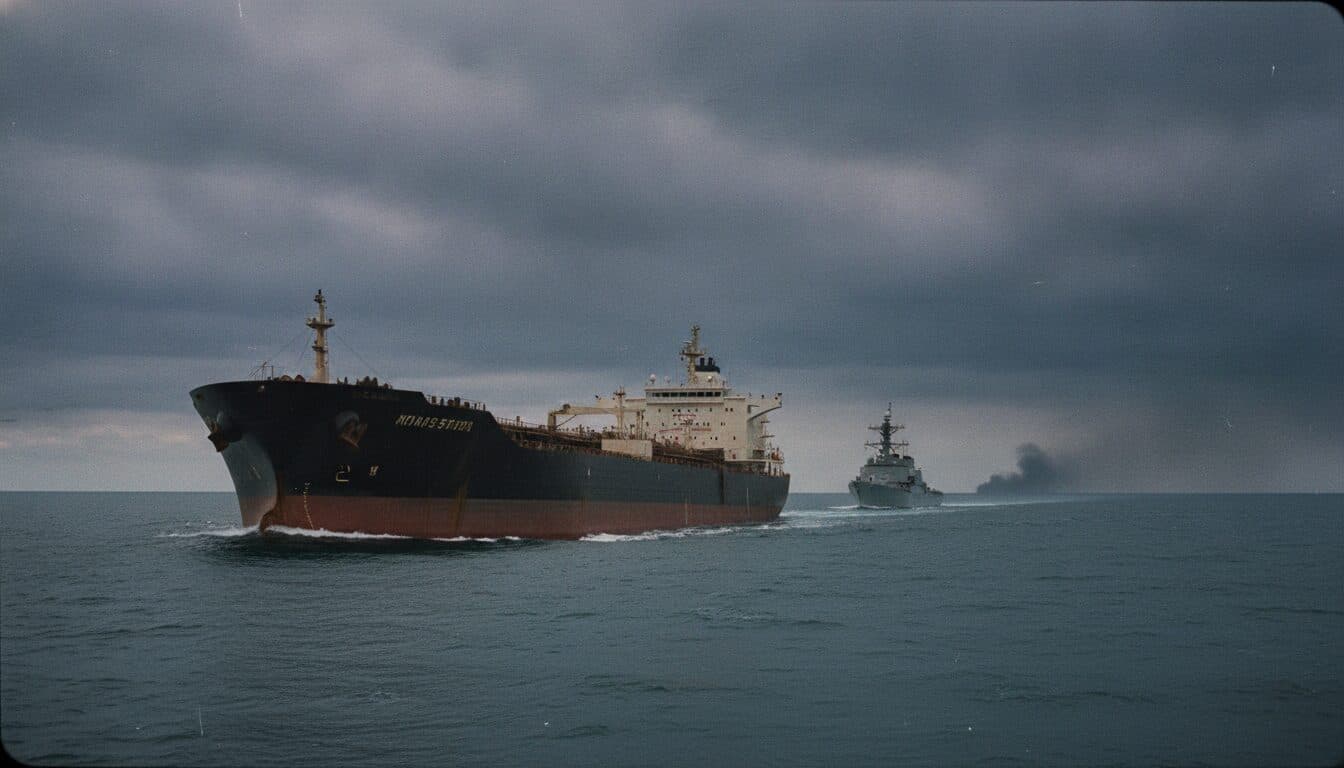
Prime Minister Micheál Martin defended the government’s actions, stating that the tax cuts offered were among the largest in Europe to combat soaring fuel prices. He also emphasized the necessity of clearing blockades at ports and the Whitegate refinery, calling them the “lifeblood of the economy” and warning of job losses and production halts if blockades continued. The government acknowledged that Ireland was on the brink of having oil tankers redirected and its refinery shut down due to the blockades, underscoring the severe economic threat posed by the Ireland fuel protests.
Global Ripple Effects and Economic Aftershocks
The Ireland fuel protests and the subsequent political instability serve as a stark reminder of how global events can rapidly translate into domestic crises. The U.S.-Israel war on Iran, and the resulting closure of the Strait of Hormuz, illustrate the interconnectedness of international geopolitics and local economies. While Ireland grappled with its immediate challenges, the broader implications for energy security and supply chains across Europe were also keenly felt. Disruptions to a single vital oil channel can trigger a cascade of economic consequences, affecting everything from transport costs to food prices.
The protests caused significant economic disruption beyond just fuel shortages. Blockades prevented fuel deliveries, leading to gas pumps running dry, and causing massive traffic jams that impacted productivity and commerce. Trade union Unite criticized the government’s aid package, arguing it did little to alleviate the burden on ordinary workers and disproportionately favored businesses, suggesting a deeper societal fault line regarding the distribution of economic hardship. For more on how global conflicts impact local economies, visit more trending stories.
The Broader Cost-of-Living Crisis and What’s Next
The fuel protests are not an isolated incident but rather a symptom of a broader cost-of-living crisis in Ireland, which has seen significant increases in energy bills and other essential costs. While the government has implemented various measures to address this crisis, including a €2.3 billion package in Budget 2024, many people continue to experience financial hardship. The current instability in the Middle East has further exacerbated the situation by driving up global oil prices, putting additional strain on households and businesses.
Looking ahead, while the government survived the no-confidence vote, the underlying pressures that fueled the protests remain. The coalition will need to demonstrate sustained efforts to address the cost-of-living crisis and mitigate the impact of global energy price volatility. The public’s confidence, particularly among transport-dependent sectors, will be crucial. The outcome of these ongoing tensions will undoubtedly shape Ireland’s political landscape and economic trajectory in the coming months, with the potential for renewed protests if conditions do not improve significantly.