Global financial markets are bracing for impact as the escalating conflict with Iran continues to send ripples through the world economy. Oil prices surged on Friday, May 15, 2026, pushing Brent crude futures past $107 a barrel and intensifying concerns over inflation, interest rates, and global growth prospects. The closure of the vital Strait of Hormuz remains a critical choke point, exacerbating supply fears and fueling market turbulence.
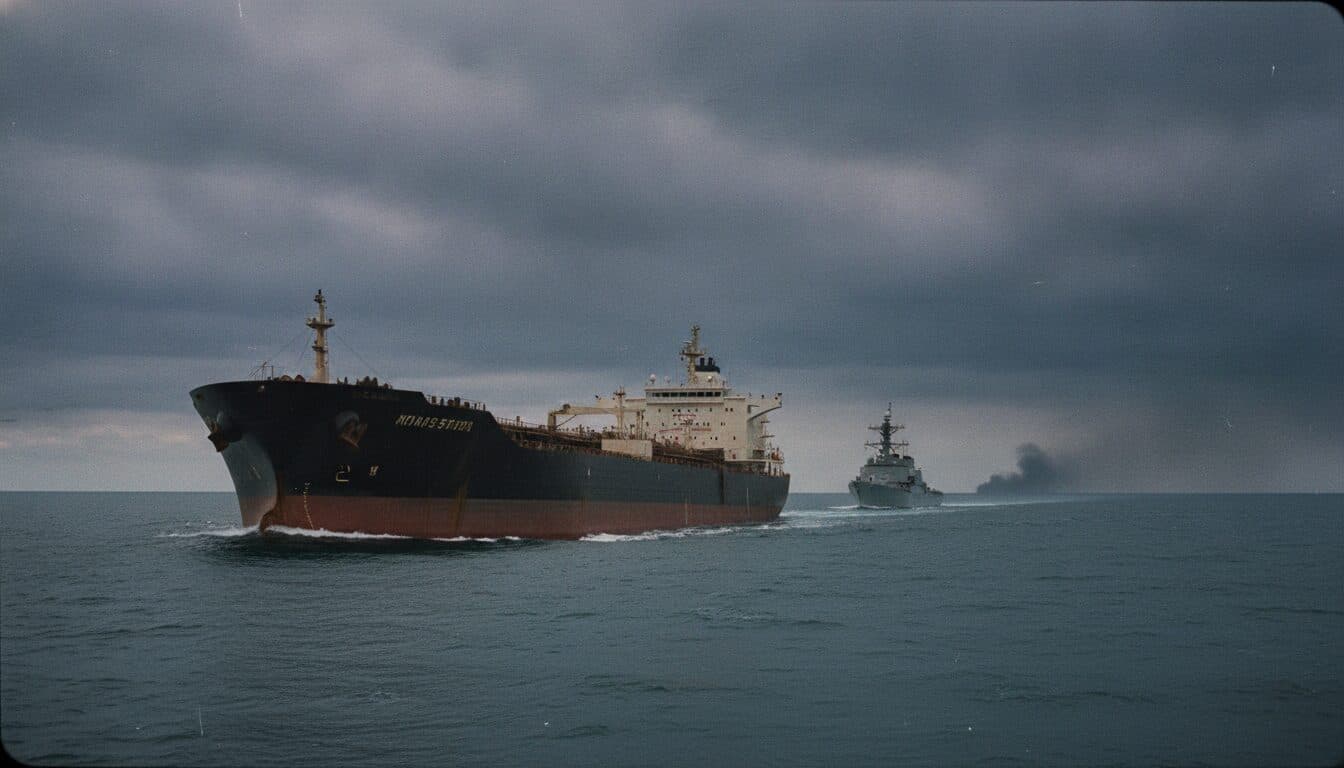
The latest market movements underscore the gravity of the situation. Brent crude futures rose 1.25% to $107.04 a barrel, marking a nearly 6% gain over the week. U.S. West Texas Intermediate (WTI) crude futures climbed 1.31% to $102.50, reflecting a jump of more than 7% for the week. Since early February, WTI crude has seen an approximate 54% increase, rising from around $65 to over $100 a barrel. This surge in oil prices is directly linked to the ongoing disruption in the Strait of Hormuz, through which approximately one-fifth of the world’s seaborne crude supply typically passes. Tehran has largely blocked this critical waterway since the war began on February 28, with only about 30 vessels transiting daily, a stark contrast to the pre-war average of 140 ships.
The repercussions are evident across major financial indices. The S&P 500 fell 0.9% from its all-time high, the Dow Jones Industrial Average dropped 331 points (closing at 49,697), and the Nasdaq composite sank 1.4% from its own record. Technology stocks, particularly those that have been AI winners, led the market lower. This widespread sell-off reflects growing investor apprehension regarding the economic fallout from the conflict and the sustained rise in energy costs.
Inflation concerns are paramount. Global headline inflation is now anticipated to reach 4.4% in 2026 before easing to 3.7% in 2027, driven by commodity market pressures and heightened uncertainty. In the U.S., the Consumer Price Index rose 3.8% on a year-over-year basis in April, marking the highest reading since May 2023 and well above the Federal Reserve’s 2% target. This inflationary pressure has prompted traders to price in a higher likelihood of a Fed rate hike by early next year, with the probability of at least one 25-basis-point increase this year climbing to over 30% from virtually zero just two weeks ago. The market interpretation now reflects a 67% probability for no Fed rate cuts in 2026, a significant shift from earlier expectations.
The International Monetary Fund (IMF) has adjusted its global growth projections, now forecasting 3.1% in 2026 and 3.2% in 2027, a downward revision of 0.2 percentage points for 2026. This reflects the drag on economic activity stemming from geopolitical and commodity-market pressures. Carl Bonham, UHERO Executive Director, succinctly captured the sentiment, stating,
“It’s hard to put an optimistic spin on this,”
regarding the ongoing war and Strait of Hormuz closure, emphasizing that “oil prices impact everything from travel to housing costs.”
Diplomatic efforts to de-escalate the conflict have yielded little progress. President Donald Trump expressed dissatisfaction with Iran’s latest proposal, deeming it “unacceptable” and reaffirming a hardline stance on nuclear issues. He reiterated that if Iran possesses “any nuclear of any form, I don’t read the rest of it.” Trump also stated that a 20-year moratorium on Iran’s nuclear program would be sufficient for a deal, but the “level of guarantee from them is not enough.” During a meeting with Chinese President Xi Jinping in Beijing, Trump indicated that Xi desires the Strait of Hormuz reopened and offered to help broker a resolution. China’s foreign ministry released a statement highlighting that there is “no point” in continuing the war, which has inflicted severe losses on the people in Iran and other regional countries. Iranian Foreign Minister Abbas Araghchi stated there was no military solution to the war and that his country was ready to help all vessels pass through the Strait of Hormuz, while also urging foreign nations to condemn the U.S. and Israel for “unlawful aggression.” The U.S. military has implemented a blockade of Iranian ports, redirecting 75 commercial ships since April 13.
The current crisis builds upon a complex geopolitical landscape, where tensions have simmered for years. The recent escalation, however, marks a significant turning point, directly impacting global energy supplies and financial stability. The closure of the Strait of Hormuz has been a primary catalyst for the surge in oil prices, severing access to a substantial portion of the world’s seaborne crude supply. This disruption, coupled with ongoing fears of attacks and seizures on ships, has kept markets on edge. The rising energy costs are fueling inflation concerns, leading to a global bond sell-off and increasing the likelihood of central banks, including the Federal Reserve, raising interest rates. Higher interest rates typically support the U.S. dollar, making U.S. assets more attractive to foreign investors.
Looking ahead, the future implications are profound. The economic impact extends beyond immediate trade disruptions, accelerating structural shifts like energy diversification and higher defense spending, and reinforcing a trend towards global fragmentation. Countries heavily reliant on imported energy, such as Turkey, are particularly exposed to the inflationary pressures. While major equity markets had recovered some losses incurred since the conflict began, buoyed by AI-driven momentum and resilient corporate earnings, this backdrop remains vulnerable as long as energy prices remain elevated. Investors and policymakers alike will be closely watching for any signs of de-escalation or further intensification of the conflict, as the global economy navigates these turbulent waters.
The key takeaway for readers and investors is the ongoing volatility and uncertainty. The sustained surge in oil prices, driven by the Strait of Hormuz closure and geopolitical tensions, is not merely an energy market phenomenon; it is a fundamental driver of inflation, interest rate policy shifts, and a drag on global economic growth. Diversification and careful risk management will be paramount in this environment, as the world grapples with the far-reaching consequences of the Iran conflict.