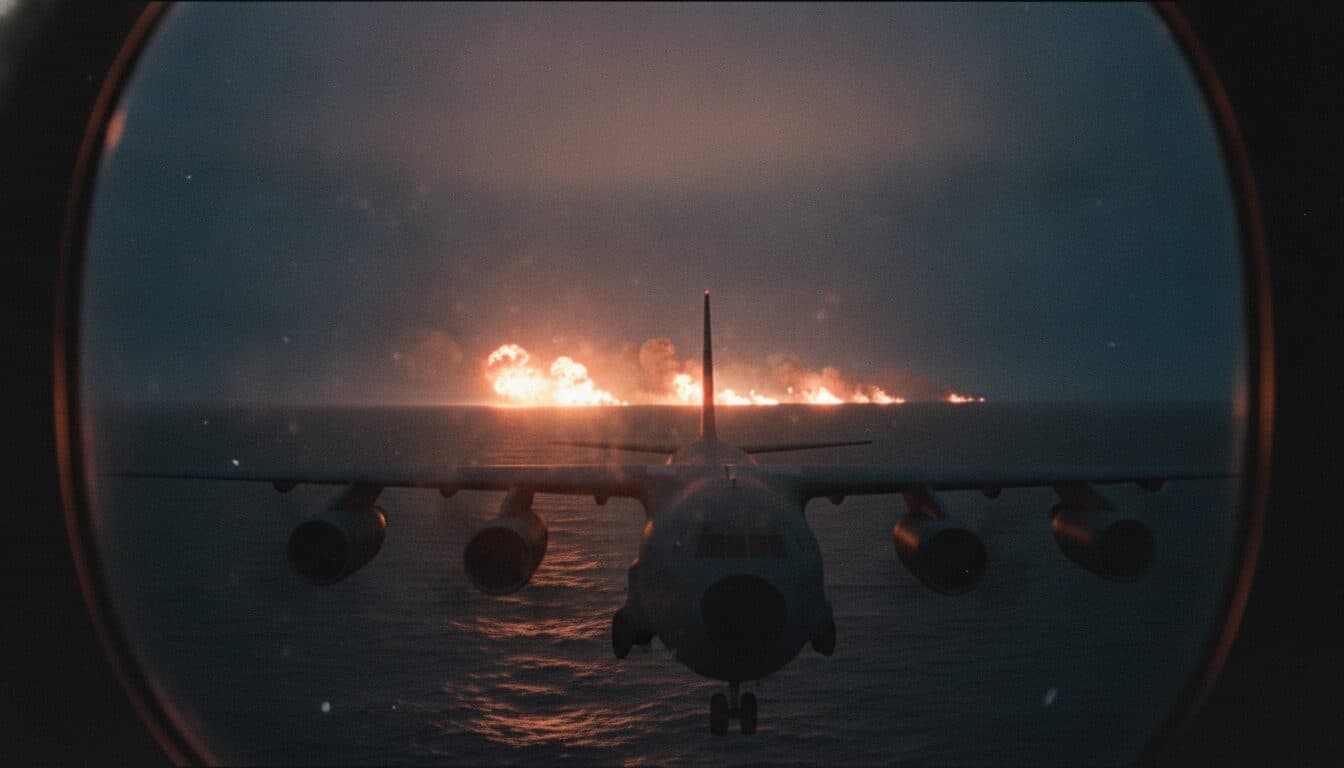
Washington D.C. – The U.S. House of Representatives has delivered a significant legislative blow to President Trump’s authority, passing a resolution to curb his ability to engage in military action against Iran without explicit congressional approval. This development unfolds amidst a renewed, albeit fragile, ceasefire in the Middle East and a dangerous escalation marked by an Iranian missile and drone strike on Kuwait International Airport, underscoring the volatile geopolitical landscape and the profound economic implications for global markets.
House Rebukes Trump on Iran War Powers
On Wednesday, June 3, 2026, the House approved a War Powers Resolution by a vote of 215 to 208. The measure aims to compel President Trump to cease military hostilities with Iran unless Congress formally declares war or authorizes the use of military force. This marks a critical moment, being the first time such a measure has successfully passed either chamber on a final vote since the conflict with Iran began over three months ago. The vote saw four Republicans—Reps. Thomas Massie of Kentucky, Brian Fitzpatrick of Pennsylvania, Tom Barrett of Michigan, and Warren Davidson of Ohio—break ranks to join all Democrats in supporting the resolution. Notably, Democratic Rep. Jared Golden of Maine, who had previously voted against three failed attempts, switched his stance, securing the resolution’s passage and drawing applause from Democrats.
The conflict, now in its fourth month without congressional authorization, has exacted a heavy toll. Estimates suggest the war has cost American taxpayers approximately $100 billion, resulted in the deaths of 13 U.S. servicemembers, and wounded hundreds more. The administration has contended that a fragile ceasefire in early April paused the 60-day clock mandated by the War Powers Resolution of 1973, which requires presidential removal of armed forces from hostilities if Congress has not authorized the war. However, Democrats and a growing number of Republicans have rejected this interpretation, citing continuous attacks from both sides. Secretary of State Marco Rubio has maintained that U.S. operations against Tehran have ended, asserting that the U.S. is now only conducting “completely defensive” strikes. President Trump, while acknowledging ongoing talks, dismissed the House vote as meaningless, signaling a potential constitutional clash ahead.
Renewed Mideast Ceasefire and Hezbollah’s Defiance
Concurrently, Israel and Lebanon reached a renewed ceasefire agreement after U.S.-mediated talks held on June 2 and 3, 2026. The agreement, forged after a fourth round of high-level trilateral meetings, is predicated on a complete cessation of Hezbollah fire and the evacuation of all Hezbollah operatives from the South Litani Sector in Lebanon. It also calls for the creation of “pilot zones” where the Lebanese Armed Forces would assume exclusive control, excluding all non-state actors. Lebanese President Joseph Aoun described this agreement as the “last chance” for a comprehensive truce, highlighting the dire need for stability in the region.
However, the fragile hopes for peace were immediately undermined by Hezbollah, the Iran-backed militant group, which explicitly rejected the U.S.-brokered ceasefire. Hezbollah leader Naim Qassem declared that any acceptable deal must commence with a full Israeli withdrawal from Lebanese territory and that the group has made no commitment to stop fighting as long as “occupation exists.” He lambasted the negotiations as “absurd, humiliating and insulting” and a “roadmap to annihilate part of the Lebanese people.” This defiant stance comes despite the Lebanese government’s ongoing efforts to disarm Hezbollah and reassert national control, further complicating an already intractable situation.
Iranian Strike on Kuwait International Airport Escalates Tensions
Further escalating regional tensions, Iran launched a missile and drone attack on Kuwait International Airport on Wednesday, June 3, 2026. The assault caused severe damage to Terminal 1, killed one Indian national, and injured 63 people. All aviation traffic in Kuwait was temporarily suspended, with flights diverted, though some operations later resumed from Terminal 4. Kuwait’s Foreign Ministry condemned the attack as “criminal Iranian aggression” and responded by expelling two Iranian diplomats, reducing the number of Iranian diplomatic staff in the country.
Iran’s Revolutionary Guards, however, claimed that a failed U.S. Patriot interceptor missile was responsible for hitting the airport and denied responsibility for firing at the facility. The U.S. military swiftly refuted Iran’s claims, stating unequivocally that Iran deliberately struck the civilian airport with drones. U.S. Central Command also reported that a wave of Iranian drones attempted to attack American forces in Kuwait but failed to hit their intended targets, with U.S. forces successfully downing multiple drones. This strike followed earlier U.S. “self-defense strikes” on an Iranian military ground control station on Qeshm Island in the Strait of Hormuz, which the U.S. described as a response to Iran launching ballistic missiles against Kuwait and Bahrain.
Impact on Global Markets and Geopolitical Chessboard
The ongoing conflict and the House’s decision to rebuke Trump on Iran war powers have immediate and significant implications for global markets, particularly energy prices. The Iranian strike on Kuwait International Airport, a key regional hub, highlights the vulnerability of critical infrastructure and potential disruptions to oil flows. Investors are closely watching the Strait of Hormuz, a vital chokepoint for global oil shipments, as any further escalation could send crude prices soaring. The political drama in Washington, coupled with the continued hostilities in the Middle East, creates a climate of uncertainty that deters investment and heightens risk premiums across various sectors. Defense contractors, cybersecurity firms, and companies involved in reconstruction efforts in the region may see shifts in their valuations depending on the conflict’s trajectory.
“The House’s vote is more than a legislative maneuver; it’s a direct challenge to presidential authority that could reshape the balance of power on foreign policy, especially as the Middle East teeters on the brink of wider conflict,” remarked Dr. Eleanor Vance, a senior geopolitical analyst.
What’s Next: A Looming Constitutional Battle and Regional Instability
The immediate future is fraught with uncertainty. The War Powers Resolution now heads to the Senate, where its fate remains unclear. Even if it passes the Senate, President Trump is expected to veto the measure, setting the stage for a potential override attempt by Congress, a difficult task requiring a two-thirds majority in both chambers. This looming constitutional battle over war powers could distract from other pressing domestic and international issues. Regionally, Hezbollah’s outright rejection of the ceasefire signals continued instability in Lebanon and the potential for renewed conflict between Israel and the militant group. The Iranian attack on Kuwait, regardless of the perpetrator’s ultimate identity, underscores the high-stakes nature of the current environment and the constant threat of miscalculation leading to broader conflagration. Global oil prices will remain highly sensitive to any developments, with traders closely monitoring the Strait of Hormuz and any threats to regional energy infrastructure. The international community will be watching for signs of de-escalation or further retaliatory actions, which could have ripple effects far beyond the Middle East.
Key Takeaway for Readers and Investors
For readers and investors, the key takeaway is the profound and interconnected nature of political decisions in Washington and the volatile realities on the ground in the Middle East. The House’s decision to rebuke Trump on Iran war powers signals a growing demand for congressional oversight on military engagements, potentially altering how future U.S. foreign policy is conducted. Simultaneously, the renewed Mideast ceasefire, undermined by Hezbollah’s rejection and Iran’s provocative actions, ensures continued instability. This confluence of political challenge and regional conflict guarantees ongoing volatility in global oil markets and heightens the risk of broader geopolitical escalation, demanding careful consideration from anyone with financial interests tied to the stability of the international order.