Gaza local elections are set to unfold tomorrow, April 25, 2026, marking a pivotal moment in the Strip’s political landscape as Deir al-Balah prepares for its first municipal vote in 22 years. This significant development, occurring amidst unprecedented regional tensions and widespread devastation, offers a rare glimpse into civic participation and potential shifts in Palestinian governance.
For the first time since Hamas won legislative elections in 2006, and the first local electoral exercise since 2005, the city of Deir al-Balah, home to approximately 70,000 people, will see its residents cast ballots for local council members. The choice of Deir al-Balah for these more trending stories municipal elections is strategic, owing to its comparatively less damaged infrastructure in a territory where an estimated 90% of buildings have been destroyed by recent conflict. Around 70,000 registered voters are eligible to participate, choosing from four independent electoral lists.
The Mechanics of Democracy Amidst Rubble
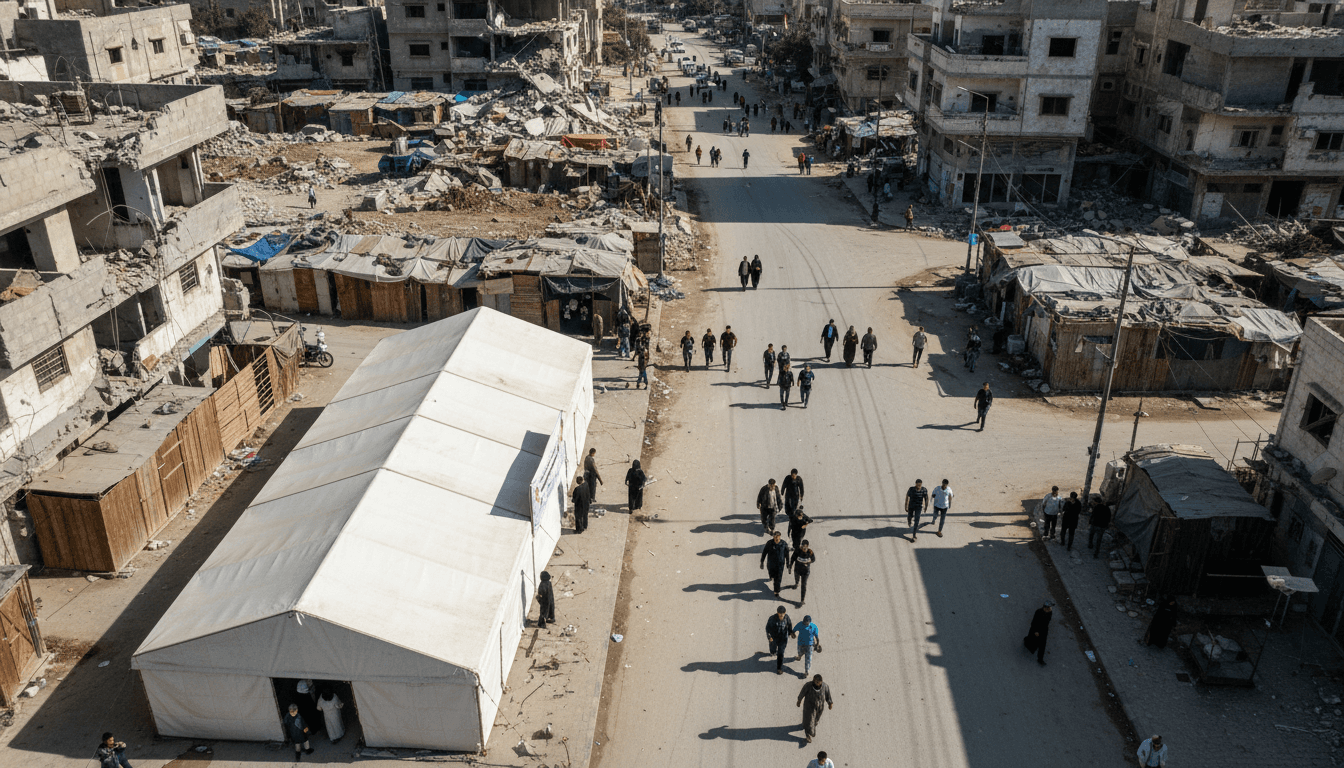
The Central Elections Commission (CEC) in Gaza, under the guidance of regional director Jamil al-Khaldi, has meticulously prepared for the vote. Twelve polling centers, comprising 100 polling stations, have been established. A testament to the challenging conditions, nine of these locations are makeshift tents erected on open land, facilitated through cooperation with the UN Development Programme (UNDP), due to the lack of suitable standing buildings. Voting will commence at 7 a.m. and conclude at 5 p.m. local time, with the local Palestinian civil police in Deir al-Balah tasked with ensuring security.
The four competing independent lists – “Peace and Construction,” “Deir al-Balah Unites Us,” “Future of Deir al-Balah,” and “Renaissance of Deir al-Balah” – each feature 15 candidates, with a mandatory minimum of four women. Voters will select one list and then choose up to five individual candidates from within that list. These municipal elections are not isolated; they are part of a broader electoral exercise encompassing 420 local authorities across the West Bank, underscoring a symbolic attempt at national unity despite deep political fissures.
Gaza Local Elections: A Barometer for Popularity and Unity
The significance of these Gaza local elections extends beyond mere municipal administration. They are widely viewed as a crucial, albeit symbolic, step towards re-establishing civic participation and projecting a message of national unity within a fragmented Palestinian political landscape. Since 2007, the Palestinian political arena has been divided, with Hamas governing Gaza and the Fatah-led Palestinian Authority (PA) controlling the West Bank. Hamas has historically appointed local council members in Gaza, making this electoral process a notable departure.
“The municipal elections are a symbolic step to send a message to the world, to the Board of Peace, and to Israel that the Gaza Strip is an inseparable part of the Palestinian political system,”
notes political analyst Reham Owda. While Hamas is not formally running under its party banner, it is believed that some pro-Hamas candidates are among those on the ballot. This offers a rare opportunity to gauge the militant group’s popularity among the populace, a critical data point given the ongoing conflict and calls for a post-war governance structure. Hamas has pledged to respect the voters’ wishes and will deploy its security forces to safeguard voting sites, a significant commitment given its previous boycotts over disagreements with the PA regarding conditions requiring candidates to recognize Israel.
Global and Regional Implications
For the Palestinian Authority, these elections serve as a means to reaffirm its relevance in Gaza and to foster a symbolic perception of unity between the two territories. This comes at a critical juncture, particularly in light of a US-backed plan for Gaza’s future that envisions rebuilding the territory under a technocratic administration, contingent on Hamas disarming – a proposal Hamas has vehemently rejected. Omar Shaban, founder and director of Palthink for Strategic Studies, suggests that these local elections could be a precursor to general elections, demonstrating Hamas’s professed faith in the democratic process.
The logistical and security challenges inherent in conducting elections amidst the rubble of conflict are immense. The war has tragically claimed an estimated 72,000 Palestinian lives and wounded over 172,000. Yet, the determination to proceed with the vote, overcoming obstacles like the shortage of suitable buildings through international cooperation, highlights a profound aspiration for normalcy and self-determination. Dr. Ramiz Alakbarov, the United Nations Deputy Special Coordinator for the Middle East Peace Process, has lauded the CEC’s efforts and called upon all stakeholders to ensure a peaceful, orderly, and inclusive process.
What’s Next for Gaza’s Political Future
As Deir al-Balah prepares to cast its ballots, the world watches closely. The outcomes of these Gaza local elections, while limited in scope, will provide invaluable insights into the shifting political sentiments within the Strip. They represent a fragile but firm step towards rebuilding not just infrastructure, but also the mechanisms of governance and representation. The ability of the newly elected council to function effectively amidst immense challenges, and the broader implications for potential future general elections and reconciliation between Hamas and Fatah, will be crucial determinants of Gaza’s trajectory. The international community will be keenly observing whether this exercise in local democracy can pave the way for a more stable and unified Palestinian political future.