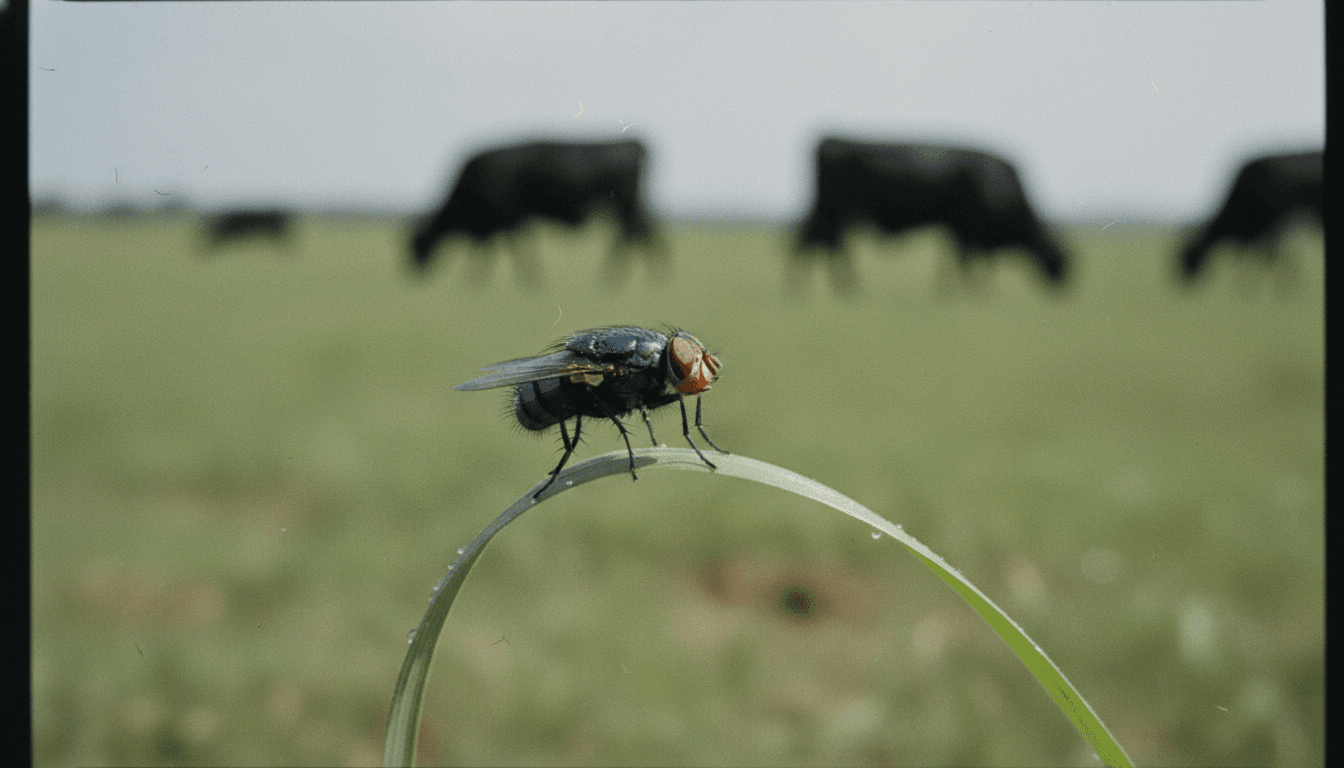
The U.S. cattle industry faces a new and formidable challenge with the confirmed re-emergence of the New World screwworm, a flesh-eating parasite, in Zavala County, Texas. This detection, the first in 60 years outside of a localized 2016-2017 Florida outbreak, arrives at a precarious time for an industry already grappling with its smallest herd in 75 years and record-high retail beef prices. The financial implications for ranchers and consumers could be substantial, drawing immediate and urgent attention from federal and state authorities.
The U.S. Department of Agriculture (USDA) confirmed the presence of the New World screwworm (Cochliomyia hominivorax) on Wednesday, June 3, 2026, in the umbilical area of a 3-week-old calf in La Pryor, approximately 50 miles from the U.S.-Mexico border. These parasitic flies lay their eggs in open wounds or orifices of warm-blooded animals, with the hatched maggots then burrowing into and feeding on living flesh. The damage can be severe, potentially leading to death if untreated. As of June 4, 2026, no further cases have been detected in the immediate vicinity, but the threat of spread looms large.
The return of the flesh-eating screwworm is not entirely unexpected. Models predicted its entry into the U.S. in 2025, and the parasite has been steadily moving north through Central America and Mexico since 2023. A cow in southern Mexico tested positive in November 2024, prompting a blockade of cattle trade between the U.S. and Mexico. Mexico subsequently reported a 53% rise in animal cases between mid-July and mid-August 2025. This northward creep provided some preparation time, as noted by Dudley Hoskins, Under Secretary for Marketing and Regulatory Programs, who affirmed,
“The United States has defeated this pest before, and we will do it again.”
The economic impact of a widespread screwworm outbreak could be staggering. The USDA estimates potential losses of $1.8 billion to the Texas economy alone. If the parasite were to spread more broadly, the cattle industry could face a $2.1 billion hit, with the hunting and wildlife industry in Texas potentially losing $9 billion. These figures are particularly concerning given the current state of the U.S. cattle market. As of January 1, 2026, the nation’s cattle herd stood at 86.2 million, the smallest in 75 years. This decline, driven by factors such as prolonged drought, elevated feeding costs, and labor shortages, has already pushed retail beef prices to unprecedented levels. Ground beef, for instance, reached a record average of $5.98 per pound in May 2025 and $6.25 per pound in July 2025. April 2026 data from the Federal Reserve Bank of St. Louis showed ground beef hitting a new record of $6.90 per pound, up 19% from the previous year, with steak prices spiking 17% to $13.02 per pound over the same period.
In response to this agricultural emergency, USDA Secretary Brooke Rollins stated that the agency is taking immediate action to contain and eradicate the screwworm in South Texas, expressing confidence that the case can be contained. She also emphasized that there is no risk to the food supply. However, Texas Agriculture Commissioner Sid Miller voiced criticism, calling the USDA’s response too slow and bureaucratic. He urged President Donald Trump to deploy the Screwworm Adult Suppression System (SWASS) and “throw every available federal resource at this threat.” Nate Sheets, a Republican nominee for Texas agriculture commissioner, echoed the sentiment, labeling it an “agricultural emergency.” Bernt Nelson, an economist with the American Farm Bureau Federation, offered a tempered view, suggesting that while eradication could be a lengthy process, improved detection and containment methods offer a better chance of success than in previous outbreaks.
Immediate containment efforts are underway, with the USDA and Texas Animal Health Commission forming a unified incident command team. They are establishing a 20-kilometer quarantine and movement control zone around the detection site in La Pryor, intensifying surveillance, and expediting the release of sterile screwworm flies. The USDA is already releasing 100 million sterile insects per week in Mexico as part of ongoing efforts. A new sterile fly production facility at the Moore airbase in Edinburg, Texas, is under construction, aiming to produce 300 million sterile flies per week, though it is not expected to be operational until next year. Another facility in Mexico is projected to provide additional sterile flies in July, bolstering the Sterile Insect Technique (SIT) – the method successfully used to eradicate the screwworm in 1966.
The public is advised to remain vigilant. Residents and animal owners, particularly along the border, are urged to regularly check their pets and livestock for wounds and any suspicious larvae, reporting potential infections to officials immediately. While human cases are rare, individuals with suspicious lesions should seek prompt medical attention. The re-emergence of the flesh-eating screwworm presents a dual challenge: protecting animal health and safeguarding the economic stability of the U.S. cattle industry. The coming weeks will be critical in determining whether this new threat can be swiftly contained or if it will exacerbate the existing pressures on a vital sector of the American economy.