Shocking Epstein Kiswah revelations have emerged, igniting global outrage and adding a profound religious dimension to the ongoing scandal surrounding the late financier, Jeffrey Epstein. Unsealed documents from the U.S. Department of Justice now allege Epstein’s acquisition of sacred Islamic artifacts, specifically fragments of the Kiswah, the revered cloth covering the Kaaba in Mecca. This development, surfacing on Wednesday, April 29, 2026, has sent shockwaves through the global Muslim community and beyond, questioning the ethical boundaries of power and privilege.
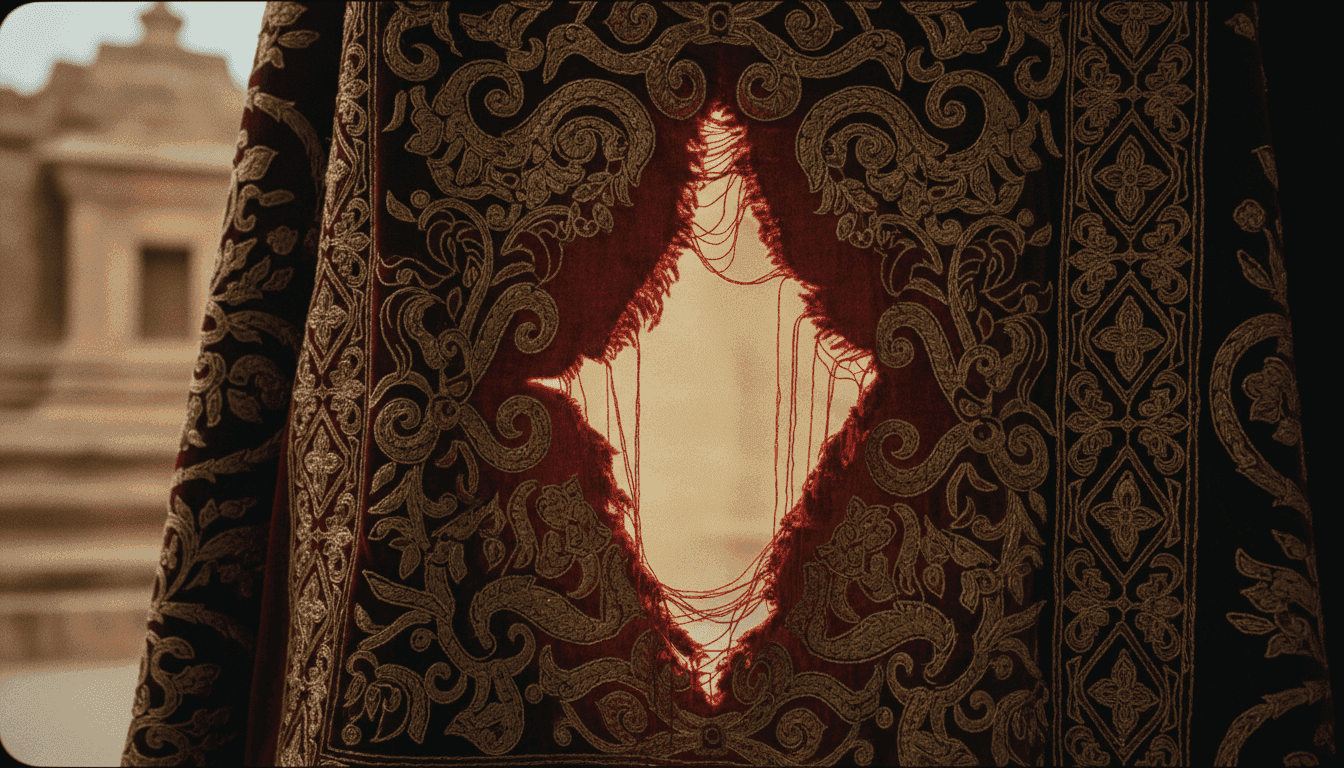
The Kiswah, a black, gold-embroidered cloth, holds unparalleled religious significance as it adorns the Kaaba, Islam’s holiest site in Mecca, Saudi Arabia. Millions of Muslims touch it during the Hajj pilgrimage, imbuing it with their prayers and tears. Replaced annually, sections of the old Kiswah become rare and highly prized religious artifacts, traditionally reserved for diplomatic gifts or official religious institutions. The idea of these sacred fragments falling into Epstein’s possession, a convicted sex offender, years after his jail time, is particularly disturbing.
The Unfolding Story: Acquisition and Allegations
According to unsealed emails and correspondence, three pieces of the Kiswah were allegedly procured and shipped to Epstein’s U.S. Virgin Islands residence, with references also made to his Florida property, in March 2017. This occurred long after his initial conviction and registration as a sex offender. The transfer was reportedly coordinated by Emirati businesswoman Aziza Al-Ahmadi and a Saudi-based contact, Abdullah Al-Maari, with British Airways cited as the logistics carrier for the shipment. To facilitate customs clearance, the sacred fragments were deceptively labeled as “artwork from Saudi Arabia.”
The documentation further details the types of fragments involved: one allegedly from within the Kaaba itself, another from the outer covering used during a pilgrimage, and a third described as unused but made from the same material. These are not mere decorative items; they are objects imbued with centuries of spiritual devotion, making their alleged secular acquisition a profound affront.
While the initial prompt mentioned a ‘private island mosque,’ reports about Epstein’s private island, Little St. James, describe a gold-domed, cube-shaped building often referred to as a “temple.” This structure, built between 2009 and 2013, has been noted for its unusual architecture, incorporating elements that some have described as a “mishmash of pagan and Christian symbolism,” including statues of Poseidon and golden birds. While its cubic base and dome might superficially resemble Islamic architecture, the presence of such statuary would be entirely out of place in a mosque. There is no definitive information confirming it was a mosque or that the Kiswah fragments were specifically intended for this structure. The lack of clarity surrounding how or why Epstein became involved in this transaction, and the exact nature of his relationship with the Emirati contacts, remains a significant point of concern. For more trending stories, visit our news section.
Global Outrage and Profound Religious Impact
The alleged acquisition of the Kiswah fragments has been met with widespread and strong condemnation across the globe. Experts and critics assert that sacred objects from the Kaaba should never be dissociated from their religious significance or circulated outside appropriate religious channels. The act is seen as a severe exploitation of religious sanctity and a profound offense to the global Muslim community, which numbers nearly two billion adherents worldwide. The unauthorized transfer of such highly spiritual items, traditionally reserved for diplomatic gifts, has sparked intense backlash due to their inherent religious sanctity and the disturbing context of their alleged possession.
“This is a blasphemous scandal that exposes how power operates through violation, reducing the Kiswah to a mere ‘gift,’ ‘art object,’ or collector’s item, stripping it of its true meaning and spiritual essence.”
This sentiment encapsulates the depth of anger and betrayal felt by many. The commercialization or private collection of such an object is perceived as a desecration, a stark reminder of how the powerful can seemingly operate beyond moral and religious boundaries.
Context, Analysis, and Lingering Questions
These Epstein Kiswah revelations are part of a larger tranche of documents released by the U.S. Department of Justice under the Epstein Files Transparency Act, which continues to shed light on Epstein’s global network and illicit activities. The ongoing investigations into Epstein’s affairs, including recent searches at his former Zorro Ranch in New Mexico, continue to uncover disturbing details about his alleged criminal enterprise and the individuals connected to it. The lack of transparency surrounding the precise motives behind Epstein’s alleged acquisition of these sacred items, and the full extent of the involvement of his contacts, leaves many unanswered questions.
This incident underscores a broader issue of accountability, especially for those who facilitated such a transaction. The financial and reputational implications for the alleged facilitators, Aziza Al-Ahmadi and Abdullah Al-Maari, could be substantial as further details emerge. The global Muslim community will likely demand thorough investigations and appropriate actions against all involved in what is widely perceived as a deeply sacrilegious act.
What’s Next: Investigations and Ramifications
The immediate future will likely see calls for further investigation into how these sacred Kiswah fragments were obtained and transferred. There will be immense pressure on Saudi Arabian authorities to address the breach of protocol concerning such highly significant religious artifacts. The global Muslim community will undoubtedly continue to voice its outrage, potentially leading to diplomatic repercussions and increased scrutiny of cultural and religious artifact trafficking. The ongoing release of Epstein documents promises more revelations, and each new detail adds another layer to the complex and disturbing narrative surrounding his life and illicit network.
Ultimately, the alleged acquisition of the Kiswah fragments by Jeffrey Epstein is more than just another scandalous detail; it is a profound violation of religious sanctity and a stark reminder of the corrupting influence of unchecked power. The world watches closely as further details emerge, demanding accountability and justice for what is widely seen as an act of profound disrespect.