The emperor penguin drowning crisis, driven by unprecedented sea ice melt in Antarctica, has reached a critical juncture, with the International Union for Conservation of Nature (IUCN) officially declaring the species endangered. This alarming declaration, made today, Thursday, April 9, 2026, underscores the profound and accelerating impact of climate change on one of Earth’s most iconic species, signaling a broader ecological crisis with global ramifications.
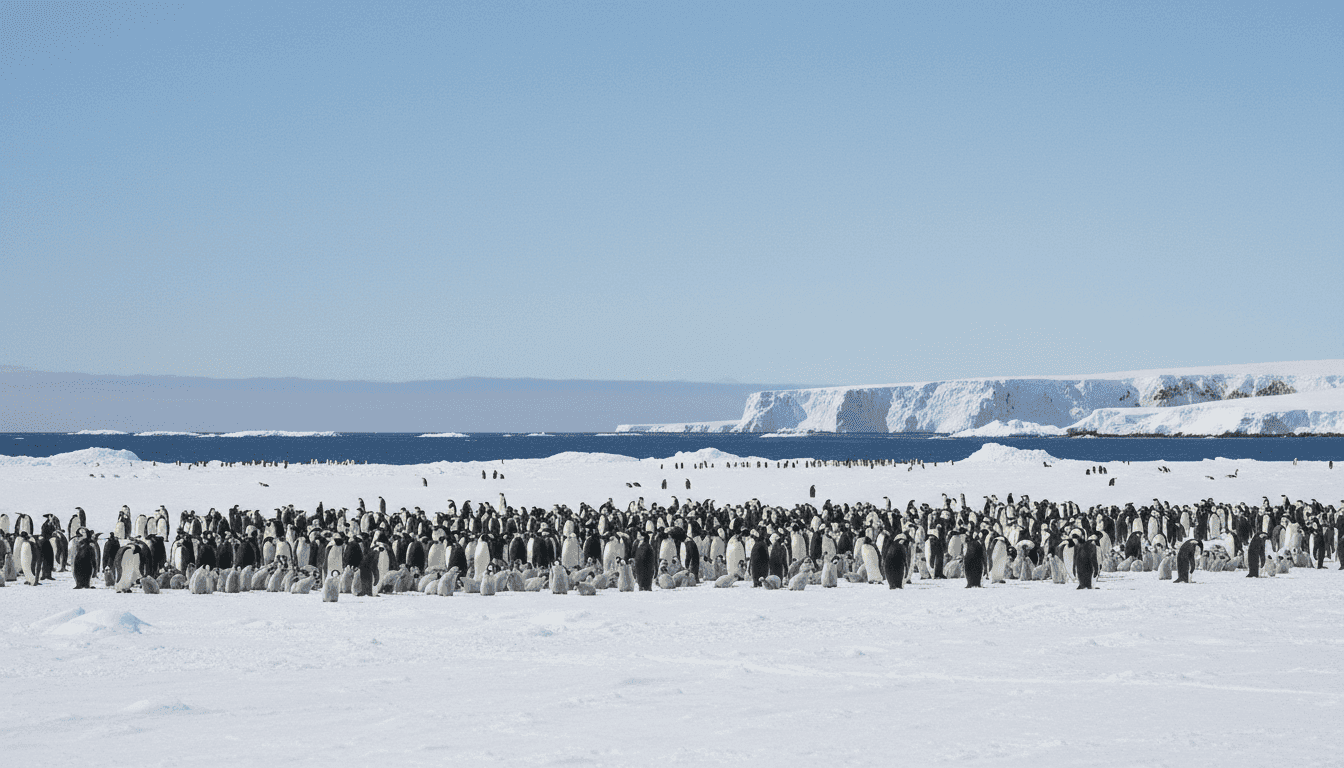
Emperor penguins are uniquely dependent on “fast ice”—sea ice firmly anchored to the coast—for their survival. This stable platform is their essential breeding ground for approximately nine months of the year, providing the sanctuary where chicks hatch and grow their crucial waterproof feathers. It also serves as a vital refuge for adults during their annual molting period, when they lose their waterproof capabilities and are exceptionally vulnerable. However, global heating has led to record lows in Antarctic sea ice since 2016, a trend that is proving catastrophic for these colonies.
When this critical sea ice breaks up prematurely, entire breeding colonies are plunged into the frigid ocean. Chicks, lacking their protective waterproof plumage, are ill-equipped to survive such an event, leading to widespread drowning or death from hypothermia. The scale of these breeding failures is staggering. In 2022, four out of five known emperor penguin breeding sites in the central and eastern Bellingshausen Sea region experienced a total loss of sea ice. This resulted in an “unprecedented breeding failure” and the presumed loss of thousands of chicks, with researchers deeming it highly probable that no chicks survived in these affected colonies. A similar devastating collapse occurred in a Weddell Sea colony in 2016 under comparable circumstances.
The Emperor Penguin Drowning Crisis: A Sentinel Species’ Plight
Satellite imagery paints a grim picture of population decline. Between 2009 and 2018, the total emperor penguin population across Antarctica saw a 10% reduction, translating to over 20,000 adult penguins. A more recent analysis focusing on 16 colonies between 2009 and 2024 revealed an even sharper decline of 22% in that specific region. The current adult population is estimated at 595,000, but future projections offer little solace. The IUCN assessment forecasts that the emperor penguin population will halve by the 2080s due to ongoing sea ice loss. Scientists warn that if current warming rates persist, over 90% of emperor penguin colonies could be “quasi-extinct” by the end of this century.
“Human-induced climate change poses the most significant threat,” states Dr. Philip Trathan, a marine ecologist involved in the emperor penguin red list analysis. “Early sea ice breakup is already impacting colonies and further changes will continue to affect their breeding, feeding, and molting habitats.”
Dr. Peter Fretwell, a scientist at the British Antarctic Survey who reported on the 2022 colony collapses, described the situation as “grim” and “extraordinarily distressing,” expressing profound shock at the large-scale death of “cute, fluffy chicks.” He also highlighted a concerning ecological shift: earlier sea ice breakup may allow more predators like leopard seals and orcas to approach colonies, exacerbating the risks to surviving penguins.
Martin Harper, CEO of BirdLife International, which coordinated the IUCN assessment, emphasized the broader implications: “The emperor penguin’s move to endangered status is a stark warning: climate change is accelerating the extinction crisis before our eyes.” This sentiment is echoed by Dr. Stephanie Jenouvrier, a seabird ecologist at Woods Hole Oceanographic Institution, who noted that the listing of emperor penguins as a threatened species is an important step in raising awareness about climate change’s far-reaching impact.
Global Implications and Conservation Efforts
While there isn’t a direct “market impact” in the traditional sense, the plight of the emperor penguin serves as a critical indicator of the broader ecological and environmental crisis driven by climate change. These penguins are considered a “sentinel species,” offering invaluable insights into the health of the Antarctic ecosystem and, by extension, the effectiveness of global efforts to control greenhouse gas emissions. The cascading effects of sea ice loss extend beyond penguins, impacting other seabirds, seals, and a vast array of marine life—from krill, a foundational species in the Antarctic food web, to whales—all of which depend on this fragile habitat.
In response to these escalating threats, the U.S. Fish and Wildlife Service granted the emperor penguin protection under the Endangered Species Act in October 2022, specifically citing threats from sea-ice loss. This listing aims to promote international cooperation, increase funding for conservation initiatives, and compel U.S. federal agencies to reduce threats, including evaluating harms from major greenhouse gas-emitting projects. Furthermore, proposals have been made to designate the emperor penguin as a Specially Protected Species under the Antarctic Treaty. However, a similar proposal in 2022 was unfortunately blocked by a single nation, highlighting the ongoing political challenges in implementing comprehensive conservation measures.
The rapid and widespread loss of sea ice in Antarctica, particularly evident since 2016, is unequivocally linked to human-induced climate change. The catastrophic breeding failures observed in emperor penguin colonies underscore the urgent and undeniable need for dramatic reductions in global greenhouse gas emissions. Without swift and decisive action, the future of the emperor penguin—and indeed, countless other species—hangs precariously in the balance. The world watches to see if humanity can respond to this stark warning from the icy reaches of Antarctica.