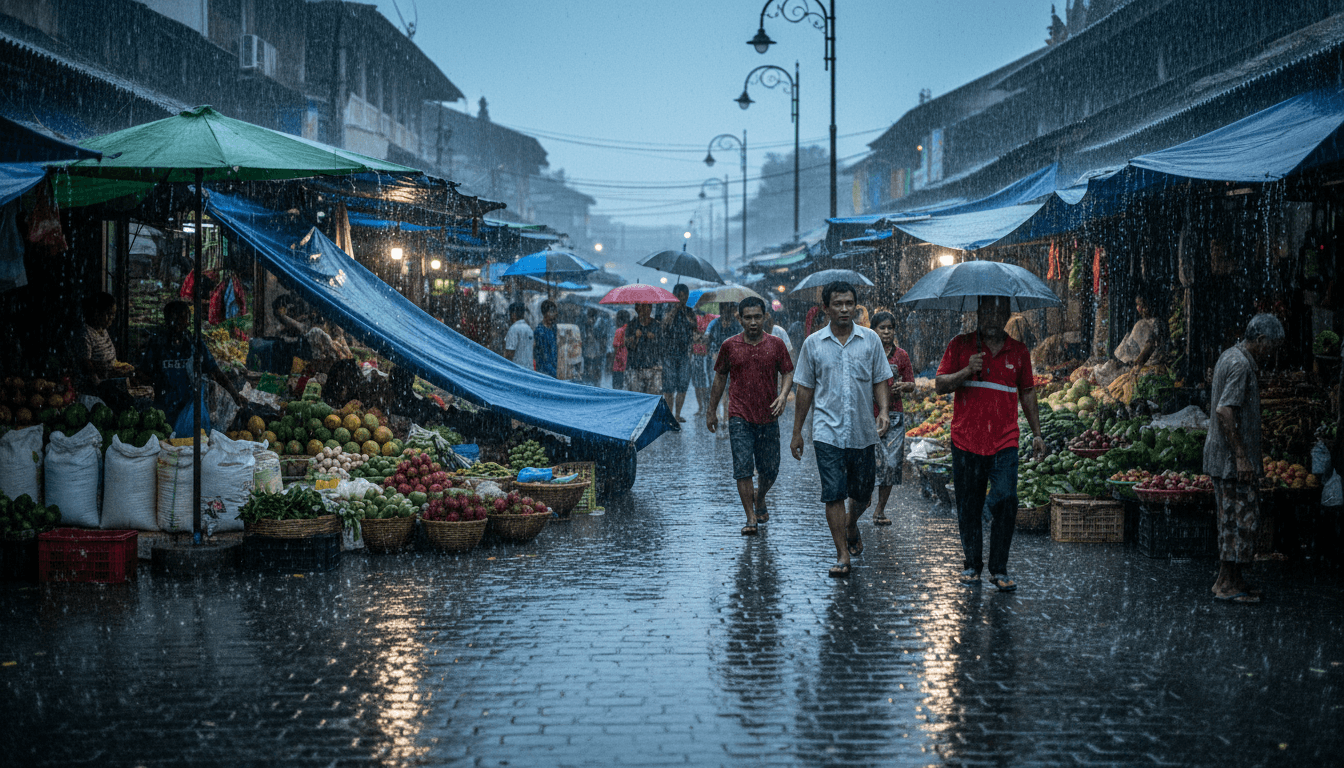
A potentially historically strong El Niño resurgence is developing, with significant implications for global weather patterns, agriculture, and disaster preparedness. Forecasts indicate a likely transition to El Niño conditions between May and July 2026, persisting through at least the end of the year, with some models suggesting a “super El Niño” by November. This event is expected to bring extreme weather, including intense heat, severe droughts, and widespread flooding, impacting regions worldwide, and could make 2027 the hottest year ever observed.
The global climate system is on high alert. While the 2023-2024 El Niño, which peaked between November 2023 and January 2024 as one of the five strongest on record with sea surface temperatures approximately 2.0 °C above average, is now weakening, the impending 2026 event threatens to eclipse it. Some models project Central Pacific temperatures to exceed 3°C above average by autumn 2026, a level not seen since 1877. El Niño typically occurs every two to seven years and lasts around nine to twelve months, but the projected strength and timing of this upcoming event are raising alarm bells among meteorologists and economists alike.
The Looming Global Impact
The ramifications of a strong El Niño are far-reaching, touching everything from commodity prices to humanitarian aid. Historically, El Niño events have a warming effect on the global climate; the 2023-2024 event contributed to 2023 being the warmest year on record. Experts now anticipate that a strong El Niño in 2026 could push global average temperatures beyond the critical 1.5 °C increase since pre-industrial times, potentially making 2027 the hottest year ever observed.
“I think we’re going to see weather events that we’ve never seen in modern history before,” stated Jeff Berardelli, Chief Meteorologist and Climate Specialist at WFLA-TV, underscoring the unprecedented nature of what might unfold. Daniel Swain, a climate scientist at the California Institute for Water Resources, also expects record global warm temperatures.
The amplified impacts are a major concern. Wilfran Moufouma Okia, Chief of Climate Prediction at WMO, noted high confidence in the onset and intensification of El Niño. Experts emphasize that while climate change doesn’t necessarily increase the frequency or intensity of El Niño, it can significantly amplify its associated impacts due to a warmer ocean and atmosphere providing more energy and moisture for extreme weather. Professor Bill McGuire, emeritus professor of geophysical and climate hazards at UCL, highlighted that “the bigger the Niño, the bigger its impacts on global weather,” recalling the “super El Niños” of 1982-83 and 1997-98, which caused trillions of dollars in weather disruption.
El Niño Resurgence and Agricultural Markets
The agricultural sector is particularly vulnerable to this El Niño resurgence. The event poses significant risks to global food security by disrupting rainfall and temperature patterns, leading to volatile agricultural markets.
- Drought and Reduced Yields: Southeast Asia and Australia are likely to experience drought conditions and weaker monsoon seasons, negatively affecting the production of rice, grain, sugar, and palm oil. India, a major rice exporter, has historically seen reduced rice yields during El Niño. Parts of South and Southeast Asia, including India, may face delayed or weaker monsoon rainfall and higher temperatures, increasing drought risk for crops like potatoes. Southern Africa typically experiences reduced rainfall, impacting crop prospects and livestock productivity, as seen in the 2023-2024 El Niño which led to severe drought in Malawi. Central America, particularly the Dry Corridor in Honduras, is prone to drought, undermining food security for subsistence farmers.
- Flooding and Waterlogging: Conversely, certain regions in South America may experience above-average precipitation, increasing the likelihood of waterlogging or flooding, which disrupts root function and tuber bulking for crops like potatoes. The Horn of Africa generally sees above-average rainfall, leading to flooding and landslides that impact agriculture and increase disease risk.
- Mixed Impacts: While many regions face adverse effects, some areas may see improved conditions. For instance, soybean yields tend to improve in the United States and Argentina during El Niño events.
Climate-related production shocks frequently drive price volatility in agricultural markets, contributing to food inflation, especially in countries where staple crops are affected. The 2023-2024 El Niño already led to shortages and rising prices for commodities like rice, palm oil, sugar cane, soybeans, and corn, increasing food insecurity for vulnerable populations. The impending strong El Niño resurgence could exacerbate these trends significantly.
Preparedness and Resilience Amidst Uncertainty
The predictable nature of El Niño, which can often be forecasted months in advance, allows for anticipatory actions and emergency responses. Accurate and timely forecasts are crucial for governments, humanitarian organizations, water managers, and farmers to anticipate and respond to risks. However, some key forecasting tools like FEWS NET have faced cutbacks, limiting early warning capacity. For more trending stories on global climate impacts, visit our news section.
Proactive measures are vital. During the 2023-2024 El Niño, the UN Central Emergency Response Fund (CERF) allocated $72.7 million across 11 countries, supporting 2.5 million people with early interventions like cash transfers and drought-resistant seeds. Investing in resilience across farms, processing, storage, and trade is critical. This includes promoting drought-resistant crops and solar-powered irrigation systems, as seen in the Philippines. Archaeological evidence from prehispanic farmers in Peru demonstrates successful management of El Niño through resilient hybrid canal systems that utilized both river and floodwater.
The world stands at a critical juncture. The impending strong El Niño resurgence demands immediate and coordinated global action. As the planet braces for potentially unprecedented weather extremes, the focus must be on enhancing early warning systems, bolstering agricultural resilience, and strengthening disaster preparedness to mitigate the inevitable human and economic toll. The coming months will test the world’s capacity to adapt and respond to a climate phenomenon that threatens to redefine our understanding of extreme weather.