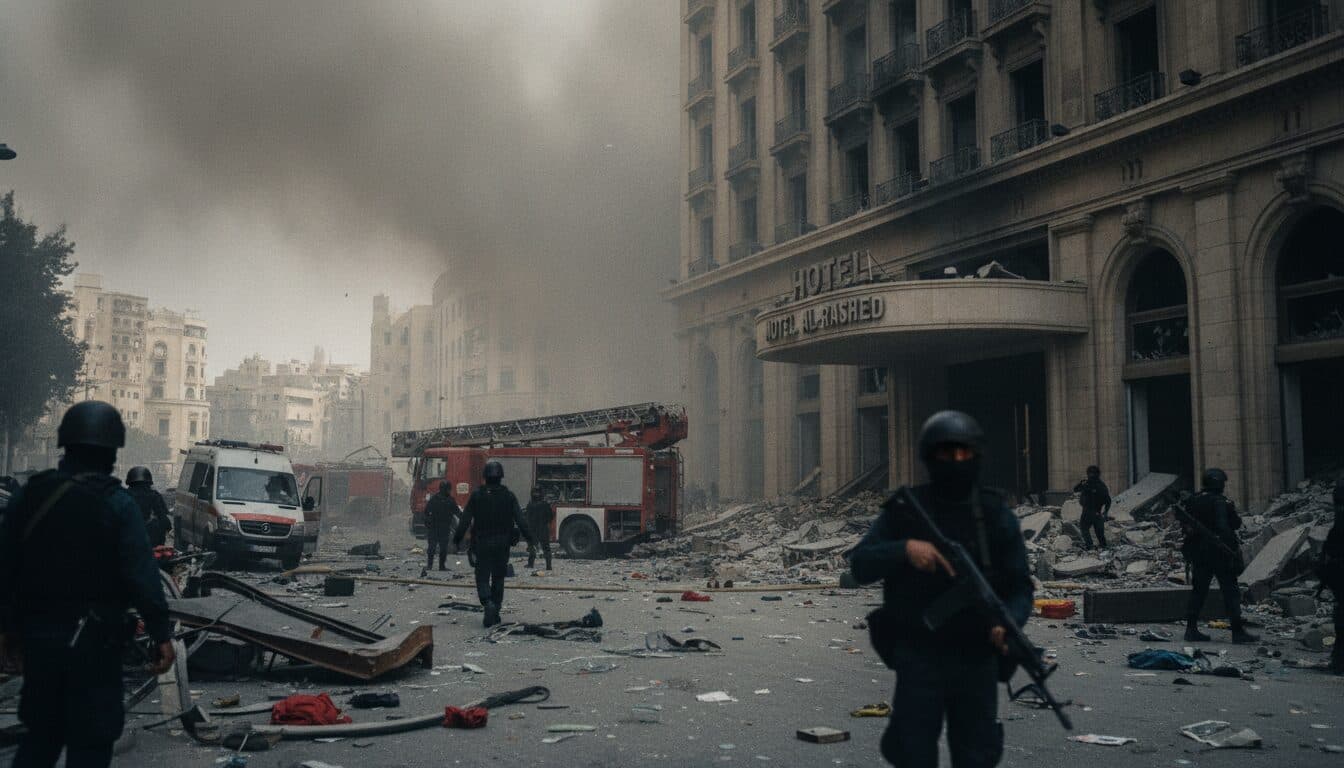
Two explosions rocked Damascus on Tuesday, July 7, 2026, injuring at least 18 people, including four police officers, in an incident that cast a stark shadow over French President Emmanuel Macron’s historic visit to Syria. The blasts, occurring near the Four Seasons Hotel where Macron had been staying, underscore the enduring fragility of security in the Syrian capital despite recent political shifts and the nation’s tentative steps towards re-engagement with the international community.
The explosions, described by Syrian security sources as originating from an explosive device in a dumpster and another in a parked vehicle, detonated around 6:00 PM UTC (9:00 PM local time). While no fatalities were immediately reported, the incident’s proximity to a high-profile diplomatic presence suggests a deliberate act intended to destabilize the nascent post-Assad era or directly target the visiting head of state. Fortunately, President Macron had already departed the hotel for the Syrian presidential palace to meet with President Ahmed al-Sharaa when the blasts occurred, and was confirmed safe.
Macron, undeterred, took to X (formerly Twitter) to affirm, “My visit continues,” and reiterated France’s commitment to the Syrian people, advocating for a “sovereign, safe, pluralistic, and united Syria.” This steadfastness in the face of such a direct security challenge highlights the strategic importance of his visit, the first by a Western European head of state since al-Sharaa assumed the presidency in January 2025.
Damascus Blasts Underscore Volatility
The timing of the Damascus blasts is particularly poignant. Macron’s delegation arrived on Monday, July 6, with a clear agenda: to discuss post-war reconstruction, strategic corridors, and to sign crucial memorandums of understanding. France has been a vocal proponent for lifting most sanctions on Syria, signaling a new chapter in diplomatic relations under President al-Sharaa, formerly Abu Mohammad al-Julani of the Hay’at Tahrir al-Sham (HTS) rebel group. Al-Sharaa, since coming to power, has actively sought to rebuild state institutions, unify armed factions, and restore Syria’s standing on the global stage. His interview with French channel BFMTV on Monday, where he hailed France’s “constructive role” in the post-Assad transition, further emphasized the high stakes of this diplomatic overture.
The incident immediately sent ripples through regional and international markets, particularly those with exposure to Middle Eastern stability. While direct market impacts were not severe in the immediate aftermath, the renewed instability could deter foreign investment crucial for Syria’s reconstruction efforts. Companies eyeing infrastructure projects, energy sector opportunities, or even tourism development in a potentially revitalized Syria will undoubtedly reassess risk profiles. Hamam Hammoud, a 37-year-old employee at a money exchange company, witnessed the immediate aftermath: “I saw three traffic police officers injured on the ground, before the area was evacuated and the roads leading to it were closed.” Such scenes, even without fatalities, reinforce perceptions of ongoing danger.
This is not an isolated incident. The explosions mark the second security breach in Damascus in less than a week, following a cafe bombing on Thursday, July 2, which tragically killed 10 people and wounded 20. This pattern of attacks suggests persistent pockets of resistance or extremist elements determined to undermine the new Syrian government’s authority and its attempts at normalization. The target of Macron’s visit, a symbol of potential Western re-engagement, makes the timing of these Damascus blasts particularly pointed.
The geopolitical ramifications extend beyond Syria’s borders. Macron is scheduled to proceed to Turkey for a NATO summit, where President al-Sharaa is also expected to attend and meet with US President Donald Trump. This sequence of events — a high-profile visit, an attack, and subsequent high-level diplomatic engagements — paints a complex picture of a region in flux. The incident will undoubtedly be a central topic of discussion at the NATO summit, potentially influencing the pace and nature of Syria’s reintegration into the international community and the willingness of other Western nations to follow France’s lead.
“If Syria wasn’t safe and stable, no president or foreign official would take the risk of coming.”
Dressmaker Diala Akkashe, 33, expressed a common sentiment among some Syrians, viewing Macron’s visit as a vote of confidence in the country’s improving security. However, the events of Tuesday evening serve as a stark reminder that the path to true stability in Syria remains fraught with peril. For investors and policymakers alike, the incident underscores the need for cautious optimism, acknowledging the immense potential of a unified Syria under new leadership, but also recognizing the formidable challenges posed by residual extremist threats and the complexities of regional power dynamics. The future of Syria, and its role in the broader Middle East, hinges on its ability to consolidate security and build genuine stability, a task made demonstrably harder by events like the recent Damascus blasts.