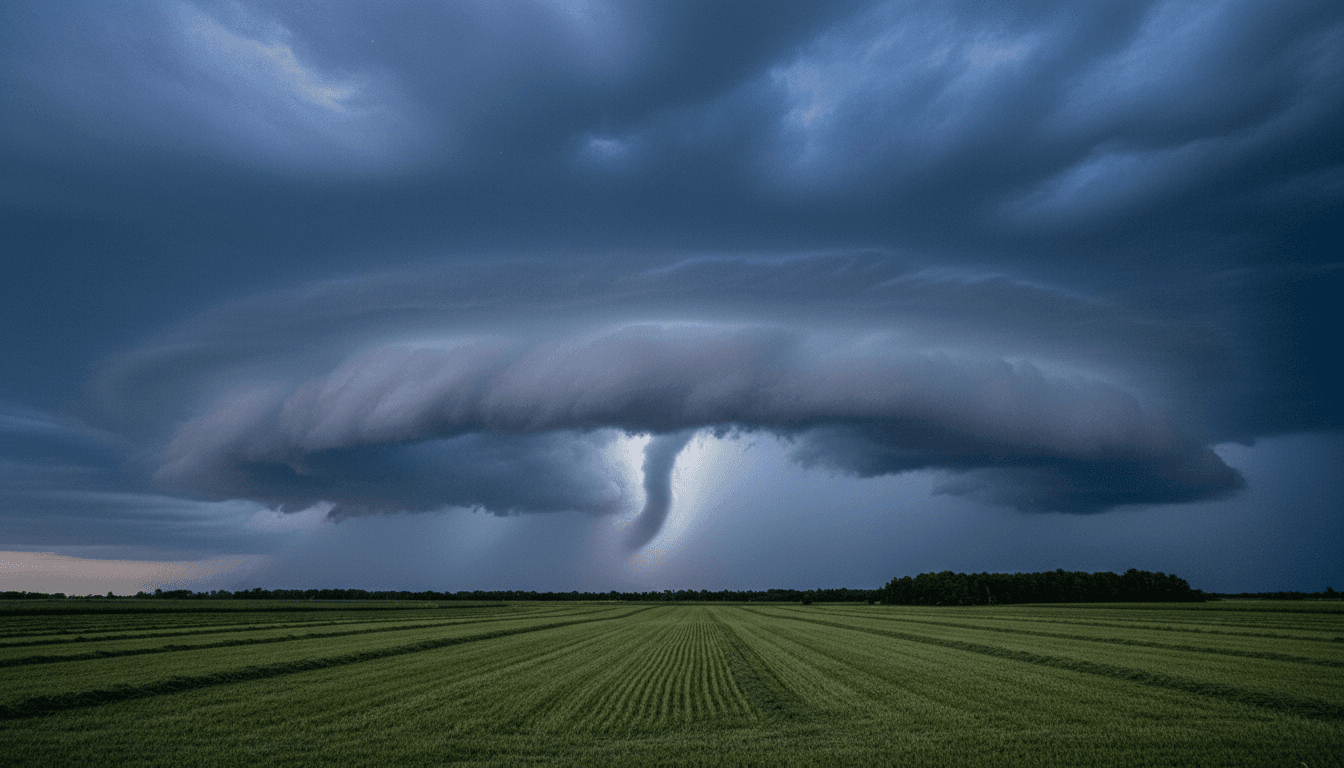
Critical Heartland storms are currently dominating headlines, as a dangerous and life-threatening severe weather outbreak unfolds across the central United States, posing significant threats of intense tornadoes and massive hail across multiple states. As of Saturday, April 18, 2026, the region is grappling with supercells capable of producing long-track tornadoes – some reaching EF-3 strength or stronger – and destructive, softball-sized hail, creating an urgent situation for millions.
The Storm Prediction Center has escalated its warning, issuing a Level 3 out of 5 risk for severe weather that stretches from northern Oklahoma deep into Wisconsin. This expansive zone encompasses major metropolitan hubs including Kansas City, Des Moines, and Chicago, where residents are bracing for the full force of the tempest. Over 100 tornado warnings have been issued as these formidable storms tracked approximately 1,500 miles, from the Plains across the Midwest, leaving a trail of confirmed tornadoes, widespread damage, and crippling power outages impacting millions.
Unfolding Disaster: Damage and Disruption
The immediate impact of these critical Heartland storms is stark. Marathon County, Wisconsin, has reported significant damage, strongly believed to be the result of a direct tornado strike. Kansas City, a major urban center, experienced a brutal combination of flooding, wind gusts up to 70 mph, and a brief, yet impactful, tornado. Further east, St. Louis also reported widespread wind damage and extensive power outages, plunging thousands into darkness. Hail reports have been alarming, with stones larger than 2 inches – ranging from egg to tennis ball size – observed. The primary threat, however, is now shifting towards widespread damaging wind gusts, potentially reaching 75 mph, as the storms coalesce into a solid, destructive line. Compounding the misery, heavy rainfall rates of 1-2 inches per hour are creating localized flash flooding risks, particularly in areas already saturated by recent precipitation.
This week’s severe weather has been relentless. On April 17, more than two dozen tornadoes were reported across the US Heartland since Monday night, including one that ripped through Clinton, Missouri. Just two days prior, on April 15, a hailstorm in Kansas inflicted significant damage to vehicles and homes, underscoring the persistent nature of this severe weather pattern. Earlier in the week, on April 14, widespread severe storms were already impacting a vast area from the Great Lakes to the Southern Plains, with enhanced risks (level 3/5) identified from Iowa to Michigan and western Oklahoma. Baseball-sized hail was reported across parts of Iowa, Minnesota, and Wisconsin, signaling the intensity to come.
Climate’s Hand in Critical Heartland Storms
Experts are increasingly linking the severity and frequency of these events to a warming climate. A key factor is the increase in “convective available potential energy” (CAPE), a critical measure of atmospheric instability that fuels thunderstorms. Warmer air holds more moisture, providing additional fuel for these storms, leading to stronger updrafts, heavier rainfall, and ultimately, more damaging winds. This trend is not new; thunderstorm wind speeds in the central U.S. increased by approximately 7% for every 1 degree Fahrenheit of warming between 1980 and 2020.
“The geography of severe weather risk is gradually shifting eastward, away from the traditional ‘Tornado Alley’ in the Great Plains and towards more densely populated regions of the Midwest and Southeast,” notes one expert, highlighting a concerning demographic shift in vulnerability.
The U.S. experienced 27 weather and climate disasters in 2024 that each exceeded $1 billion in damage, totaling an estimated $182.7 billion and resulting in 568 fatalities. The annual average for the last five years (2020-2024) is 23 such events, a stark increase. Severe storms are consistently the most frequent and expensive natural catastrophes in the U.S., significantly impacting GDP and productivity.
Economic Fallout and Future Implications
Natural disasters, particularly tornadoes and severe storms, place an increasing economic strain on Heartland communities. These events displace households, force businesses to close, and burden public budgets. In 2024 alone, weather and climate disasters in the U.S. inflicted an estimated $368 billion in damages nationwide, with a disproportionate share affecting states in the middle of the country. Missouri, for instance, averaged 8.2 billion-dollar disaster events annually between 2020 and 2024, more than triple its historical rate. The March 13-16, 2025, tornado outbreak, the largest ever recorded in March, caused $6.25 billion in damages across 14 states, including 670,000 power outages.
While immediate economic activity may slow during and after these critical Heartland storms, rebuilding efforts often stimulate economic activity in sectors like construction and retail. However, this often comes at the expense of discretionary spending and can leave long-running scars on local economies, particularly those with existing poverty or poor infrastructure. Longer-term, federal aid-triggering disasters, especially hurricanes and tornadoes, have paradoxically been found to increase personal income per capita, wages, and home prices in affected counties, suggesting potential productivity increases or shifts in housing demand post-reconstruction.
What’s Next: Vigilance and Adaptation
As the immediate threat from these critical Heartland storms begins to subside in some areas, the focus will shift to recovery and resilience. The AccuWeather 2026 U.S. Spring Forecast had predicted a different severe weather profile compared to the destructive spring of 2025, with likely fewer tornadoes and hail reports but a more frequent threat of damaging straight-line winds. However, flooding was identified as the main hazard due to slower-moving storms, a prediction that is certainly holding true with the current heavy rainfall rates.
The increasing frequency and intensity of extreme weather events are now an undeniable reality of a warming world. For businesses, insurers, and policymakers, understanding and adapting to this new climate reality is paramount. Investment in resilient infrastructure, improved early warning systems, and community-level preparedness will be crucial in mitigating the devastating human and economic costs of future severe weather outbreaks. The ongoing events in the Heartland serve as a stark reminder of the urgent need for comprehensive strategies to confront the escalating challenges posed by a changing climate.