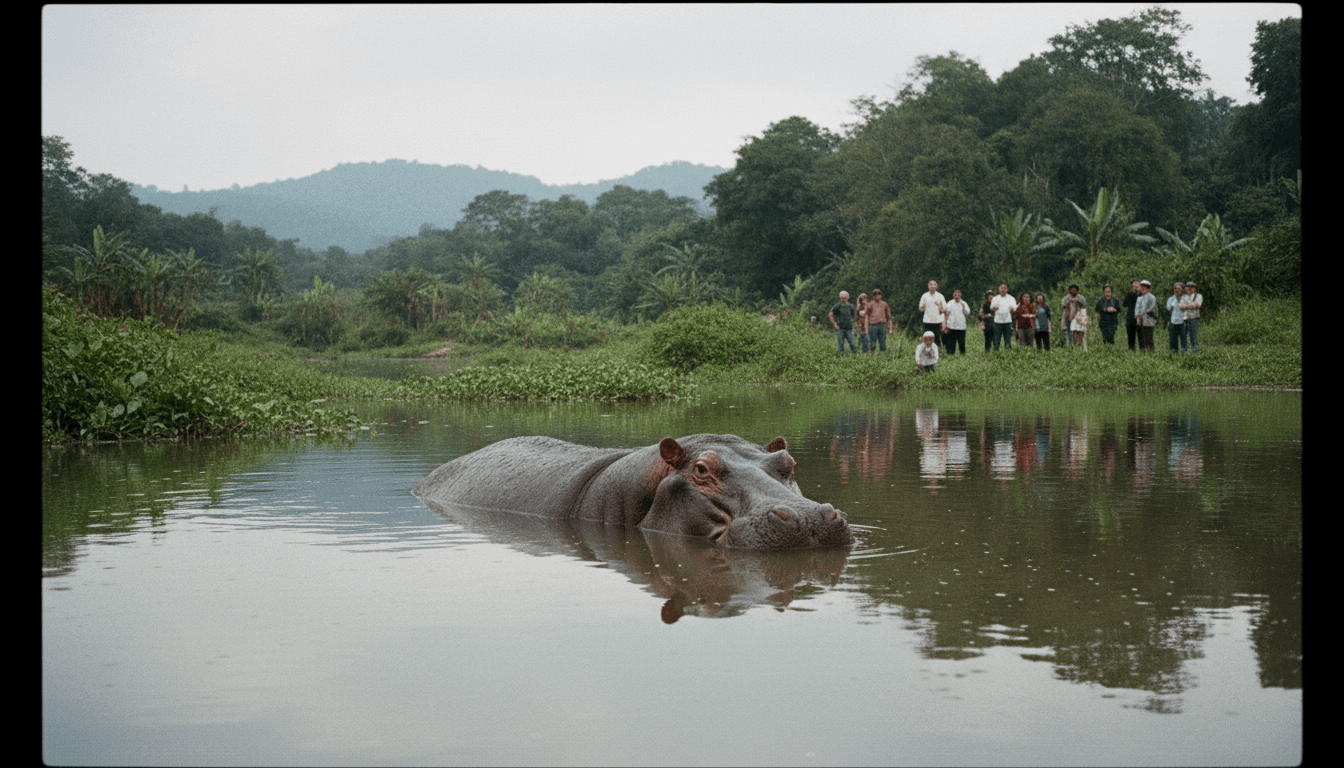
Colombia culls hippo population, initiating a controversial and drastic measure to control the descendants of drug lord Pablo Escobar’s private zoo that have become an ecological crisis. This pivotal decision, announced by Environment Minister Irene Vélez on Tuesday, April 14, 2026, marks a significant escalation in the nation’s battle against the invasive species, raising both environmental hopes and ethical outcries on a global stage.
The story of Colombia’s ‘cocaine hippos’ began in the 1980s when Escobar illegally imported four hippos – three females and one male – for his extravagant Hacienda Nápoles estate. Following his death in 1993, these animals escaped into the Magdalena River basin, an environment devoid of natural predators and rich in water, allowing them to thrive unchecked. From a mere 16 individuals in 2007, their numbers surged to an estimated 170 by 2022. Experts project that without intervention, the population could balloon to 1,000 by 2035 and potentially 1,300 by 2060, with some studies even suggesting 1,500 by 2035.
The Spreading Ecological Menace
These hippos, now considered the largest invasive animal in the world, have spread far beyond Hacienda Nápoles, with sightings over 60 miles from the original estate. Their range, which covered approximately 2,250 km² by 2019, is expected to expand to over 13,500 km² within a decade, encompassing Colombia’s largest and most vital river system, the Magdalena River. The hippos’ rapid reproduction rate, with Colombian hippos reaching sexual maturity earlier than their African counterparts and exhibiting a 7-11% population growth rate, fuels this alarming expansion.
The environmental impact is profound. As ‘ecosystem engineers,’ hippos drastically alter both terrestrial and aquatic environments. Each hippo produces 13-20 pounds of feces daily, enriching waterways with nutrients that trigger toxic cyanobacteria blooms, leading to devastating fish kills and disrupting aquatic ecosystems. They also compete directly with native species such as the West Indian manatee, neotropical otter, spectacled caiman, and various turtles, including the critically endangered Dahl’s toad-headed turtle and Magdalena River turtle. The ecological balance of a critical biodiversity hotspot hangs in the balance.
Colombia Culls Hippo Population: A Controversial Strategy
The government’s decision to cull up to 80 hippos comes after years of struggling with less lethal, yet expensive and largely unsuccessful, management methods. Environment Minister Susana Muhamad outlined a three-pronged strategy in November 2023: sterilization, translocation, and culling. However, the scale of the problem has pushed the government towards the most contentious option.
Sterilization, using the GonaCon vaccine and surgical procedures, began in October 2021. While ecologists like Nataly Castelblanco-Martínez suggest sterilizing around 30 hippos annually could offer a sustainable solution, the high cost (approximately $9,800 to $10,000 per procedure) and logistical challenges mean it alone cannot stem the tide. Similarly, translocation efforts, aiming to move at least 70 hippos to sanctuaries in India and Mexico, face a $3.5 million price tag and significant logistical hurdles, including the animals’ size, aggressive nature, and potential to carry South American pathogens.
“The cost of inaction is extremely high and will continue to increase if substantial actions are delayed. A 10-year delay could result in a 2.5 times increase in minimum costs for each management approach.”
The ethical dimensions of culling are fiercely debated. A previous attempt in 2009 to cull a hippo named ‘Pepe’ sparked widespread outrage, halting further plans. Animal rights activists, including Senator Andrea Padilla, decry culling as “cruel” and a poor precedent for a nation striving to overcome a history of conflict. Yet, ecologists argue that lethal measures are essential to protect native ecosystems and prevent irreversible damage.
Economic and Human Impact
Beyond the environmental devastation, the growing hippo population poses an increasing threat to human safety. Reports include hippos trampling farmland, attacking cattle, menacing fishing boats, and a severe injury to a farmer in May 2020. These dangerous encounters highlight the escalating human-wildlife conflict.
Paradoxically, the ‘cocaine hippos’ have also become a tourist attraction. Hacienda Nápoles, now a theme park, capitalizes on their presence, with local vendors offering hippo-themed souvenirs and guided tours. This localized economic benefit creates a complex dilemma, as some residents, who have grown accustomed to their unusual neighbors, are hesitant to support eradication efforts. The cost of intervention, regardless of the method, is substantial, and the longer action is delayed, the more expensive and challenging a solution becomes.
What’s Next for Colombia’s Hippos
The authorization to cull 80 hippos marks a critical turning point. The immediate future will see the implementation of this controversial plan, likely amidst continued protests from animal welfare groups. The success or failure of this strategy will be closely watched, not only by environmentalists and ethicists but also by other nations grappling with invasive species. The logistical challenges of culling such large, aggressive animals in a complex river system are immense. Furthermore, the government will need to balance the urgent need for ecological restoration with the ethical sensibilities of its citizens and the international community. The long-term implications for Colombia’s biodiversity and its relationship with its unique, albeit problematic, naturalized wildlife population remain uncertain. For more trending stories, visit our news section.