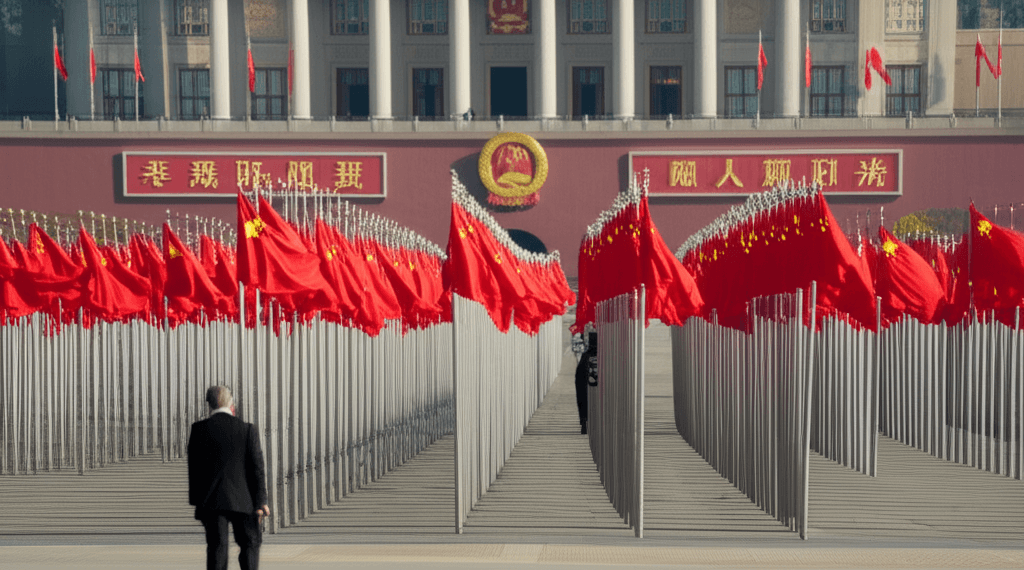
China policy decisions are under intense global scrutiny this week as Beijing convenes its annual Two Sessions meeting, setting the stage for the nation’s economic and political agenda. This year’s gathering is particularly significant as it marks the commencement of the 15th Five-Year Plan (2026-2030), a pivotal blueprint guiding China’s development across various sectors for the next half-decade. The meetings of the National People’s Congress (NPC) and the Chinese People’s Political Consultative Conference (CPPCC) will offer crucial insights into the direction the world’s second-largest economy will take, influencing markets and geopolitical strategies worldwide.
The Two Sessions: A Deep Dive
The Two Sessions, lasting one to two weeks, serve as a platform for unveiling key economic targets and policy priorities. A central focus will be the announcement of the GDP growth target for 2026. While China achieved its “around 5%” target in 2025, many economists anticipate a more moderate objective for 2026, potentially ranging from 4.5% to 5%. Some analysts even predict a target closer to 4.5%, reflecting a strategic shift towards slower, more sustainable growth. International financial institutions like the World Bank and the IMF have projected growth rates of 4.4% and 4.5% respectively, adding weight to expectations of a tempered target.
Key Areas of Focus: The 15th Five-Year Plan
The cornerstone of this year’s Two Sessions is the unveiling of the 15th Five-Year Plan (2026-2030). This plan is expected to prioritize several key areas: industrial upgrading, technological self-reliance, and the cultivation of a robust domestic market. The focus is shifting towards a more consumption-driven economy. Specific measures are anticipated to boost domestic demand by raising urban and rural incomes, unlocking the potential of services consumption. China aims to achieve breakthroughs in core technologies and promote a more strategic approach to basic research. Key technologies include AI, robotics, quantum technology, aerospace, and 6G mobile communications. Investors will be watching to see if Beijing maintains its inflation target at around 2%, keeps the fiscal deficit target at around 4% of GDP, and reiterates employment goals, such as creating more than 12 million new urban jobs. more trending stories
Global Implications of China Policy Decisions
The ramifications of China policy decisions extend far beyond its borders. The Two Sessions provide a critical opportunity for the rest of the world to assess the trajectory and policies of the world’s second-largest economy. The meetings will address how China will respond to global challenges, including geopolitical tensions and climate change. China aims to promote openness and cooperation, providing opportunities for the Global South to benefit from its economic growth. Strengthening trade relations with the Global South, supporting infrastructure development, and fostering economic growth in these regions are expected to be key themes.
Context and Analysis: A Shift in Strategy
Several factors contribute to the evolving landscape. China faces challenges including a slowing economy, a property market slump, and weakened consumer confidence. Geopolitical pressures and ongoing trade frictions also present significant hurdles. Furthermore, demographic pressures, such as a declining population and low birth rates, compound these challenges. Neil Thomas from the Asia Society Policy Institute observes that the defining shift of the 15th Five-Year Plan is the further institutionalization of a state-guided growth model that prioritizes technological leadership and industrial self-reliance. UBS Securities’ chief China economist Yu Song suggests that an “around 5 per cent” target should be treated as a floor rather than a ceiling.
“The defining shift of the 15th Five-Year Plan is the further institutionalization of a state-guided growth model that prioritizes technological leadership and industrial self-reliance.”
Looking Ahead: What’s Next
The coming months will be crucial in observing the implementation of the policies announced during the Two Sessions. The success of the 15th Five-Year Plan will depend on China’s ability to navigate these challenges and effectively execute its strategic priorities. Specifically, monitoring progress in technological self-reliance, the expansion of domestic demand, and the advancement of the green transition will be essential. The implementation of the “ethnic unity” law will also be closely watched, given its potential social and political implications.
Key Takeaways: Navigating a New Era
The China policy decisions emanating from the Two Sessions will shape the global economic and political landscape for years to come. The shift towards a more moderate growth target, the focus on technological self-reliance, and the emphasis on domestic consumption signal a strategic recalibration. While challenges remain, China’s commitment to openness and cooperation offers opportunities for global partnerships. The world will be watching closely to see how China navigates this new era and what impact its policies will have on the global stage.