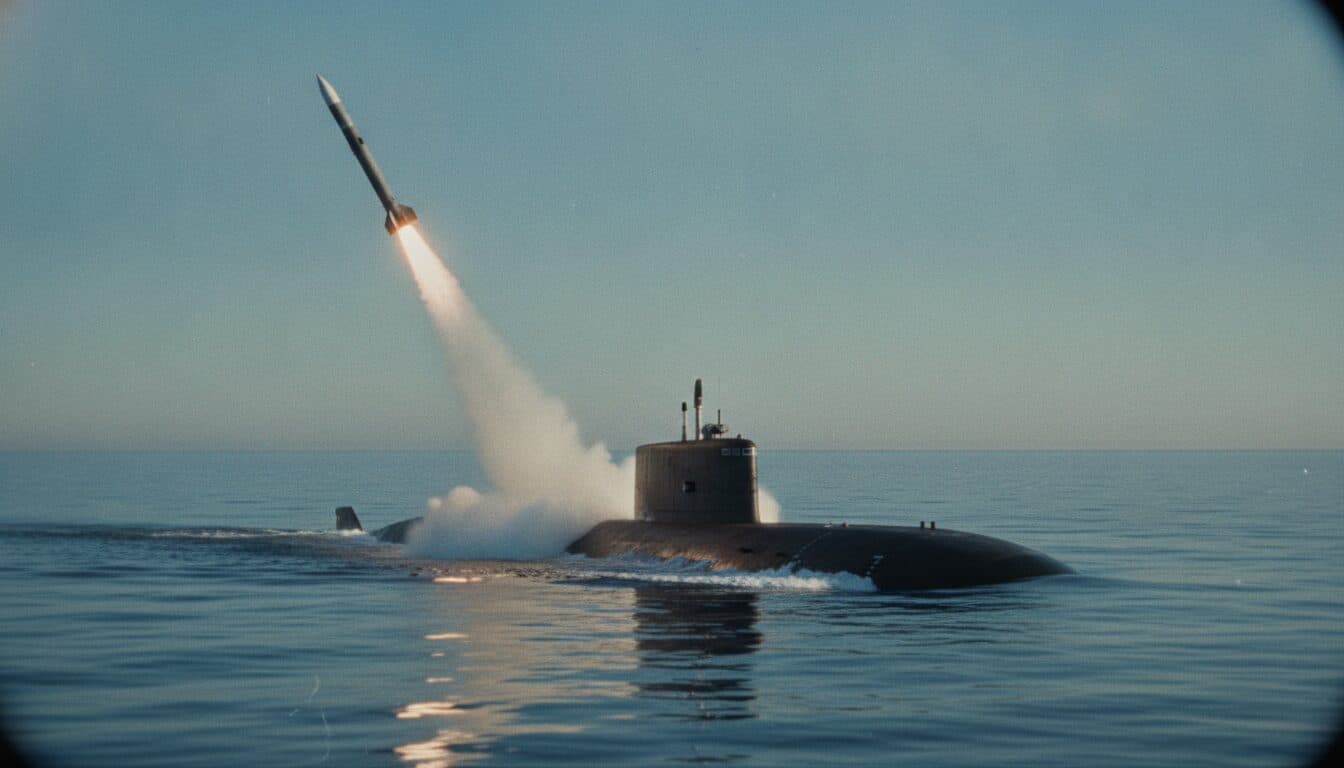
A ballistic missile test conducted by China in the South Pacific on Monday, July 6, 2026, has ignited a fresh wave of regional condemnation and heightened anxieties over geopolitical stability. Launched from a nuclear-powered submarine, the strategic missile test occurred mere hours after Australia and Fiji formalized a new defense pact, prompting widespread speculation that Beijing’s timing was a deliberate signal against strengthening alliances in its strategic backyard. This development carries significant implications for trade routes, regional investment, and the broader security architecture of the Indo-Pacific.
The test, executed at 12:01 PM US time (4:01 AM GMT), involved a long-range ballistic missile, described by China’s defense ministry as carrying a ‘training simulation warhead.’ While Beijing has not explicitly confirmed the missile type, experts widely believe it to be either a JL-2 or the newer JL-3 submarine-launched ballistic missile, with the latter boasting a formidable range exceeding 10,000 kilometers. The launch vehicle was a nuclear-powered submarine of the Chinese People’s Liberation Army Navy, though its precise launch location remains undisclosed, with some reports pointing to the Bohai Sea. Crucially, the missile ‘accurately landed in the designated sea area’ within the high seas of the Pacific Ocean, specifically within the South Pacific Nuclear Free Zone established by the 1986 Treaty of Rarotonga. China, a signatory to the protocols of this treaty since 1987, has pledged not to conduct nuclear weapons tests within this zone. This marks China’s second strategic missile test in the Pacific since September 2024, following an intercontinental ballistic missile (DF-31 type) firing from Hainan to seas near French Polynesia, and only the third such test since 1980.
The immediate fallout has been a chorus of strong regional condemnation. Australian Foreign Minister Penny Wong denounced the missile test as ‘destabilizing’ for the region, directly linking it to China’s rapid military expansion and persistent lack of transparency. New Zealand’s Foreign Affairs Minister Winston Peters articulated ‘deep concern,’ emphasizing that the Pacific is an ‘Ocean of Peace’ and that its nations have no desire for China to use their waters as a missile testing ground. Peters also highlighted that China conducted the test within hours of informing New Zealand, despite long-standing concerns. Japan’s Chief Cabinet Secretary Minoru Kihara expressed ‘grave concerns’ regarding the ‘intensification of China’s military activities’ and urged Beijing to ‘rethink’ the test. Japan received a 90-minute advance notification, and while the missile passed over Japanese airspace, its altitude above 100 kilometers classified it as outer space under international convention. Taiwan also joined the condemnation, adding to the regional chorus.
The timing of the missile test is undeniably central to its geopolitical significance. It occurred just hours after Australia and Fiji signed the ‘Ocean of Peace Alliance,’ also known as the Veitacini Treaty, in Suva, Fiji. This landmark agreement commits both nations to mutual defense in the event of an attack, marking Fiji’s inaugural mutual defense treaty and elevating it to Australia’s fourth full ally. Australian Prime Minister Anthony Albanese and Fijian Prime Minister Sitiveni Rabuka also sealed an economic treaty, the Vuvale Union, which includes over A$1 billion ($693 million) in Australian investment in Fiji over the next decade. Many experts and government sources interpret China’s missile test as a deliberate and pointed warning against Australia’s proactive efforts to forge stronger regional alliances and counter growing Chinese influence. As Foreign Minister Wong articulated, the test reinforces concerns that the Chinese Communist Party is attempting to reshape the regional order through intimidation rather than genuine partnership.
“The deliberate timing of this missile test underscores Beijing’s willingness to project power and send a clear message to nations perceived as challenging its regional ambitions. It’s a calculated move designed to test resolve and influence diplomatic alignments.”
Beijing, however, has maintained that the missile test was a ‘routine arrangement of China’s annual military training’ and was ‘not directed at any specific country or target.’ Chinese foreign ministry spokesperson Mao Ning further asserted that China’s cooperation with Pacific island nations adheres to principles of mutual respect and equality, devoid of political self-interest. This narrative, however, clashes with the prevailing sentiment across the region, especially given the immediate context. The event also coincided with the commencement of annual joint naval exercises between China and Russia, ‘Joint Sea-2026,’ off the Chinese coast in Qingdao, further complicating the geopolitical tableau.
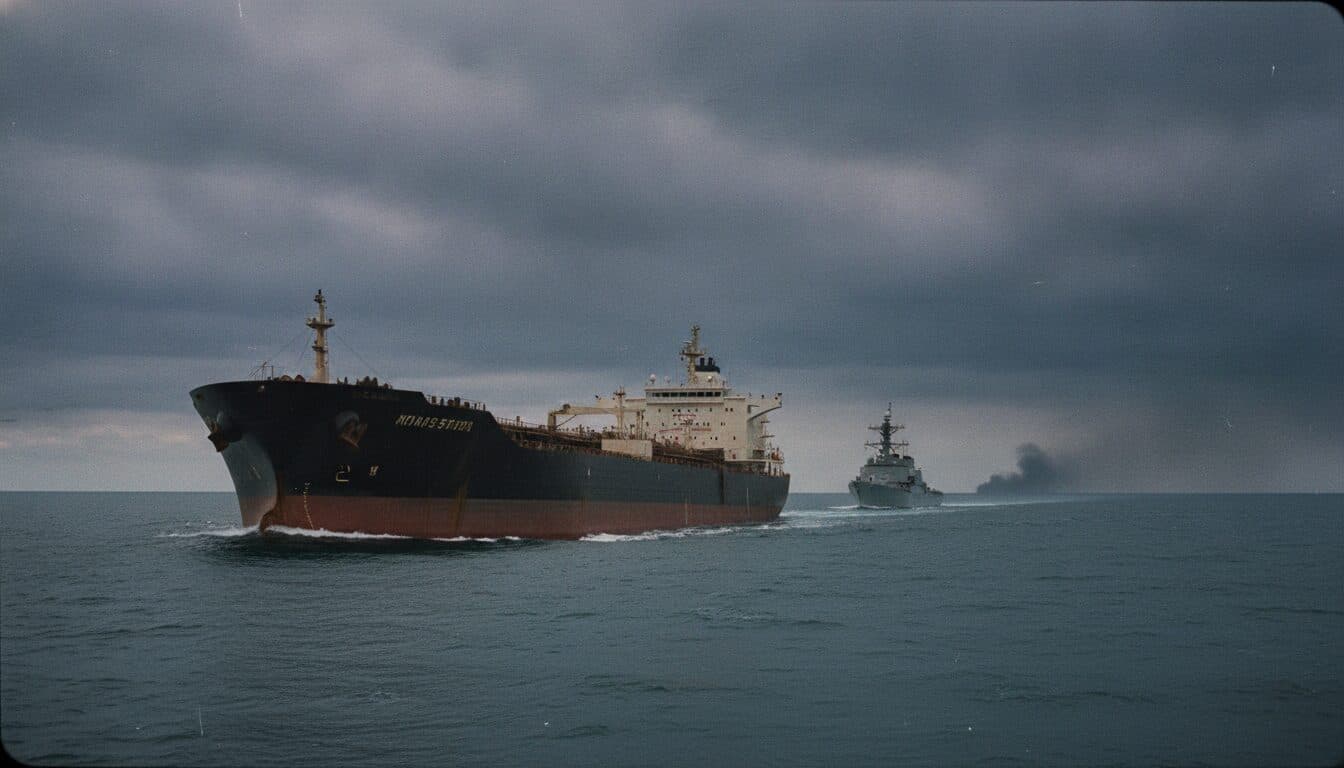
For investors and businesses operating in the Indo-Pacific, the heightened tensions carry tangible risks. Increased military posturing can disrupt established trade routes, particularly those reliant on the South China Sea and wider Pacific. Uncertainty could deter foreign direct investment in vulnerable island nations and impact supply chains. Companies with significant regional presence, especially in sectors like shipping, logistics, and resource extraction, will need to closely monitor developments. The possibility of further military drills, counter-demonstrations, and a hardening of diplomatic stances could lead to prolonged instability, affecting market sentiment and potentially triggering capital flight. The ongoing competition for influence in the Pacific, underscored by this missile test, will likely intensify, demanding careful navigation from all stakeholders.
The key takeaway for readers and investors is that China’s ballistic missile test is more than a mere military exercise; it is a potent geopolitical statement. It signals China’s growing military capabilities and its readiness to use them to assert its interests in the Pacific. The deliberate timing, immediately following a critical defense pact, highlights the escalating strategic competition in the region. This event will undoubtedly prompt further re-evaluation of defense strategies, deepen existing alliances, and shape future investment flows. The ‘Ocean of Peace’ is increasingly becoming a theatre of strategic contention, demanding vigilance and adaptability from all who operate within its vast expanse.