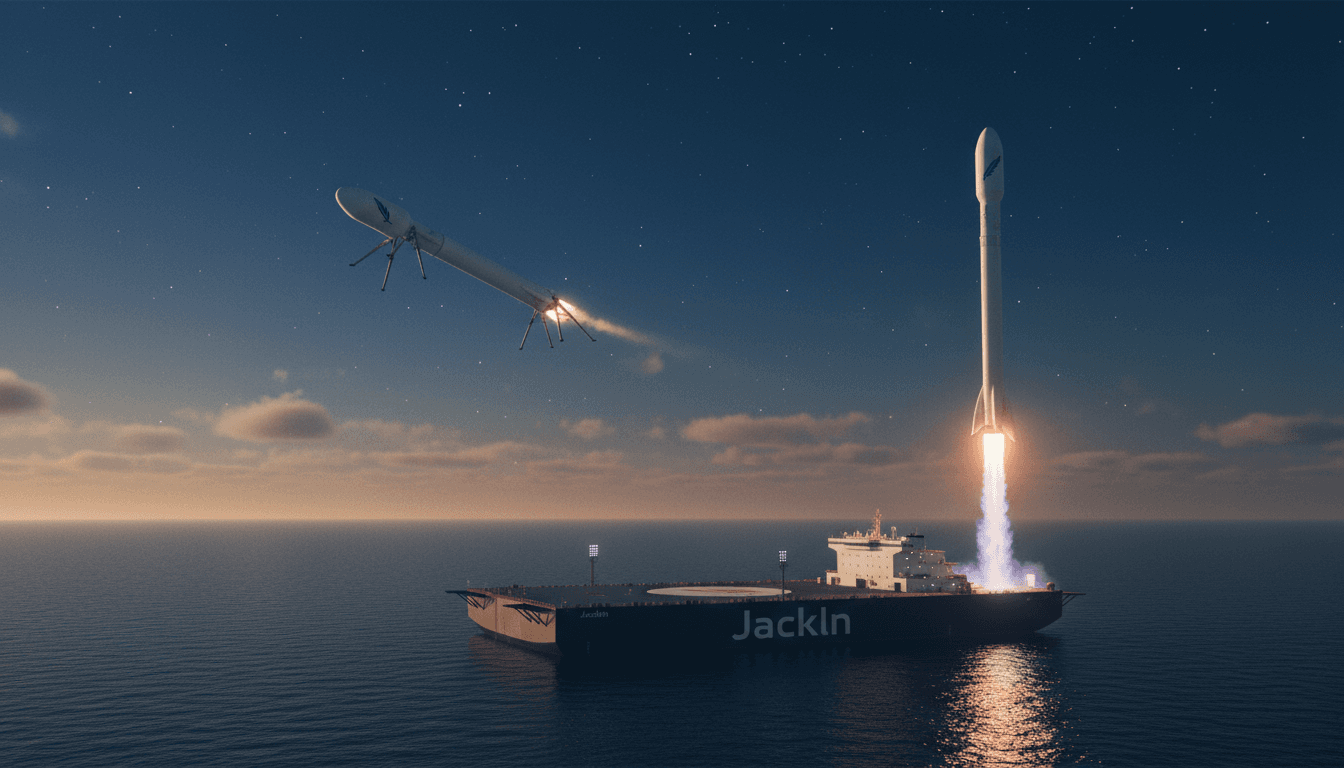
A major Blue Origin New Glenn rocket launch on Sunday, April 19, 2026, has dramatically intensified the commercial space race, with the company successfully landing a reused booster for the first time. This landmark achievement by Jeff Bezos’s aerospace venture marks a pivotal moment, signaling Blue Origin’s readiness to challenge SpaceX’s long-held dominance in the reusable orbital rocket market. The NG-3 mission, which lifted off from Launch Complex 36 at Cape Canaveral Space Force Station in Florida at 7:25 a.m. EDT (1125 GMT), saw the 322-foot-tall (98-meter) New Glenn rocket deliver AST SpaceMobile’s BlueBird 7 satellite to low Earth orbit (LEO).
The successful recovery of the ‘Never Tell Me the Odds’ booster, previously flown on the NG-2 mission in November 2025, is a profound validation of Blue Origin’s engineering prowess and its commitment to reusability. This capability is not merely an engineering feat; it’s a critical economic driver for making spaceflight more affordable and frequent, a fundamental tenet of the rapidly expanding commercial space industry. While the booster reuse was a resounding success, the mission experienced an ‘off-nominal orbit’ for its BlueBird 7 payload, though Blue Origin confirmed satellite separation and power-on, and is currently assessing the situation.
The Ascent of New Glenn: A Reusability Breakthrough
The NG-3 mission’s primary triumph was undoubtedly the flawless landing of its first-stage booster on Blue Origin’s Landing Platform Vessel 1, aptly named ‘Jacklyn.’ This marks the first instance of a previously flown New Glenn booster being successfully recovered, building on the success of the NG-2 mission which also landed its first stage. The booster, powered by seven BE-4 engines using liquid oxygen and liquid methane (methalox), is engineered for an impressive minimum of 25 flights, underscoring Blue Origin’s long-term vision for sustainable space operations.
The payload, AST SpaceMobile’s BlueBird 7, is the second ‘Block 2’ satellite designed to expand a direct-to-smartphone broadband network. Despite the orbital anomaly, the successful launch and booster recovery demonstrate New Glenn’s robust capabilities for high-volume and high-mass payloads, a crucial aspect of Blue Origin’s ambition to facilitate moving people and heavy industries into space. This successful Blue Origin New Glenn rocket launch is a testament to years of development and significant investment, including over $1 billion to redevelop Launch Complex 36.
“This successful reuse of a New Glenn booster is a significant step for Blue Origin, demonstrating its capability to compete with SpaceX in the reusable orbital rocket market. While SpaceX still leads in launch cadence, Blue Origin’s achievement signals that the competition in commercial space is becoming more intense.”
Intensifying the Commercial Space Race
The implications of this successful Blue Origin New Glenn rocket launch extend far beyond the launch pad. For years, SpaceX’s Falcon 9 has been the undisputed standard-bearer for reusable orbital rockets, enjoying a substantial lead in launch cadence, satellite infrastructure, and deep-space systems. Blue Origin’s latest achievement, however, makes the rivalry between the two space giants feel “real” for the first time, as experts observe. The ability to reliably reuse rocket boosters is the cornerstone of reducing launch costs and increasing accessibility to space, areas where SpaceX has excelled.
This heightened competition is beneficial for the entire space industry, driving innovation, efficiency, and potentially lower prices for satellite operators and government agencies. New Glenn is also central to Blue Origin’s involvement in NASA’s Artemis program, where the company is developing lunar landers aimed at returning astronauts to the Moon. This directly pits Blue Origin against SpaceX for critical NASA contracts, adding another layer of intensity to their burgeoning rivalry. The estimated cost per launch for New Glenn is higher than Falcon 9, making reusability not just an advantage, but a necessity for its long-term competitiveness in the market.
What Lies Ahead: A Future Defined by Reusability
Looking forward, the successful reuse of the New Glenn booster sets the stage for a more dynamic and competitive commercial space landscape. Blue Origin aims for rapid turnaround times, with AST SpaceMobile anticipating the New Glenn booster to be reused every 30 days or less to support its ambitious launch cadence in 2026. This aggressive schedule underscores the economic imperative behind reusability and Blue Origin’s determination to scale its operations rapidly.
The coming months will be crucial as Blue Origin works to resolve the BlueBird 7 orbital anomaly and continues to demonstrate the reliability and reusability of its New Glenn system. The industry will be closely watching how quickly Blue Origin can increase its launch cadence and how effectively it can leverage its reusable technology to capture a larger share of the commercial launch market. The success of this Blue Origin New Glenn rocket launch marks a new chapter in the space race, one where the competition for affordable, frequent access to orbit is more fierce and exciting than ever before.