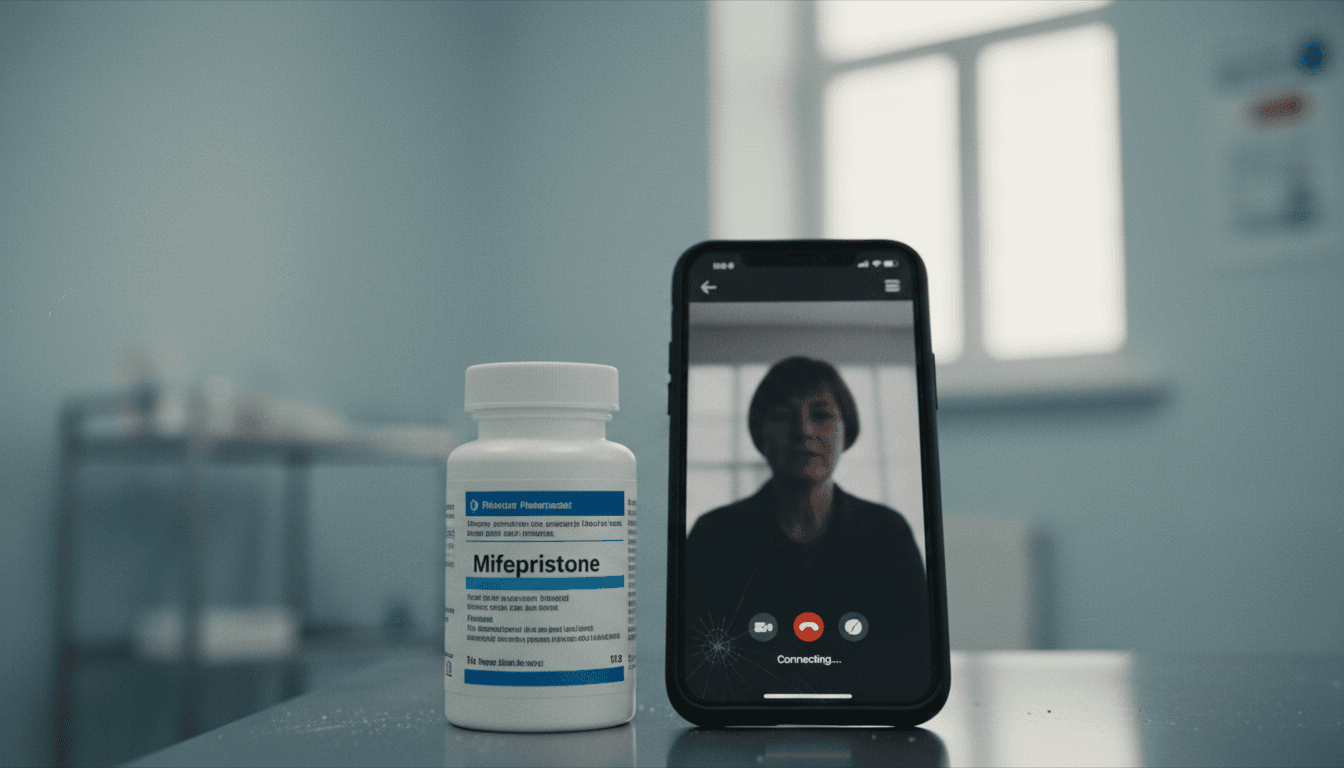
A federal appeals court has issued a nationwide ruling that temporarily blocks access to abortion pills via telehealth providers and mail services, a decision poised to significantly alter reproductive healthcare access across the United States. This move by the U.S. Court of Appeals for the Fifth Circuit, known for its conservative leanings, temporarily halts a 2023 policy by the Food and Drug Administration (FDA) that permitted medical professionals to prescribe mifepristone through telehealth and have it mailed to patients.
The ruling, handed down on Friday, May 1, 2026, means that, for the foreseeable future, mifepristone can only be obtained in person from doctors or pharmacies. This directly impacts the primary method for medication abortions, which constitute the majority of abortions in the United States. Mifepristone, used in conjunction with misoprostol, is also critical for miscarriage care, having received initial FDA approval in 2000. While the FDA has progressively eased restrictions on its dispensing over the years, notably in 2016 and 2021 to allow telehealth prescriptions and mail delivery, this latest court action rolls back those recent flexibilities.
Impact of Telehealth Abortion Pill Block
The immediate repercussions of this decision are expected to be widespread. Telehealth has emerged as a vital lifeline for individuals in states with restrictive abortion bans, with nearly a quarter of all abortions conducted via telehealth, and half of those serving people in states where access is otherwise severely limited. Abortion rights advocates have voiced profound concern that the loss of the telehealth option will create substantial barriers to care, disproportionately affecting those in rural areas, individuals experiencing intimate partner violence, and people living with disabilities.
The current legal challenge stems from a lawsuit initiated in October by Louisiana Attorney General Liz Murrill, a Republican. This suit specifically targets the FDA’s 2023 policy, with anti-abortion opponents arguing that these telehealth provisions undermine state-level abortion bans. Previously, a federal judge in Louisiana paused the case in April, awaiting a federal government review of mifepristone’s approval. Louisiana subsequently appealed this pause to the Fifth Circuit, requesting a temporary block on the telehealth provision of the pills while the case continued, a request the Fifth Circuit granted in an 18-page order.
“Louisiana built this case on debunked, junk science. The safety of mifepristone has never actually been in question,” stated Mini Timmaraju, CEO of abortion advocacy group Reproductive Freedom for All, highlighting the contentious basis of the legal challenge.
It is important to note that this ruling does not affect the mailing or availability of misoprostol, the second medication used in medication abortions, which providers may continue to mail to patients. However, the requirement for in-person pickup of mifepristone complicates the process significantly.
This latest development unfolds against a complex legal backdrop. In June 2024, the U.S. Supreme Court unanimously ruled in FDA v. Alliance for Hippocratic Medicine that anti-abortion plaintiffs lacked the legal standing to challenge the FDA’s actions regarding mifepristone. That decision reversed a Fifth Circuit ruling that had sought to reinstate pre-2016 restrictions on the medication, seemingly affirming broader access. However, the current Fifth Circuit ruling in Louisiana v. FDA, while temporary, reinstates the in-person pickup requirement for mifepristone as Louisiana’s appeal proceeds, creating a nuanced and challenging legal environment where federal and appellate court decisions present conflicting directives on access.
Julia Kaye, senior staff attorney for the Reproductive Freedom Project of the ACLU, underscored the severity of the situation, noting, “Anti-abortion politicians have just made it much harder for people everywhere in the country to get a medication that abortion and miscarriage patients have been safely using for more than 25 years.” This sentiment reflects widespread concern among healthcare providers and advocates about the immediate practical impact on patients seeking care.
The path forward remains uncertain as legal challenges continue to unfold. The temporary nature of this block suggests further appeals and judicial scrutiny are highly likely. This decision by the Fifth Circuit represents a significant escalation in the ongoing national debate over abortion access and medication abortion, with profound implications for reproductive rights and healthcare delivery across the United States. Investors and stakeholders in the healthcare sector, particularly those involved in pharmaceutical distribution and telehealth services, should monitor these developments closely as they could influence operational strategies and market dynamics related to reproductive health products and services. Related trending articles delve into the broader political and social ramifications of these legal battles.