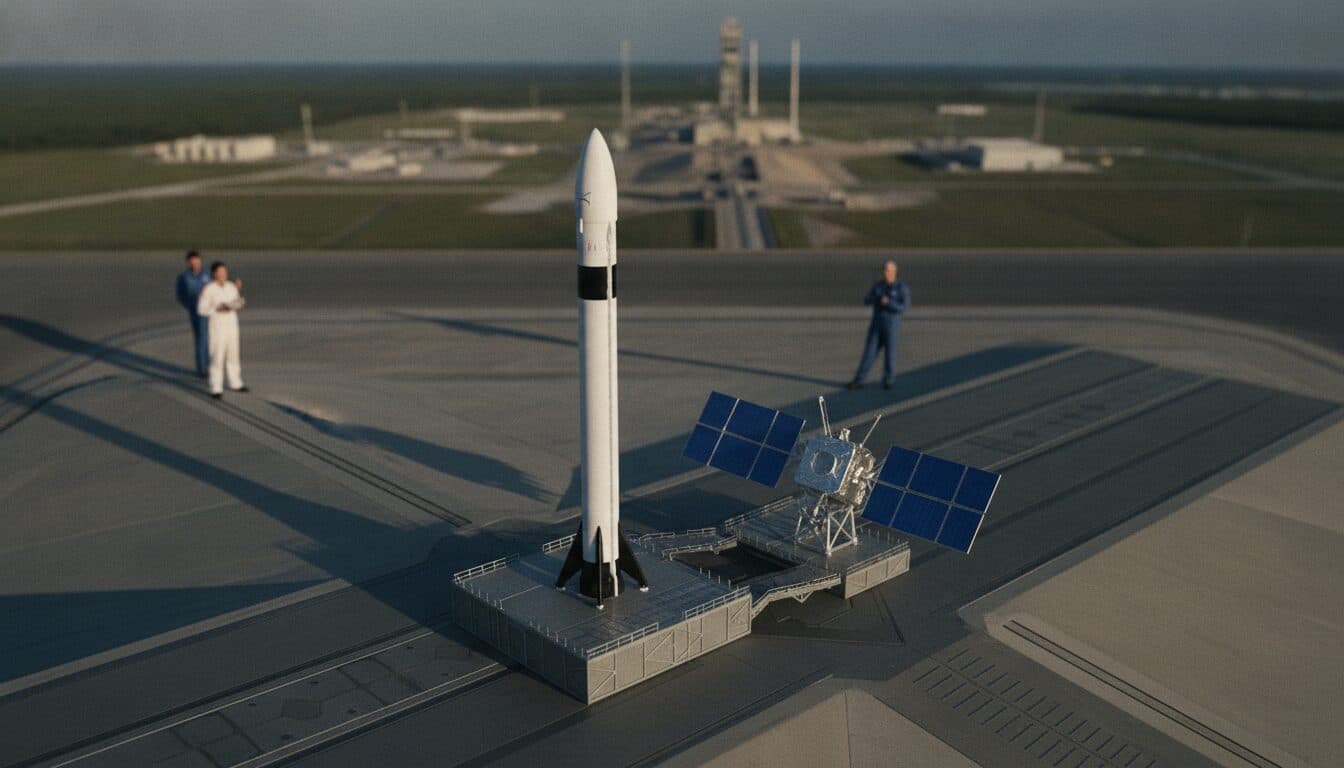
SpaceX launches cargo ship to International Space Station, marking another critical resupply mission to the orbiting laboratory. The successful launch, reported on Friday, June 5, 2026, by MSN, underscores the ongoing reliance on private aerospace companies to maintain the operational integrity and scientific output of the ISS. These missions are vital for delivering essential supplies, scientific experiments, and equipment that enable astronauts to conduct groundbreaking research in microgravity.
The details surrounding this particular mission remain consistent with SpaceX’s established protocols. While specific payload details were not immediately available, such cargo ships typically carry a diverse manifest, including food, water, spare parts, and, crucially, new scientific instruments for ongoing and upcoming experiments. The Dragon spacecraft, known for its ability to return cargo to Earth, is the workhorse for these missions, providing a unique capability for bringing completed research and critical equipment back from orbit.
Impact Analysis
The successful launch of a SpaceX cargo ship to the International Space Station further solidifies the role of commercial spaceflight in supporting human endeavors beyond Earth. This mission is not merely a logistical exercise; it represents the continued expansion of capabilities for space exploration and scientific discovery. By reliably ferrying supplies and experiments, companies like SpaceX free up national space agencies to focus on more ambitious, long-term goals, such as lunar missions and eventual Mars exploration. The consistent cadence of these launches ensures that the ISS remains a vibrant hub for international collaboration and scientific advancement.
Moreover, the efficiency and cost-effectiveness offered by private providers like SpaceX are reshaping the economics of space access. This model has proven beneficial for taxpayers and has spurred innovation within the aerospace sector. The reliability of these missions is paramount, as any failure could have significant repercussions for the astronauts aboard the ISS and the continuity of scientific research. For more insights into the evolving landscape of space logistics, explore our related science & space articles.
“The consistent success of these resupply missions is a testament to the robust partnership between private industry and international space agencies, ensuring the uninterrupted progress of science in orbit.”
The consistent success of SpaceX launches cargo ship missions has also fostered a more competitive environment, driving other companies to develop their own resupply capabilities. This healthy competition ultimately benefits the entire space ecosystem, leading to more resilient and diverse supply chains for future space operations. The data gleaned from each mission also contributes to improving future spacecraft designs and operational procedures, enhancing safety and efficiency.
Context & Background
SpaceX’s involvement in ISS resupply missions dates back to the Commercial Resupply Services (CRS) program initiated by NASA. This program was a strategic shift away from exclusive reliance on government-operated vehicles, aiming to stimulate the commercial space industry and reduce costs. The Dragon spacecraft, first launched in 2010, quickly became a cornerstone of this initiative, demonstrating its capability for both uncrewed cargo delivery and, eventually, crewed transport. Prior to the advent of commercial resupply, the ISS relied on a combination of Space Shuttle missions, Russian Soyuz and Progress spacecraft, and European and Japanese cargo vehicles.
The transition to commercial providers has been a significant trend in the space industry over the past decade. This approach has proven particularly effective for routine operations, allowing agencies like NASA to dedicate resources to more complex and exploratory missions. The ongoing development of Starship, SpaceX’s next-generation fully reusable launch system, hints at even greater efficiencies and capabilities for future cargo and crew transport, potentially revolutionizing deep space missions.
What’s Next
Looking ahead, the cadence of SpaceX launches cargo ship missions to the ISS is expected to continue, supporting the station’s operations until its planned decommissioning, currently anticipated in the early 2030s. Beyond that, the technologies and operational expertise gained from these missions will be critical for future commercial space stations, which are already in various stages of planning and development. These private stations will likely inherit the resupply model pioneered by the ISS and its commercial partners.
Further advancements in spacecraft reusability and autonomous docking systems will continue to refine these missions, making them even more routine and cost-effective. The data and experience from each flight contribute to the broader goal of making space access more sustainable and regular, paving the way for expanded human presence in low Earth orbit and beyond. The future will also likely see an increase in specialized cargo, tailored for specific scientific breakthroughs, requiring even greater precision and flexibility from resupply providers. For deeper analysis on the future of commercial space stations, read our latest articles.
Key Takeaway
The successful SpaceX launches cargo ship mission on June 5, 2026, is more than just another delivery; it is a reaffirmation of the robust and evolving ecosystem supporting humanity’s presence in space. It highlights the critical role of commercial partnerships in enabling scientific discovery and maintaining the vital infrastructure of the International Space Station. This ongoing success is foundational for the next era of space exploration, where private enterprise will play an even more central role in expanding our reach into the cosmos and unlocking new frontiers of knowledge.