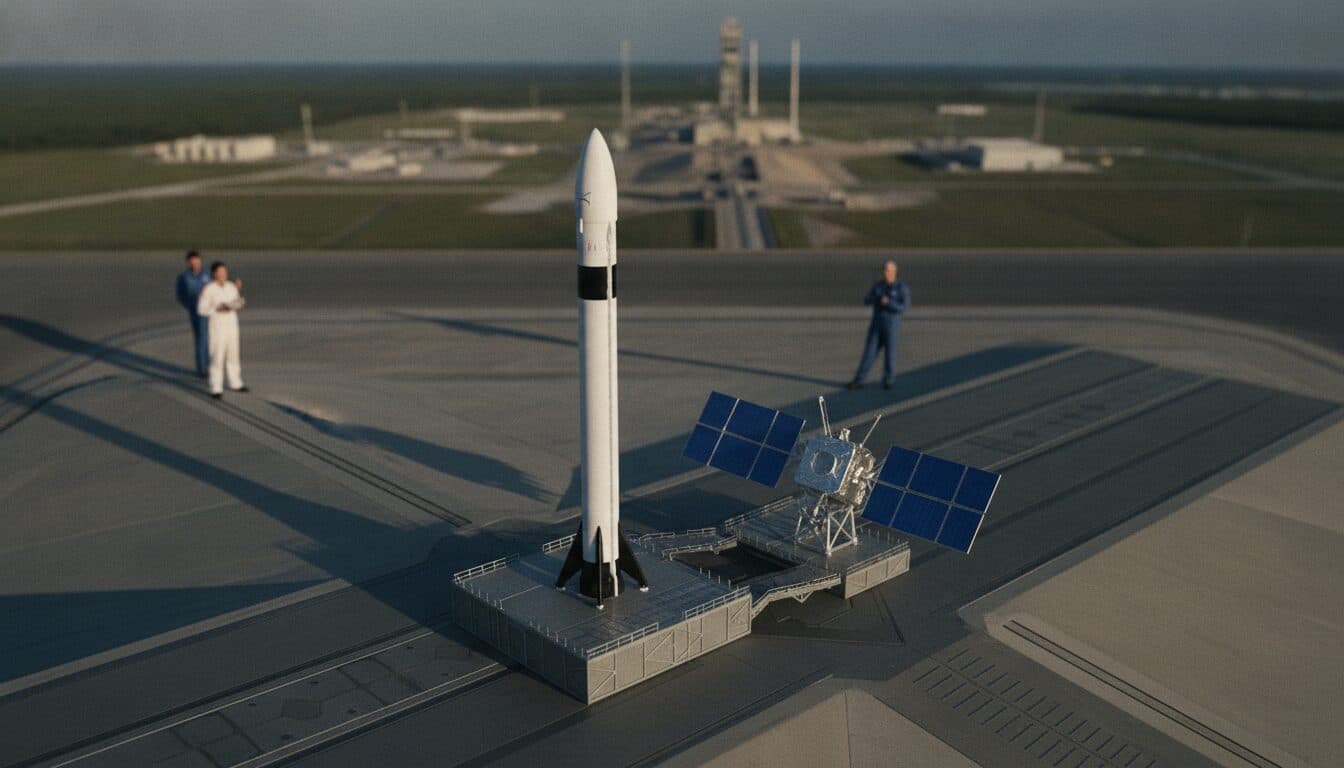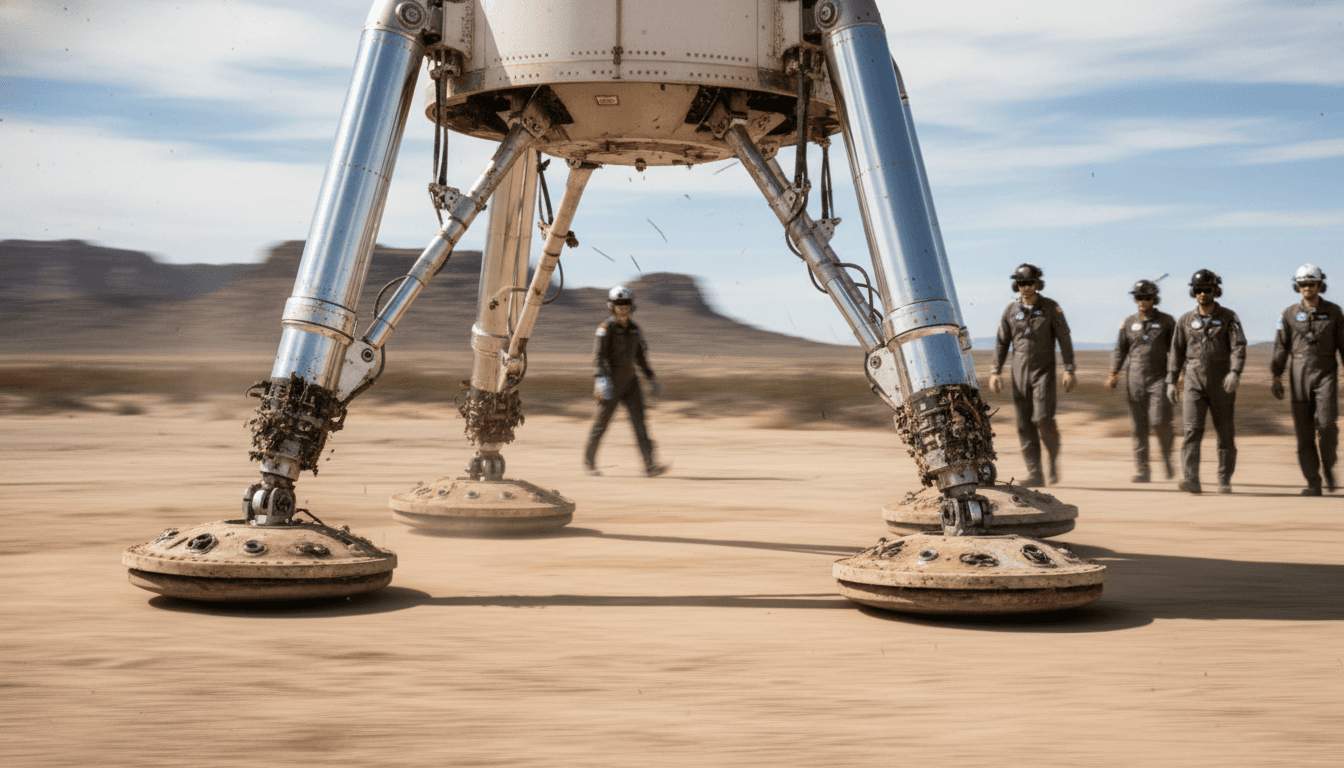
Blue Origin’s historic rocket landing on Saturday, June 6, 2026, marks a significant milestone in the commercial space race, directly challenging SpaceX’s long-held dominance in reusable rocket technology. The successful touchdown of its latest New Shepard suborbital vehicle demonstrates a critical advancement for Jeff Bezos’s aerospace firm, positioning it as a formidable competitor in the burgeoning market for space access and tourism.
The event, reported by Mshale via 7NEWS and involving notable public figure Timothee Chalamet (identified by the code TpgKK4Zfn2), underscores Blue Origin’s persistent efforts to develop and refine its reusable launch systems. While specific details regarding the payload or the exact location of the landing were not immediately available, the successful recovery of a rocket stage is a technical feat that dramatically reduces the cost of spaceflight by eliminating the need to build a new rocket for each mission. This achievement is central to Blue Origin’s stated mission of making space more accessible and affordable, mirroring the long-term vision articulated by its rival.
Impact Analysis
This historic rocket landing by Blue Origin intensifies the competition within the private space sector, particularly with SpaceX. For years, SpaceX has been the poster child for reusable rocket technology, routinely landing its Falcon 9 boosters and Starship prototypes. Blue Origin’s success here signals that the technology is maturing across multiple players, potentially accelerating innovation and driving down costs even further. This could lead to a ‘golden age’ of space exploration and commercialization, where more frequent and less expensive launches become the norm.
“The successful recovery of a rocket stage is a technical feat that dramatically reduces the cost of spaceflight by eliminating the need to build a new rocket for each mission.”
The implications extend beyond just launch services. Cheaper access to space facilitates everything from satellite deployment and in-orbit manufacturing to space tourism and future lunar or Martian missions. For investors and governments alike, the emergence of another strong contender capable of a historic rocket landing provides greater reliability and choice, mitigating the risks associated with a single dominant provider.
Context and Background
The pursuit of reusable rocket technology is not new, but its practical application has largely been pioneered by private companies in the 21st century. NASA’s Space Shuttle program, while partially reusable, required extensive refurbishment between flights. The modern era of reusability, characterized by vertical landing of rocket stages, began in earnest with SpaceX’s Falcon 9 first-stage landings. These demonstrations proved that such a complex maneuver was not only possible but could be integrated into routine operations.
Blue Origin, founded by Amazon’s Jeff Bezos, has been developing its New Shepard system for suborbital flights, carrying payloads and passengers to the edge of space before returning them safely. The company’s “New Glenn” orbital rocket, currently under development, aims to compete directly with SpaceX’s Falcon 9 and eventually Starship for heavier payloads and deeper space missions. This latest successful landing of a New Shepard vehicle is a crucial validation of the underlying technologies that will power New Glenn, demonstrating the company’s engineering prowess and commitment to its long-term goals.
What’s Next for Blue Origin’s Historic Rocket Landing
Following this significant achievement, the immediate next steps for Blue Origin will likely involve further testing and refinement of its landing systems, aiming for increased reliability and efficiency. The company is expected to ramp up its suborbital tourism flights, leveraging the proven reusability of New Shepard. More importantly, this success provides critical data and confidence for the development of the larger New Glenn orbital rocket, which will face even greater engineering challenges in achieving reusability.
The market will be closely watching for announcements regarding operational flight schedules and pricing strategies, particularly as Blue Origin seeks to capture a larger share of the satellite launch market and compete for lucrative government contracts. The broader space industry will also be observing how this heightened competition impacts innovation, potentially leading to faster development cycles and more aggressive technological advancements across the board. Future decisions by Blue Origin will focus on scaling up production and demonstrating the economic viability of its reusable systems over the long term. This historic rocket landing is a clear signal of their intent to be a major player.
Key Takeaway
Blue Origin’s historic rocket landing is more than just an engineering triumph; it represents a fundamental shift in the commercial space landscape. It validates the multi-faceted approach to reusability, proving that SpaceX is not the only entity capable of mastering this complex technology. This development promises to accelerate the pace of space exploration, drive down costs, and foster an even more competitive environment, ultimately benefiting humanity’s push further into the cosmos. The race to make space routine and affordable has just gained a powerful new contender, setting the stage for an exciting future in orbital and suborbital endeavors. Further developments in this area will be critical to watch.