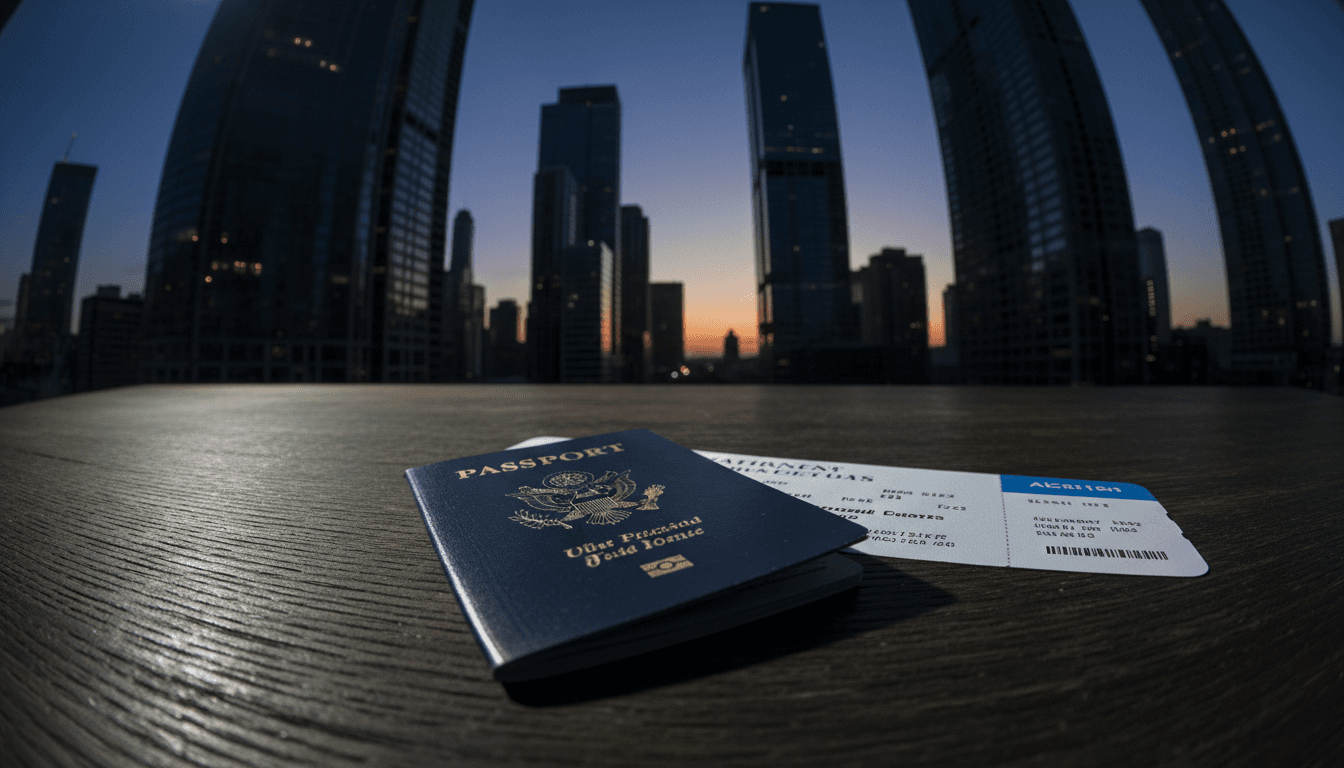
US visa exemption for foreign doctors has been granted, providing a crucial reprieve for medical professionals previously ensnared by broader travel restrictions. This significant development, announced on Monday, May 4, 2026, by Newsweek, signals a targeted adjustment to immigration policy, acknowledging the indispensable role of international medical talent within the United States.
The Story: Who, What, and Key Details
The core of this story revolves around foreign doctors who, until recently, were subject to a travel ban that impeded their entry or re-entry into the United States. The specifics of the initial ban, including its exact scope and the nations affected, are not detailed in the source material, but its impact on the medical community was evidently substantial enough to warrant a specific exemption. The beneficiaries are medical professionals whose skills are deemed essential, particularly in a healthcare landscape that frequently relies on international talent to staff hospitals, clinics, and research institutions across the nation. This exemption is not a blanket lifting of the travel ban but a precise carve-out for a specific, high-demand professional group.
Impact Analysis on Travel & Tourism
While seemingly a niche policy adjustment, the US visa exemption for foreign doctors carries notable implications for the broader travel and tourism sector. Firstly, it facilitates the essential movement of skilled professionals, directly impacting air travel, accommodation, and related services for these individuals and potentially their families. This influx, even if numerically modest in the grand scheme of global tourism, represents high-value travelers who often require extended stays and generate significant economic activity in their destination communities. For airlines, the assurance of entry for a critical demographic helps stabilize demand on key international routes. Furthermore, the decision reflects a pragmatic approach to immigration that prioritizes economic and societal needs, potentially setting a precedent for future exemptions in other critical sectors. This could, in turn, signal a more nuanced and flexible approach to travel restrictions, which is always a positive indicator for an industry heavily reliant on predictability and open borders. Related travel & tourism articles often highlight how policy shifts, even granular ones, can ripple through the entire ecosystem.
Context & Background: A Shifting Landscape
The context for this exemption lies in a period where global travel policies have been highly volatile, often influenced by public health concerns, national security considerations, and economic imperatives. Travel bans, whether broad or targeted, have been a recurring feature of the international landscape in recent years, leading to significant disruptions for individuals and industries alike. The healthcare sector, in particular, has faced immense pressure, and the reliance on foreign-trained medical professionals is a long-standing structural reality in the US. This exemption can be seen as an acknowledgment of this reality and a move to mitigate potential staffing crises or strains on the healthcare system. It underscores a global trend where nations are increasingly having to balance restrictive immigration policies with the need to attract and retain essential skilled labor. The decision to grant this specific exemption suggests a careful evaluation of the economic and social costs of excluding such professionals.
“The targeted nature of this US visa exemption for foreign doctors highlights a growing global trend: nations are increasingly fine-tuning their immigration policies to serve specific economic and societal needs, even amidst broader restrictive frameworks.”
What’s Next: Future Implications and Predictions
The immediate implication of this US visa exemption is the expedited entry or re-entry of foreign doctors, alleviating immediate staffing concerns in various medical facilities. Looking ahead, this decision could serve as a blueprint for other sectors experiencing critical labor shortages. Industries such as technology, engineering, or specialized research might advocate for similar exemptions if broader travel bans remain in effect. This move also signals a potential shift towards more sector-specific immigration policies, moving away from more generalized restrictions. It will be crucial to observe if this pragmatic approach extends to other professional categories, potentially opening up further avenues for international travel and skilled migration. The success and impact of this exemption on the US healthcare system will likely influence future policy decisions regarding skilled worker immigration.
Key Takeaway: Why This Matters
The US visa exemption for foreign doctors is more than just a bureaucratic adjustment; it is a critical acknowledgment of the globalized nature of essential services and the economic necessity of skilled international labor. For the travel and tourism industry, it represents a positive, albeit small, step towards greater predictability and openness in international movement. It underscores that even in an era of complex travel restrictions, strategic exemptions for vital professionals are not only possible but necessary. This development offers a hopeful precedent for a more nuanced approach to international mobility, benefiting both the individuals involved and the economies they serve, ultimately contributing to a more stable and predictable environment for global travel and commerce. For more insights into the evolving landscape of international travel, explore our extensive travel & tourism coverage.