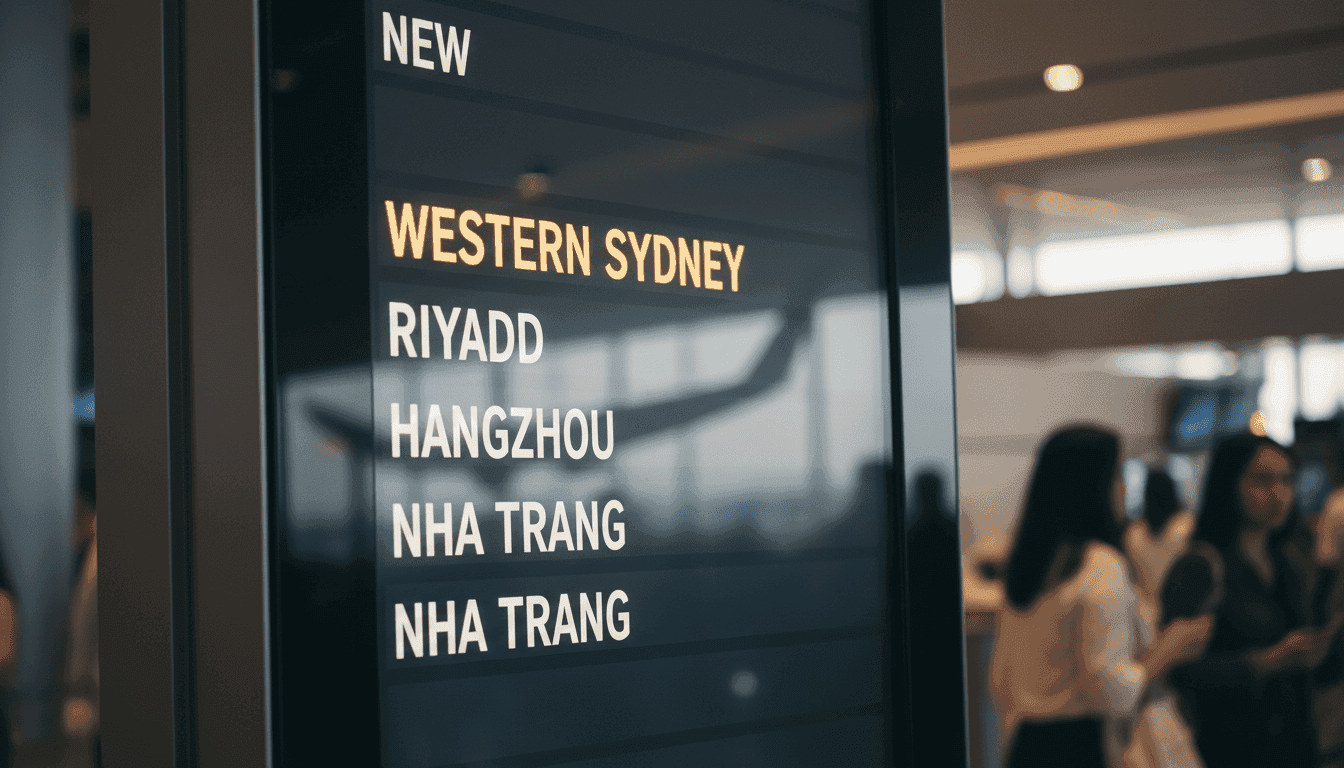
Singapore Airlines’ expansion of its global reach in 2026, including the addition of Western Sydney as a key new destination alongside Riyadh, Hangzhou, and Nha Trang, signals a significant strategic pivot for the airline and the broader travel and tourism sector. Announced on Wednesday, April 22, 2026, this move underscores the growing importance of emerging regional hubs and the airline’s commitment to diversifying its route network.
The Story: Singapore Airlines Expands Global Reach
The announcement by Singapore Airlines details a substantial network expansion planned for 2026, introducing four new destinations to its global network. Western Sydney, specifically, has been highlighted as a critical addition, marking a strategic investment in a rapidly developing Australian region. The other new cities include Riyadh in Saudi Arabia, Hangzhou in China, and Nha Trang in Vietnam. These additions are not merely about increasing flight numbers; they represent a calculated move to tap into new markets with burgeoning economic and tourism potential.
For Western Sydney, this development is particularly impactful, indicating a recognition of its evolving infrastructure and increasing appeal as both a business and leisure destination. The inclusion of Riyadh speaks to the growing economic power and tourism ambitions of Saudi Arabia, while Hangzhou and Nha Trang reflect the sustained growth of the Chinese and Vietnamese travel markets, respectively. This expansion is poised to enhance connectivity, offer more choices for travelers, and facilitate stronger trade and cultural links between Singapore and these key regions.
Impact Analysis: New Horizons for Travel & Tourism
The decision by Singapore Airlines to launch services to these four new destinations will have a ripple effect across the global travel and tourism landscape. For Western Sydney, the direct air links will undoubtedly boost inbound tourism and business travel, stimulating local economies and creating new opportunities for hospitality, retail, and related services. This could position Western Sydney as a more prominent gateway to Australia, complementing existing services to major hubs like Sydney Kingsford Smith Airport.
Similarly, the inclusion of Riyadh will cater to both business travelers heading to the rapidly developing Saudi capital and a growing segment of leisure tourists exploring the Kingdom. Hangzhou, a major economic and cultural center in China, will likely see increased connectivity for business and leisure, while Nha Trang’s addition will further cement Vietnam’s status as a top-tier Southeast Asian tourist destination. This expansion demonstrates a strategic foresight by Singapore Airlines to diversify its portfolio beyond traditional, saturated routes.
“The strategic inclusion of Western Sydney, Riyadh, Hangzhou, and Nha Trang reflects a keen understanding of evolving global economic centers and tourism hotspots. This isn’t just about adding routes; it’s about investing in future growth markets and solidifying Singapore’s position as a premier aviation hub.”
This move is also indicative of a broader industry trend where airlines are looking beyond established primary gateways to secondary and tertiary cities that offer untapped potential. It suggests a future where regional airports play an increasingly vital role in international air travel, decentralizing traffic and distributing economic benefits more widely. Related travel & tourism articles have previously highlighted the increasing competition among airlines to secure lucrative slots in emerging markets.
Context & Background: Shifting Sands in Global Aviation
The aviation industry has been in a dynamic state of recovery and recalibration following recent global disruptions. Airlines are now aggressively pursuing growth strategies, often focusing on markets with strong demographic trends, economic development, and tourism infrastructure investment. Singapore Airlines, known for its premium service and extensive network, has historically been a bellwether for industry trends.
The choice of Western Sydney, for instance, aligns with significant governmental and private investment in the region, including the development of the new Western Sydney Airport (Nancy-Bird Walton Airport). This new airport is designed to alleviate pressure on Sydney’s existing airport and unlock economic potential in the city’s west. Riyadh’s inclusion comes amid Saudi Arabia’s ambitious Vision 2030, which heavily emphasizes tourism and economic diversification. Hangzhou and Nha Trang, meanwhile, are beneficiaries of robust domestic and international tourism growth in their respective countries.
This expansion also reflects Singapore’s enduring ambition to remain a leading global aviation hub. By offering direct connections to these emerging destinations, Singapore Airlines enhances the attractiveness of Changi Airport as a transit point for travelers from around the world, reinforcing its competitive edge against other regional hubs. This strategic positioning is crucial for Singapore’s long-term economic prosperity.
What’s Next: Future Implications and Market Dynamics
The introduction of these new routes in 2026 will undoubtedly spur further competition and innovation within the airline industry. Other carriers may follow suit, exploring similar secondary and tertiary markets to expand their own networks. For the newly connected destinations, the challenge will be to capitalize on the increased accessibility by developing sustainable tourism infrastructure and promoting their unique attractions effectively.
We can anticipate a surge in investment in hotels, tour operators, and related services in Western Sydney, Riyadh, Hangzhou, and Nha Trang as they prepare to welcome a new influx of international visitors. Regulatory bodies and local governments will need to work closely with airlines and tourism boards to ensure smooth operations and a positive visitor experience. The success of these new routes could also pave the way for further expansion into other underserved or emerging markets globally, signaling a new era of network diversification. This expansion will likely be a topic of discussion in future travel & tourism analyses.
Key Takeaway: A Strategic Leap for Connectivity
Singapore Airlines’ decision to add Western Sydney, Riyadh, Hangzhou, and Nha Trang to its global network in 2026 is more than just a route expansion; it is a strategic declaration of intent. It highlights the airline’s agility in identifying and capitalizing on new growth frontiers in the global travel market, reinforcing Singapore’s role as a pivotal international aviation gateway. This move will significantly enhance global connectivity, foster economic development in the newly served regions, and reshape competitive dynamics within the travel and tourism industry for years to come.