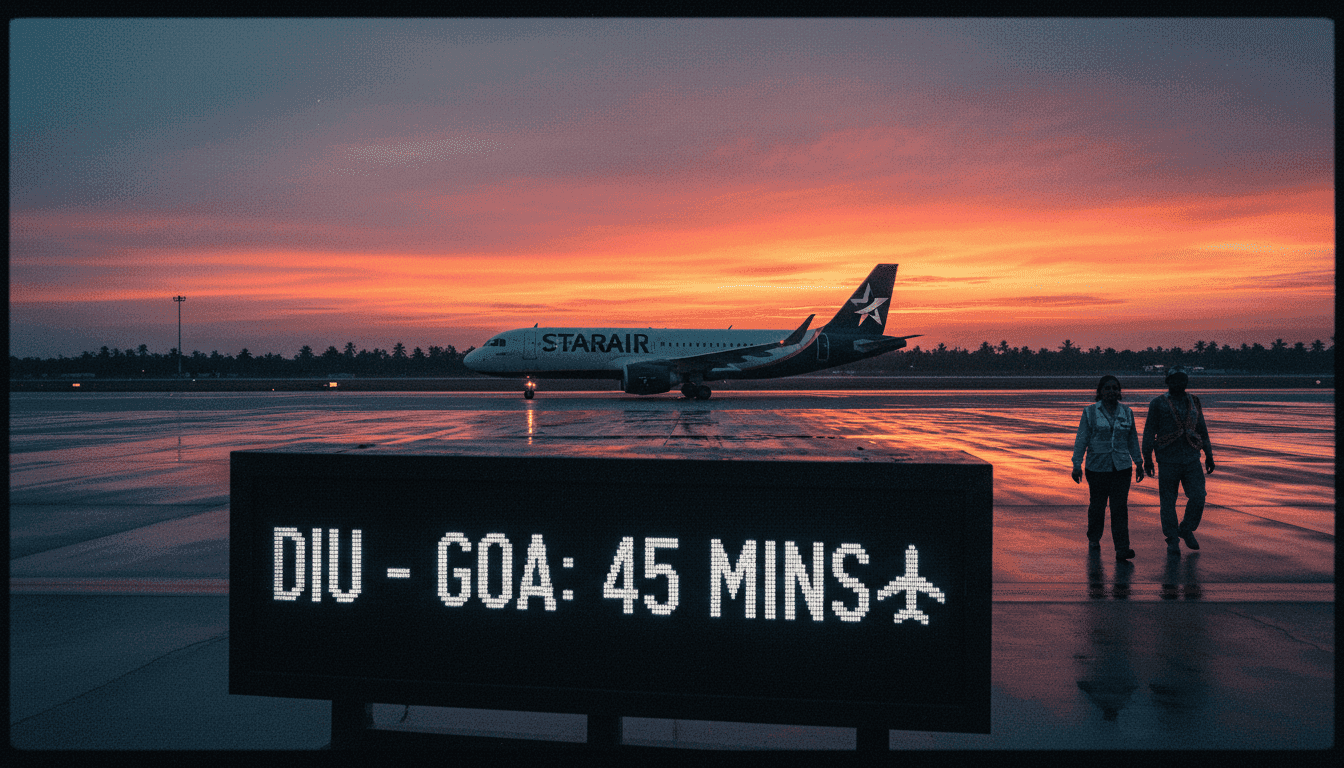
The direct Diu-Goa flight route, launched by India’s Star Air on Sunday, May 10, 2026, marks a significant milestone in regional connectivity, drastically reducing travel time between the two popular tourist destinations to just forty-five minutes. This new service is poised to significantly boost tourism and streamline travel, offering a convenient alternative to the previously arduous journey.
The Story: Bridging Diu and Goa
Star Air, a prominent regional airline in India, has introduced a direct flight connecting Diu, a union territory known for its serene beaches and historical forts, with Goa, India’s most celebrated beach destination. The launch on May 10, 2026, is a strategic move to cater to the growing demand for efficient inter-state travel and to unlock the tourism potential of both regions. Prior to this direct connection, travelers often faced lengthy road journeys or multi-stop flights, making the forty-five-minute flight a game-changer for tourists and local commuters alike. This initiative by Star Air underscores a commitment to enhancing regional air accessibility across India.
Impact Analysis: Boosting Tourism and Regional Connectivity
The introduction of the direct Diu-Goa flight route is expected to have a profound impact on the tourism sectors of both Diu and Goa. For Diu, it opens up a new gateway for tourists, especially those already visiting Goa, encouraging them to extend their itineraries to include the charming coastal enclave. Conversely, Goan tourists can now easily explore Diu’s unique Portuguese heritage and tranquil environment. This improved accessibility is likely to increase visitor numbers, stimulate local economies, and create new opportunities for hospitality businesses, tour operators, and ancillary services in both regions. The reduced travel time also makes weekend getaways more feasible, appealing to a broader demographic of travelers seeking short, convenient breaks.
“This direct connection is more than just a flight; it’s a bridge between two distinct cultural and natural landscapes, poised to unlock significant tourism and economic potential for both Diu and Goa.”
Context & Background: India’s Aviation Expansion
This development aligns with India’s broader focus on enhancing regional air connectivity under schemes like UDAN (Ude Desh ka Aam Naagrik), which aims to make air travel affordable and widespread. The increasing disposable incomes and growing travel aspirations of the Indian populace have fueled a demand for more direct and time-efficient travel options. Star Air’s decision to launch the direct Diu-Goa flight route reflects a strategic response to these market trends, identifying underserved routes with high tourism potential. The Indian aviation sector has been witnessing robust growth, with regional airlines playing a crucial role in connecting tier-2 and tier-3 cities, thereby integrating them into the national tourism circuit. For more insights into the evolving landscape of Indian travel, explore our related travel & tourism articles.
What’s Next: Future Implications and Market Growth
The success of the direct Diu-Goa flight route could pave the way for similar regional connections across India. Airlines will likely monitor passenger load factors and market response closely, potentially leading to increased flight frequencies or the introduction of new routes connecting other lesser-explored destinations with major hubs. This move by Star Air could also encourage other regional carriers to explore new point-to-point connections, further decentralizing air travel and reducing reliance on traditional hub-and-spoke models. The enhanced connectivity is expected to attract further investments in tourism infrastructure in both Diu and Goa, from new hotels to improved local transport services, preparing for an anticipated influx of visitors. The direct Diu-Goa flight route could serve as a blueprint for future regional expansion.
Key Takeaway: A New Era for Regional Travel
The launch of the direct Diu-Goa flight route by Star Air is a testament to the ongoing transformation in India’s travel and tourism sector. It highlights the growing importance of regional airlines in bridging geographical gaps, fostering economic development, and making diverse travel experiences more accessible. This forty-five-minute connection not only saves valuable travel time but also creates a synergistic relationship between two unique tourist destinations, promising a brighter future for regional tourism and connectivity in India.