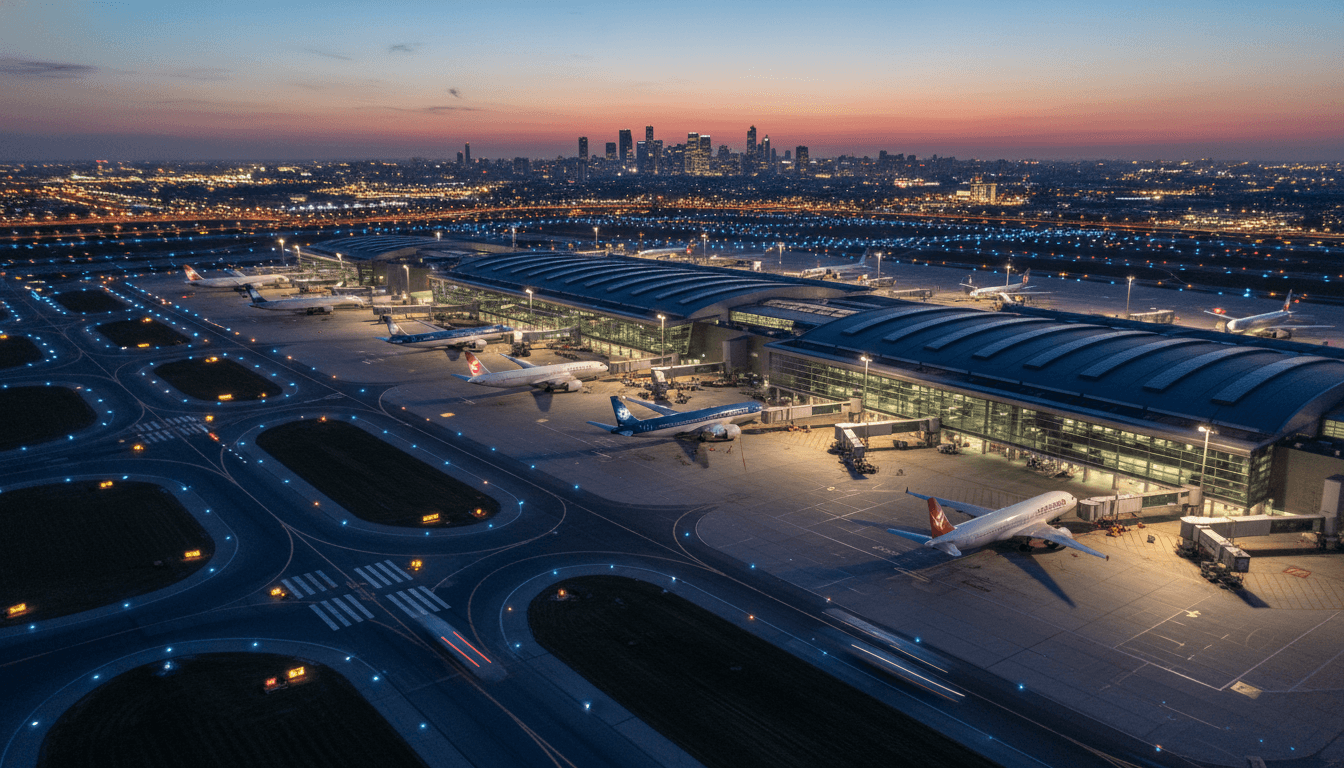
SITA’s AI-Driven Airline Technology is poised to revolutionize global travel experiences in 2026, with the rollout of its latest Intelligent Operations systems to major airlines and the largest airports. This transformative technology, already demonstrated to reduce operational disruptions and delays by 30%, is set to significantly enhance schedule adherence and passenger satisfaction. The implications extend far beyond mere efficiency, promising to stimulate substantial growth across the travel and tourism industry, particularly within the burgeoning hospitality sector of the Gulf Cooperation Council (GCC) region and worldwide.
The financial burden of flight delays on the airline industry is staggering, costing approximately $30 billion annually in lost revenue. SITA’s strategic acquisition of the OCCam system, alongside other advanced AI solutions, provides airlines with an unprecedented capability. These systems can simultaneously assess complex aircraft, crew, and passenger schedules, then rapidly draft the most cost-effective operational recovery plans within minutes. This minimizes operational costs and drastically reduces delays, enabling airlines to both improve and expand the quality and quantity of their services. The industry’s commitment to this technological shift is evident, with global aviation technology investments reaching a record $50.8 billion in 2025, as airlines and airports prioritize data and digital operation techniques. Currently, 63% of airlines leverage AI in operational control, with future automation goals increasingly focused on generative AI and large language models.
Impact Analysis: A New Era for Global Travel and Tourism
The improvements in aviation reliability, driven by SITA’s AI-Driven Airline Technology, align perfectly with robust growth trends in global tourism. International tourist arrivals are projected to reach approximately 1.52 billion in 2025, marking a 4% increase from 2024. This surge indicates that global travel has surpassed pre-pandemic levels in most regions, despite ongoing economic challenges. The GCC region, in particular, is experiencing a phenomenal boom, with tourism revenue expected to hit $120.2 billion in 2024, a nearly 40% increase over the previous five years. This represents almost 5.2% of global tourism arrivals.
Dubai continues to lead this regional expansion, recording 19.59 million international visitors in 2025 for the third consecutive year, maintaining hotel occupancy rates above 80% due to strong leisure and business travel demand. Qatar also saw remarkable growth, attracting 5.1 million visitors in 2025, a testament to enhanced marketing, increased events, and an improved passenger experience. Saudi Arabia, under Vision 2030, is diversifying its tourism offerings beyond luxury, with official estimates predicting around 22 million international arrivals in 2025. Investments are targeting a wider hotel segment, diverse events, and a harmonized visa system to broaden the kingdom’s appeal.
“The combination of AI capabilities and the anticipated tourism boom in 2026 will forever change the global travel landscape. Intelligent systems will finally allow airlines to tackle delays and cancellations, while the tourism markets of the GCC countries will continue to provide strong demand through integrated visas and improved hospitality.”
Current Traveler Experience and Future Projections
For travelers in 2026, the immediate impact includes a more predictable air travel experience, though vigilance remains key. While AI significantly reduces disruptions, travelers are still advised to check flight status frequently (48-24 hours before departure) and consider booking flexible flights. Airport experiences are also improving, with many adopting biometric and digital identity technologies to expedite processing and reduce waiting times. A pilot program for a unified GCC visa is underway, promising to simplify multi-stop itineraries across the UAE, Saudi Arabia, Qatar, Oman, Kuwait, and Bahrain, making regional travel more accessible for international visitors. Accommodation planning requires foresight, with cities like Dubai and Riyadh anticipating full hotel occupancy through 2026, necessitating early bookings, especially during peak seasons. There’s also a growing trend towards shoulder-season travel, reflecting a shift in global tourism patterns.
Beyond the GCC, European destinations are seeing record visitor numbers. France anticipates approximately 105 million international travelers in 2025, while Spain projects around 96.5 million, highlighting a strong recovery and global appeal. Conversely, the United States is experiencing a slight decline in foreign visitors, with approximately 68 million in 2025, indicating a shift in global travel flows away from the USA. This underscores the robust recovery and diversification of international tourism markets, driven partly by improved aviation reliability.
The Path Forward: Sustained Innovation and Collaboration
The integration of SITA’s AI-Driven Airline Technology marks a pivotal moment for the travel industry. While the immediate benefits are clear in terms of reduced delays and enhanced operational efficiency, the long-term success hinges on continued commitment to innovation and industry-wide collaboration. The primary remaining challenges involve the seamless coordination of operational data across diverse systems and addressing sustainability concerns. Both require persistent effort from airlines, airports, and technology providers to ensure long-term viability and sustained customer satisfaction. As 2026 unfolds, the global travel landscape will continue to evolve, offering travelers greater predictability, more options, and richer experiences, solidifying AI’s role as the new backbone of the industry.