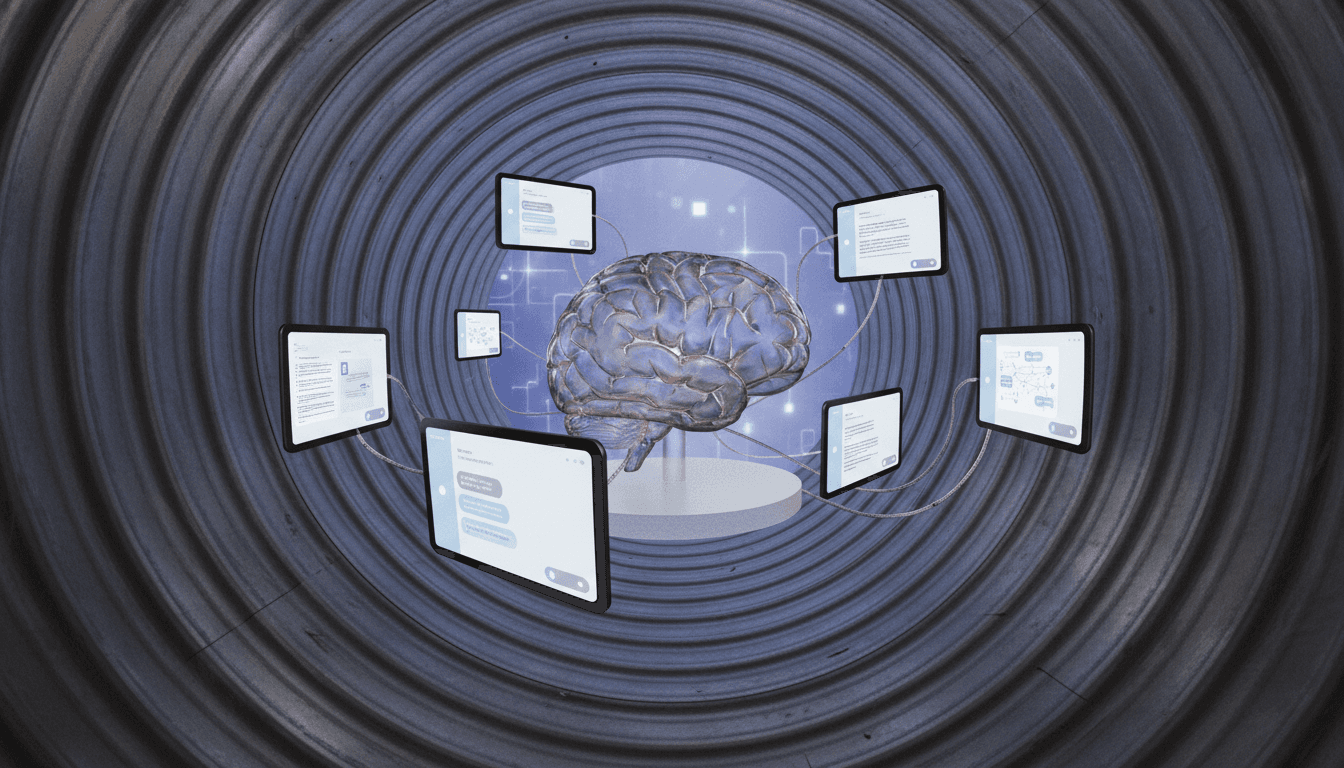
AI chatbots pose a significant threat to our cognitive control and emotional intelligence, warns Dr. Gloria Mark, a psychologist at the University of California, Irvine, whose decades of research reveal a concerning decline in human attention spans and critical thinking. Speaking at SXSW London, Mark presented compelling evidence that our increasing reliance on digital technologies, particularly AI, is eroding our fundamental mental capabilities.
Mark’s early career focused on the impacts of the internet and email, concerns that, while seemingly quaint today, foreshadowed a steady decline in human attention. Her “living laboratories” — studies using sensors and trackers to monitor adult volunteers — tracked attention, mood, and behavior during device use. In 2003, she found an average attention span of two and a half minutes. By 2012, this had plummeted to 75 seconds, and between 2014 and 2020, it shrank further to a mere 47 seconds. This rapid switching of attention isn’t just inefficient; it’s stressful.
“We would have people wear heart rate monitors, and … we would see direct correlation between switching attention fast and stress going up,”
she explained, highlighting the detrimental effects on both performance and emotional well-being.
The Impact of Digital Technologies on Attention
The consequences of shrinking attention spans are far-reaching. Beyond increased stress, constant digital distraction makes it harder to complete tasks efficiently. Mark noted, “It just takes longer to do any single task if you’re switching your attention. It’s not great for performance. It’s not great for our emotional well-being.” This trend is particularly alarming when considering its effects on younger generations, as evidenced by recent lawsuits against social media giants Meta and Google’s YouTube for designing addictive products that led to childhood addiction and mental health issues in students.
While the long-term effects of social media on children remain inconclusive, despite popular narratives, Mark hopes that large-scale, long-term studies, like the one underway in Australia following its social media ban for under-16s, will provide clearer answers. However, the emergence of advanced AI presents a new, potentially more insidious challenge.
AI Chatbots and Cognitive Atrophy
Mark expresses profound worry about the widespread adoption of AI tools such as ChatGPT, Claude, and Gemini. When we offload tasks like summarizing, writing, or evaluating to AI chatbots, we bypass what psychologists call “depth of processing.” This active engagement with information is crucial for learning, understanding, and retention.
“When you’re actively engaged with information, you’re processing it on a very deep level. Then you’re more likely to learn it, to understand it, [and] to retain it,”
she stated. By contrast, “You’re deferring your cognitive work to AI. And it’s not good for us.”
The risk is clear: our cognitive abilities could atrophy. Mark draws a compelling analogy: “If you’re not constantly exercising your muscles, they can atrophy. And that’s exactly what can happen with our minds.” Weaker critical thinking skills make individuals more susceptible to misinformation, a growing concern in an increasingly digital world. Furthermore, interactions with AI-powered “synthetic companions” threaten emotional intelligence. Genuine human relationships require effort, time, and understanding — elements absent in interactions with a perpetually agreeable bot. Mark points out that emotional intelligence is already in decline, and over-reliance on AI companions could accelerate this trend.
Reclaiming Control in a Digital Age
Mark paints a stark picture: “If we continue on this trajectory, attention spans are diminished, loneliness is rising, boredom is rising, emotional intelligence decreasing, and actually our sense of purpose, according to studies, is also decreasing.” Yet, she remains hopeful that we can course-correct by consciously altering our relationship with technology. The antidote, she believes, is effort. Engaging in activities that require cognitive effort, such as reading a book instead of a summary, meeting friends in person, or navigating without GPS when possible, can strengthen our mental faculties and lead to deeper satisfaction.
While technology is an undeniable part of modern life, Mark emphasizes that we don’t have to abandon it entirely. Instead, the focus should be on establishing new, healthier routines. By actively choosing to exert cognitive and emotional effort, individuals can safeguard their mental acuity and well-being against the encroaching influence of pervasive digital tools and AI chatbots.