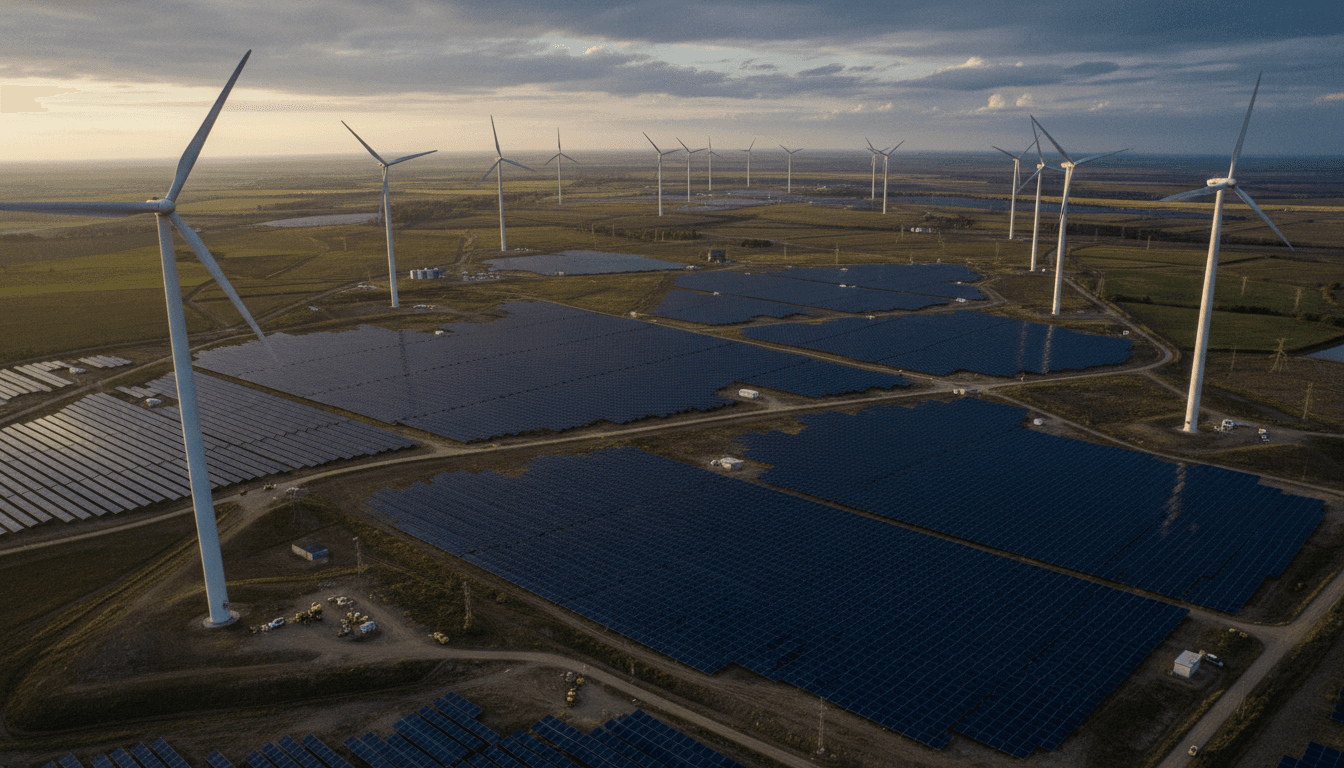
A landmark wind plus solar plant, heralded as the world’s largest, is now actively pumping power into national grids, marking a significant milestone in the global transition to renewable energy. This monumental project, combining two of the most potent clean energy sources, represents a substantial leap forward in scaling up sustainable electricity generation and reducing reliance on fossil fuels. Its operational status, confirmed on Monday, April 13, 2026, by Recharge News, underscores the accelerating pace of large-scale renewable infrastructure development.
The Genesis of a Giant: Who, What, Where
The ‘world’s largest’ wind plus solar plant is a hybrid marvel, integrating the complementary strengths of wind and solar power generation. While the specific developers and precise location were not detailed in the initial report, the sheer scale of the undertaking suggests a consortium of major energy players, likely involving international investment and expertise. The core achievement is the successful synchronization of both wind turbines and solar panels into a unified system, delivering consistent power output. This integrated approach mitigates the intermittency challenges often associated with single-source renewable plants; when the sun isn’t shining, the wind might be blowing, and vice-versa, offering a more stable and reliable electricity supply.
“The successful integration of wind and solar at this unprecedented scale provides a compelling blueprint for future hybrid renewable energy projects worldwide, demonstrating the technical feasibility and economic viability of such colossal endeavors.”
The plant’s operational status signifies the culmination of years of planning, construction, and rigorous testing. Its capacity to now ‘pump power’ indicates it has passed critical commissioning phases and is contributing electricity to the grid, a crucial step in delivering on its promise of clean energy. The focus on a ‘wind plus solar plant’ highlights a strategic shift towards more resilient and efficient renewable energy infrastructure.
Impact Analysis
The activation of this landmark wind plus solar plant carries profound implications for the broader environment and climate landscape. Firstly, it represents a massive injection of clean energy into the grid, directly displacing fossil fuel-based generation and significantly reducing greenhouse gas emissions. This contributes directly to national and international climate targets aimed at limiting global warming. Secondly, its ‘world’s largest’ designation sets a new benchmark for renewable energy project scale, potentially inspiring even more ambitious developments globally. This kind of project demonstrates that renewable energy can not only compete with, but surpass, traditional energy sources in terms of scale and ambition.
Economically, such projects often stimulate local economies through job creation during construction and operation, as well as attracting further investment in the renewable energy sector. For energy consumers, increased renewable capacity can lead to more stable and potentially lower electricity prices in the long term, reducing exposure to volatile fossil fuel markets. Environmentally, beyond emissions reductions, large-scale renewable plants can also reduce air and water pollution associated with conventional power generation, leading to improved public health outcomes. This landmark wind plus solar plant is a testament to the power of integrated renewable solutions.
Context & Background
The development of this wind plus solar plant aligns with a growing global trend towards hybrid renewable energy systems. Historically, wind and solar farms were often developed as standalone projects. However, the recognition of their complementary generation profiles – solar peaks during the day, wind often stronger at night or in different seasons – has driven innovation in combining them. Early examples were smaller, but the recent push has been towards utility-scale integration, often coupled with battery storage solutions to further enhance grid stability. This project likely builds on decades of research and development in both wind turbine technology and photovoltaic efficiency, pushing the boundaries of what is achievable in renewable energy generation.
The policy landscape in many nations has increasingly favored such large-scale renewable investments, often through incentives, regulatory frameworks, and carbon pricing mechanisms designed to accelerate the energy transition. This particular hybrid renewable plant emerges at a time when energy security and climate action are paramount global concerns, making its operational status particularly timely and impactful. It reflects a maturing renewable energy industry capable of delivering complex, multi-technology projects.
What’s Next
The immediate future for this landmark wind plus solar plant will involve continuous monitoring of its performance, optimization of its output, and integration into the existing grid infrastructure. Data gathered from its operation will be invaluable for future renewable energy projects, informing best practices in design, construction, and management of hybrid systems. We can anticipate that the developers will likely seek to expand its capacity or integrate advanced storage solutions to further enhance its reliability and grid contribution.
More broadly, the success of this project is expected to catalyze investment in similar large-scale hybrid renewable energy plants across the globe. Policy makers and investors will be looking closely at its economic and environmental returns, potentially leading to new policy incentives for integrated renewable solutions. The energy sector can expect a continued shift towards diversification of renewable portfolios, moving beyond single-source reliance to more robust, multi-technology approaches. The challenge will be replicating this success in diverse geographical and climatic conditions, while also addressing grid infrastructure upgrades needed to accommodate such massive influxes of renewable power. The momentum from this landmark wind plus solar plant is undeniable.
Key Takeaway
The successful commissioning of the world’s largest wind plus solar plant is more than just an engineering feat; it is a powerful affirmation of the global commitment to a sustainable energy future. It demonstrates the technical maturity and economic viability of large-scale hybrid renewable energy solutions, providing a critical pathway for accelerating decarbonization efforts and enhancing energy security worldwide. As nations grapple with the urgent demands of climate change and energy independence, projects of this magnitude offer tangible proof that a cleaner, more reliable energy system is not only possible but actively being built.