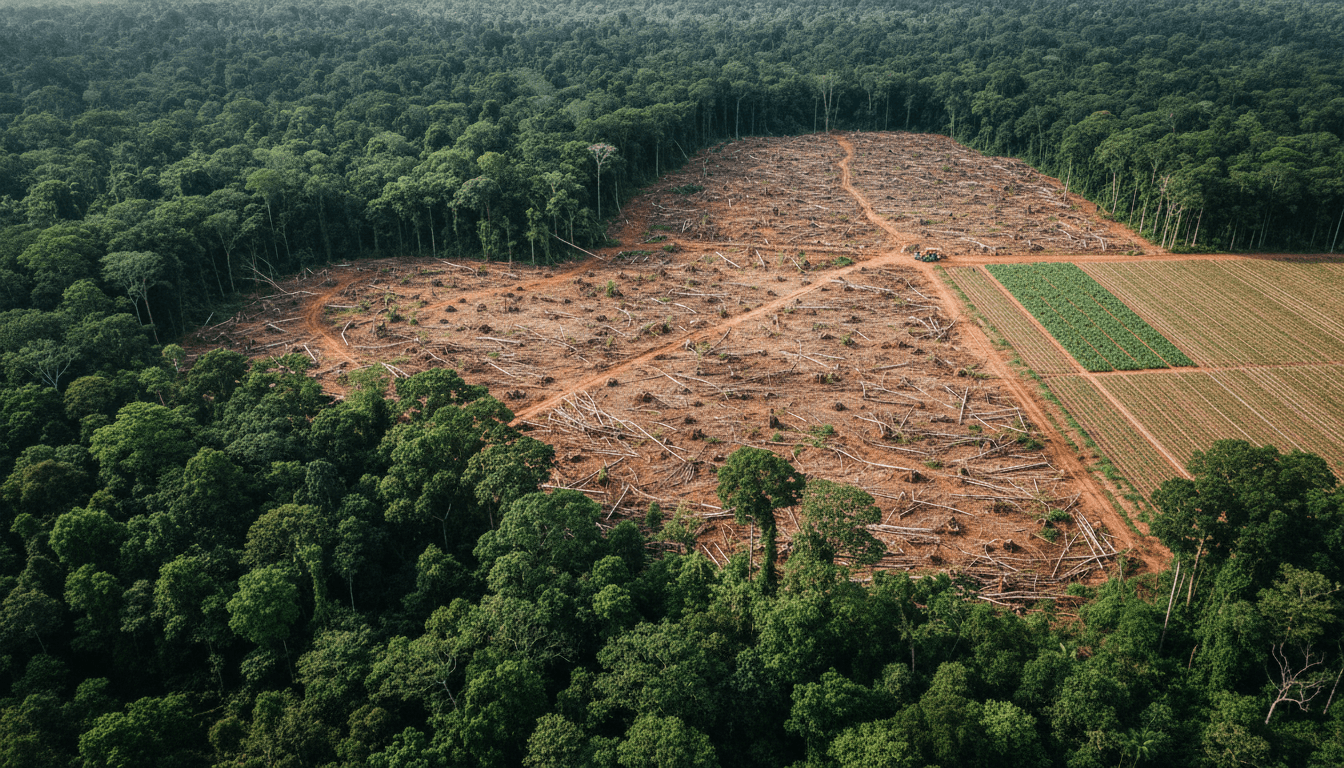
UK green jet fuel imports have been directly linked to Amazon deforestation, casting a significant shadow over the sustainability claims of the aviation industry’s efforts to decarbonise. This startling revelation, emerging on Saturday, April 11, 2026, exposes a critical flaw in the certification and supply chains intended to ensure environmentally sound alternatives to fossil fuels.
The Unravelling of ‘Green’ Credentials
The core of the issue lies in the complex and often opaque supply chains for Sustainable Aviation Fuel (SAF). While marketed as a crucial step towards reducing aviation’s carbon footprint, the ‘green’ label applied to UK jet fuel imports is now under intense scrutiny. Investigations have uncovered that some of the biomass feedstocks used to produce this fuel originate from areas implicated in the destruction of the Amazon rainforest. This situation involves a network of producers and intermediaries, with the ultimate destination being the UK aviation sector, which has been keen to demonstrate its commitment to environmental responsibility.
The specific mechanisms linking these imports to deforestation are intricate, often involving indirect land-use change. For instance, the expansion of certain monocultures for biofuel feedstock in one region can displace other agricultural activities, pushing them into sensitive areas like the Amazon. This phenomenon, known as indirect land-use change (ILUC), is a significant challenge in the assessment of biofuel sustainability, often difficult to quantify but with profound environmental consequences.
“The promise of sustainable aviation hinges on robust, transparent supply chains. If ‘green’ fuel is driving deforestation, it undermines the entire premise of aviation’s decarbonisation efforts.”
Impact Analysis: UK Green Jet Fuel’s Broader Ramifications
This discovery has profound implications for the broader environment and climate landscape, particularly for the credibility of green certifications and carbon offsetting schemes. It highlights a systemic vulnerability where the pursuit of decarbonisation in one sector inadvertently exacerbates environmental degradation in another. For the UK, a nation that prides itself on its climate leadership, this connection to Amazon deforestation is a significant blow to its environmental standing. It raises urgent questions about the due diligence performed by companies and regulators overseeing SAF imports.
Furthermore, it complicates the global effort to protect vital carbon sinks like the Amazon rainforest. The Amazon is not just a biodiversity hotspot but a critical regulator of global climate patterns. Its continued destruction releases vast amounts of stored carbon, accelerating climate change and threatening indigenous communities. The notion that a solution designed to mitigate climate change could actively contribute to this destruction is a stark reminder of the complexities and potential pitfalls in the transition to a low-carbon economy. This incident underscores the need for a holistic approach to sustainability, one that considers the entire lifecycle and geographical impact of ‘green’ products.
Context and Background: The SAF Imperative
The push for Sustainable Aviation Fuel has been a cornerstone of the aviation industry’s strategy to meet ambitious emissions reduction targets. With conventional jet fuel being a major contributor to global greenhouse gas emissions, SAF, derived from sources like used cooking oil, agricultural waste, or even dedicated energy crops, has been hailed as a viable alternative. Governments, including the UK, have offered incentives and set mandates for SAF blending, aiming to scale up production and adoption. However, the sustainability of these feedstocks has always been a point of contention among environmental groups, who have warned against the potential for perverse outcomes, such as competition with food crops or, as now revealed, deforestation.
Previous debates have often focused on the ‘food vs. fuel’ dilemma, but the direct link to deforestation adds another critical dimension. This incident echoes past controversies surrounding palm oil and other agricultural commodities where demand from developed nations inadvertently fueled environmental destruction in biodiverse regions. The UK’s commitment to achieving net-zero emissions by 2050 places significant pressure on all sectors, including aviation, to find sustainable solutions. However, this recent revelation suggests that the current pathways for sustainable aviation fuel may be flawed.
What’s Next for UK Green Jet Fuel?
The immediate future will likely see intense scrutiny on the supply chains of all UK green jet fuel imports. Regulators will be under pressure to implement more stringent verification processes and traceability mechanisms to prevent future instances of ‘greenwashing’ and environmental harm. Airlines and fuel providers will need to re-evaluate their sourcing strategies, potentially shifting towards feedstocks with demonstrably lower environmental footprints and away from those linked to high-risk areas. There could also be renewed calls for greater transparency across the entire SAF industry, with detailed public reporting on feedstock origins and sustainability certifications.
Furthermore, this incident could spark a broader debate within the European Union and other major economies about the criteria for ‘sustainable’ biofuels and the effectiveness of existing certification schemes. It may also accelerate research and development into alternative SAF pathways, such as power-to-liquid fuels (e-fuels), which do not rely on biomass and thus avoid land-use issues. The long-term implications could include a significant overhaul of international standards for sustainable aviation fuel, pushing for a more robust and geographically comprehensive approach to environmental impact assessment.
Key Takeaway: Reassessing Sustainability’s True Cost
This development is a stark reminder that the path to true sustainability is fraught with complexities and requires unwavering vigilance. The link between UK green jet fuel imports and Amazon deforestation highlights the critical importance of scrutinizing every facet of ‘green’ solutions, ensuring they deliver genuine environmental benefits without inadvertently causing harm elsewhere. For businesses and policymakers alike, the lesson is clear: robust, transparent, and globally conscious supply chains are not merely an ideal, but an absolute necessity for any credible climate action. The pursuit of decarbonisation must not come at the expense of vital ecosystems, underscoring the need for a comprehensive and ethical approach to environmental transitions across all sectors, including crucial areas like carbon markets and offsets.