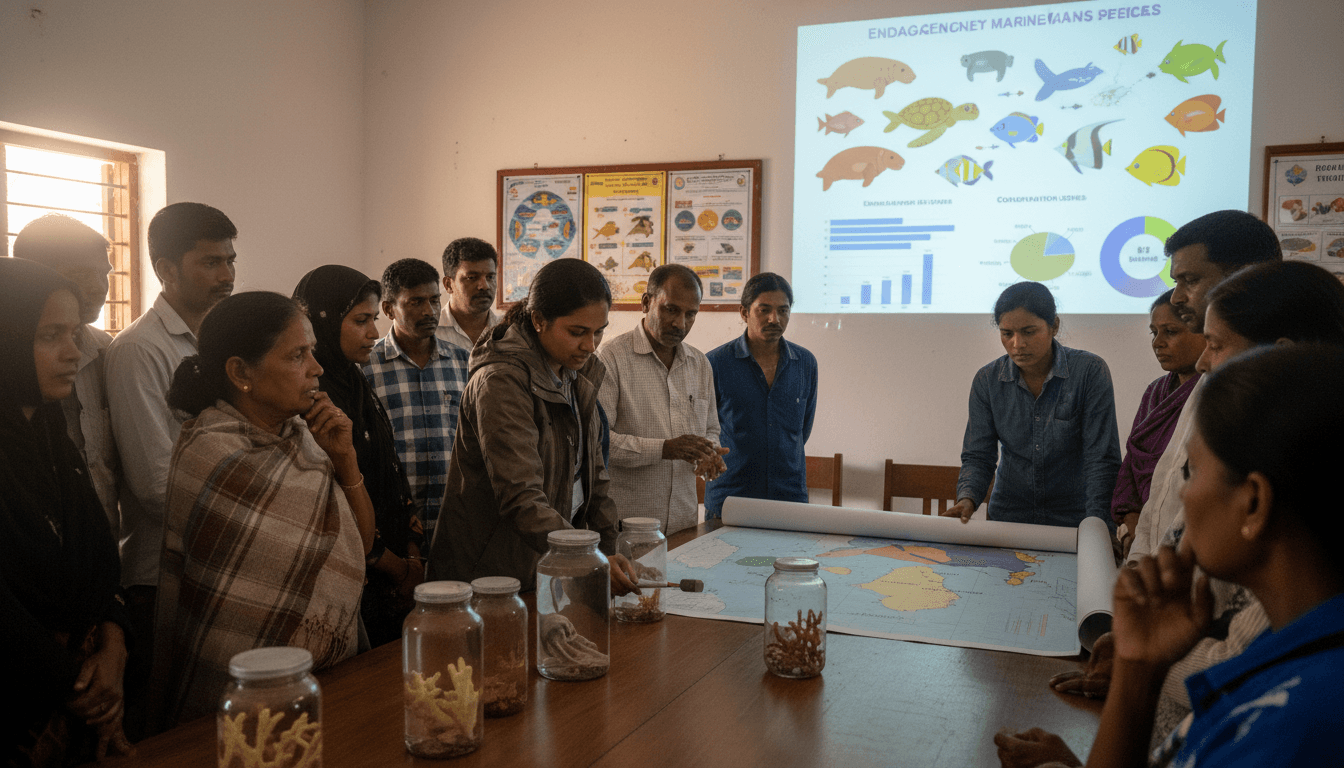
Marine endangered species conservation awareness received a significant boost on Monday, May 18, 2026, as the ICAR-Central Island Agricultural Research Institute (CIARI) and the Fisheries Survey of India (FSI) collaborated to promote vital understanding among communities. This joint initiative underscores a growing recognition of the critical threats facing marine biodiversity and the urgent need for concerted efforts to protect vulnerable aquatic life.
The collaborative effort by ICAR-CIARI and FSI signals a strategic alignment of research and survey capabilities towards a common environmental goal. While specific details of the awareness campaign, such as target demographics or geographical reach within the Andaman region, were not explicitly stated, the involvement of these two prominent organizations suggests a comprehensive approach. ICAR-CIARI, with its focus on agricultural research in island ecosystems, often extends its purview to allied sectors like fisheries, given the integral role they play in the livelihoods and ecology of such regions. FSI, on the other hand, is dedicated to assessing marine fishery resources, making their participation crucial for providing data-driven insights into the status of endangered species.
Marine Endangered Species Conservation Awareness Efforts
The implications of this joint initiative extend beyond localized educational outreach, touching upon broader environmental and climate landscapes. The conservation of marine endangered species is intrinsically linked to ocean health, which is under immense pressure from climate change, overfishing, habitat destruction, and pollution. By raising marine endangered species conservation awareness, these organizations are directly contributing to the resilience of ocean ecosystems, which in turn play a vital role in global climate regulation, carbon sequestration, and supporting diverse marine food webs. Healthy oceans are also crucial for the economic well-being of coastal communities that depend on fisheries and marine tourism.
Historically, efforts to protect marine life in the Andaman region have faced challenges due to limited resources, vast marine territories, and sometimes, a lack of public understanding regarding the impact of human activities. Previous initiatives have often focused on specific species or protected areas. This collaboration between ICAR-CIARI and FSI represents a potentially more integrated strategy, leveraging scientific expertise with on-the-ground survey data. Industry trends indicate a global shift towards more collaborative and community-centric conservation models, recognizing that sustained protection requires local engagement and buy-in. The Andaman and Nicobar Islands, being a biodiversity hotspot, are particularly vulnerable to environmental degradation, making such awareness campaigns crucial for long-term ecological stability.
Looking ahead, this partnership could pave the way for more sustained and impactful conservation programs. Future implications might include the development of specific conservation action plans, enhanced monitoring of endangered populations, and the integration of traditional ecological knowledge with scientific research. Upcoming decisions could involve policy changes to strengthen protection for marine species, potentially informed by the data and insights gathered through these awareness efforts. Predictions suggest that as climate change impacts intensify, particularly through sea-level rise and ocean acidification, the need for robust conservation strategies will only grow. Initiatives like this are foundational for building the societal capacity to respond effectively.
“The long-term viability of our marine ecosystems hinges not just on scientific understanding, but crucially, on widespread public awareness and active participation in conservation efforts. This collaboration is a vital step in that direction.”
The key takeaway from this development is the reinforcement of a multi-stakeholder approach to environmental protection. The joint effort by ICAR-CIARI and FSI to promote marine endangered species conservation awareness highlights that safeguarding our planet’s biodiversity requires a concerted, informed, and collaborative effort from scientific institutions, governmental bodies, and the public alike. This is not merely about protecting individual species; it is about preserving the intricate balance of entire ecosystems that are fundamental to both environmental health and human prosperity. For more information on ongoing efforts to protect vulnerable marine ecosystems, explore our related environment & climate articles. The success of such initiatives will determine the health of our oceans for generations to come, underscoring the profound importance of every awareness campaign and every conservation action.