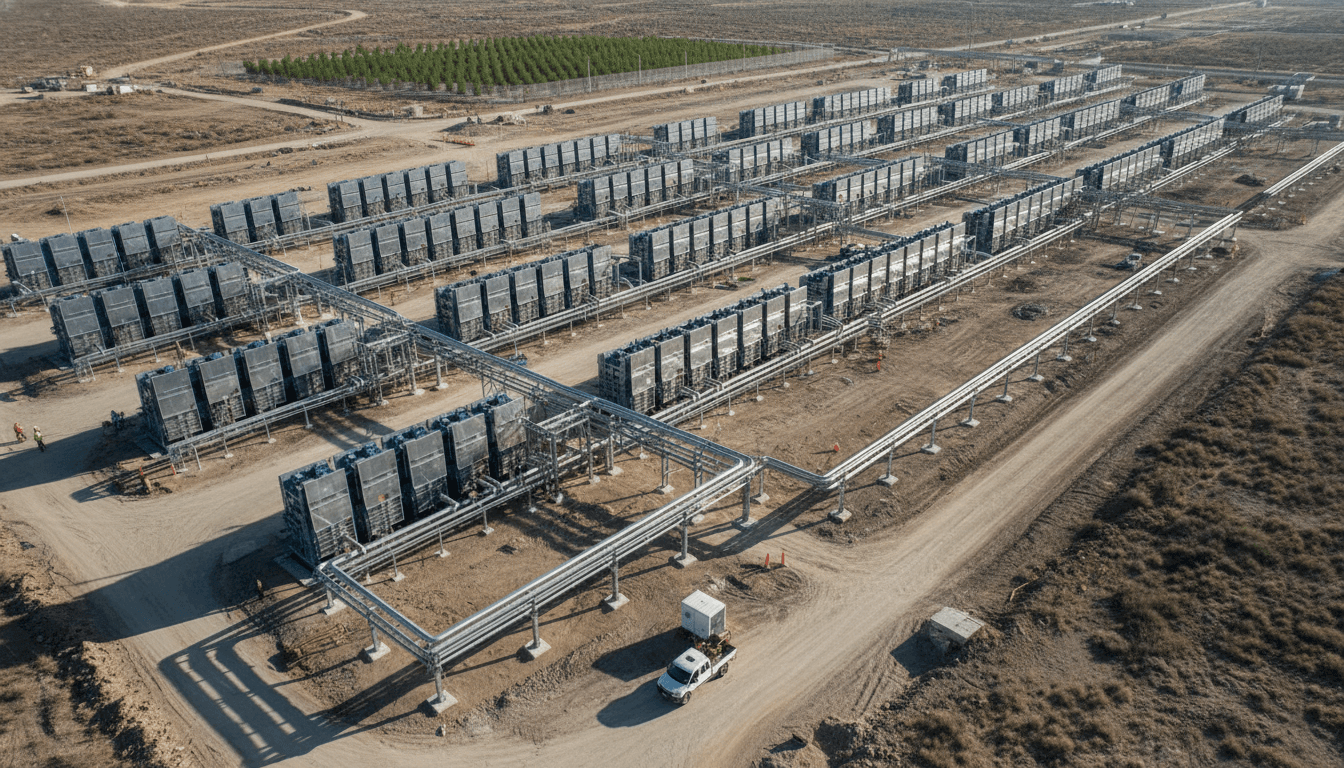
A historic carbon removal scale-up is required faster than the growth seen in solar power and electric vehicles if the world is to successfully limit global temperature rise, according to a new global assessment released this week. The third edition of the ‘State of Carbon Dioxide Removal (SoCDR)’ report, published on Tuesday, June 2, 2026, warns that current national pledges for carbon removal fall short by over five billion tonnes of carbon dioxide (CO₂) annually by 2050, compared to pathways necessary to achieve the 1.5°C climate goal.
Carbon dioxide removal (CDR) refers to the process of extracting CO₂ already present in the atmosphere and storing it to prevent its contribution to global warming. This encompasses a range of measures including reforestation, biochar, bioenergy with carbon capture and storage (BECCS), and direct air carbon capture and storage (DACCS). It is crucial to distinguish CDR from carbon capture and storage (CCS), which focuses on capturing CO₂ before it is released into the atmosphere from industrial sources.
The Imperative for Unprecedented Scale-Up
The SoCDR report underscores that while reducing greenhouse gas emissions remains the primary response to climate change, emission cuts alone will not suffice to meet global climate targets. CDR is identified as a critical tool for addressing emissions that are the most challenging to eliminate. Researchers warn that any delay in cutting emissions will significantly escalate future dependence on carbon removal technologies. They estimate that a decade-long postponement of emission reductions could lead to a global temperature increase of approximately 0.15°C and necessitate a greater volume of carbon removal later this century.
Currently, about 2.2 billion tonnes of CO₂ are removed from the atmosphere each year, predominantly through land-based approaches such as forests. Novel technologies, which employ machinery or minerals for carbon removal and storage, constitute a mere 0.1 percent of total removals, despite experiencing rapid annual growth of roughly 40 percent. Investment in carbon removal is on an upward trajectory, with approximately $5.7 billion committed globally to research and early-stage projects since 2019, and over 40 pilot projects presently underway. However, deployment remains sluggish, with only about 20 percent of planned carbon removal capacity being delivered.
Challenges and National Pledges
National commitments for carbon removal are significantly lagging behind the necessary pace. Countries have pledged to remove approximately 2.7 billion tonnes of CO₂ annually by 2035 and around 3.6 billion tonnes by 2050. These figures fall considerably short of the levels mandated by climate pathways consistent with the Paris Agreement. The period leading up to 2030 is highlighted as a critical window for action, with the report cautioning that without swifter emission reductions and more robust support for a historic carbon removal scale-up, climate targets will become increasingly difficult and expensive to achieve.
“Most progress in limiting warming will come from reducing emissions, while CDR will help address emissions that are hardest to eliminate,” the SoCDR report states, emphasizing the complementary role of carbon removal technologies.
Morgan Edwards, lead author and assistant professor at the University of Wisconsin-Madison, has voiced concerns regarding the vulnerability of investment in CDR technologies. Edwards noted that the sector is concentrated in a limited number of countries and approaches, making its future growth heavily reliant on demand expectations. This concentration means that shifts in government policies or market conditions in key nations could impede global progress in scaling up carbon removal efforts. The need for a diversified and resilient investment landscape for a robust carbon removal scale-up is clear.
Context and Broader Implications
The call for a rapid carbon removal scale-up underscores a growing recognition within the climate science community that emissions reductions alone, while paramount, may no longer be sufficient to avert the most catastrophic impacts of climate change. This perspective has gained traction as global emissions continue to rise, and the window for achieving the Paris Agreement’s most ambitious goals narrows. The report implicitly builds on previous scientific assessments that have increasingly highlighted the necessity of negative emissions technologies in various climate models, shifting from a theoretical concept to an urgent practical requirement.
The comparison to solar power and electric vehicles is particularly salient. Both sectors have seen exponential growth over the past decade, driven by technological advancements, supportive policies, and increasing consumer demand. To suggest that carbon removal must outpace even these success stories illustrates the sheer magnitude of the challenge and the unprecedented speed required for deployment. This necessitates not only substantial financial investment but also significant innovation, infrastructure development, and public acceptance on a global scale. The political will to integrate such ambitious targets into national climate strategies will be a defining factor in the coming years. Related environment & climate articles often discuss the policy frameworks needed to accelerate such transitions.
What’s Next for Carbon Removal
The coming years will be crucial for translating the report’s warnings into concrete action. Governments and private sector entities will need to dramatically increase funding for research, development, and deployment of novel carbon removal technologies. This includes not just direct air capture but also enhanced weathering, ocean alkalinity enhancement, and other nascent methods that could offer diverse pathways for CO₂ sequestration. International cooperation will be essential to establish common standards, facilitate technology transfer, and create robust carbon markets that incentivize large-scale removal projects. Without a concerted, global effort, the goal of stabilizing global temperatures by cutting CO₂ emissions to net zero, and subsequently achieving net negative emissions, will remain out of reach. Further analysis on climate finance will explore how these investments can be mobilized efficiently.
The path forward demands a strategic re-evaluation of climate priorities, placing a greater emphasis on the role of carbon removal alongside aggressive emissions reductions. The report serves as a stark reminder that the time for incremental change has passed; only a transformative and rapid deployment of all available climate solutions, including a historic carbon removal scale-up, can secure a livable future.