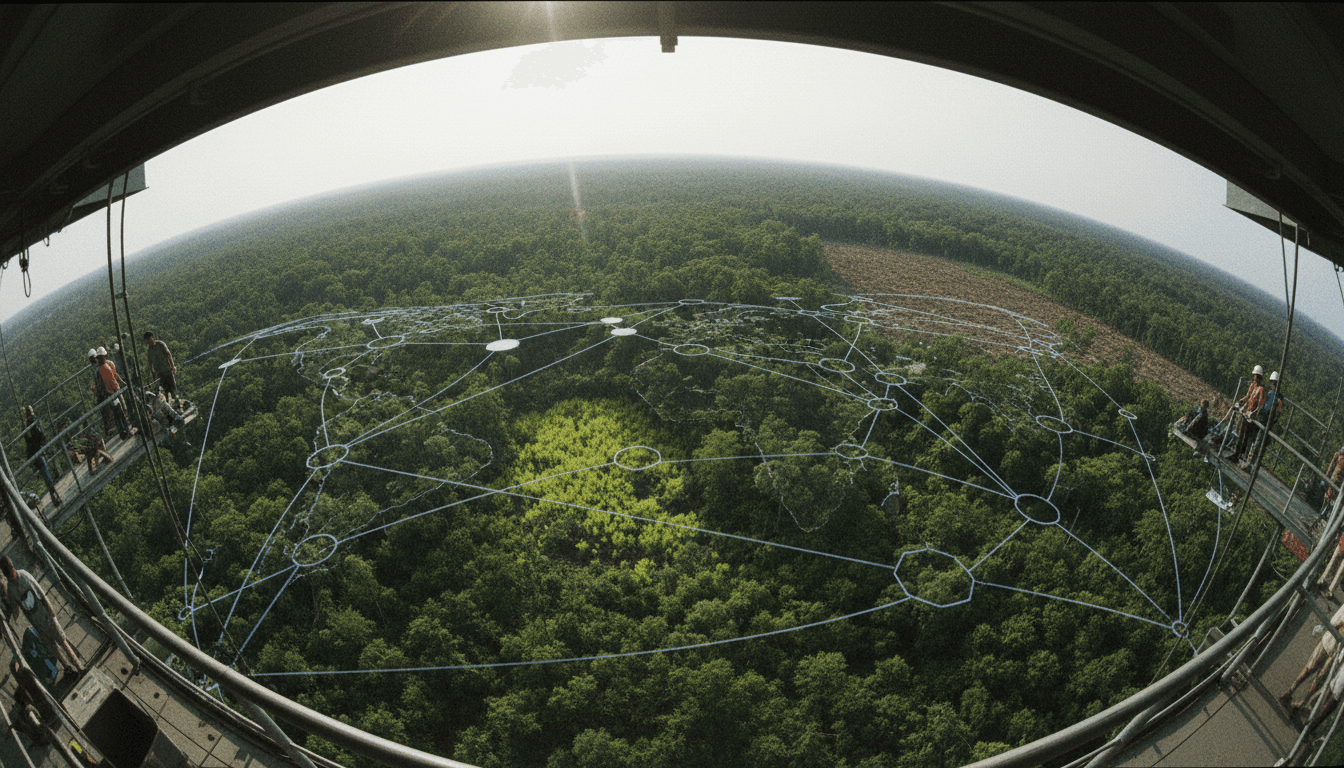
A global deforestation roadmap, designed to meet the ambitious promise to halt deforestation, has been unveiled, offering a critical framework for environmental and economic stakeholders worldwide. This comprehensive strategy, detailed by Climate Home News on Sunday, April 12, 2026, aims to bridge the gap between aspirational pledges and tangible action, providing a much-needed blueprint for international cooperation and policy implementation.
The Story: Charting a Course to Zero Deforestation
The newly announced global deforestation roadmap emerges as a direct response to the escalating crisis of forest loss and its profound implications for climate stability and biodiversity. While the specific entities involved in its creation are not detailed in the initial report, the very nature of a ‘global roadmap’ implies extensive collaboration among international bodies, national governments, NGOs, and potentially private sector actors committed to sustainability. The core objective is clear: to provide a structured, actionable pathway that can genuinely meet existing commitments to halt deforestation. This is not merely a reiteration of past pledges but an attempt to operationalize them, outlining specific milestones, responsibilities, and mechanisms for accountability. The roadmap is expected to address key drivers of deforestation, including agricultural expansion, illegal logging, and infrastructure development, while also promoting sustainable land use practices and empowering local communities.
“The release of this global deforestation roadmap signifies a pivotal moment, shifting the conversation from ‘if’ we can halt deforestation to ‘how’ we will achieve it, providing concrete steps for nations and industries.”
The initiative acknowledges the complex socio-economic factors that often underpin deforestation, suggesting a multi-faceted approach that integrates economic incentives, robust governance, and technological solutions. Its timing in April 2026 underscores the urgency felt by the international community to accelerate progress on climate goals, particularly as the window for limiting global warming continues to narrow. The success of this global deforestation roadmap will hinge on its ability to foster genuine political will and secure sustained financial commitments from signatory nations and corporations.
Impact Analysis: Realigning Climate Ambitions with Action
The unveiling of this global deforestation roadmap holds significant implications for the broader environment and climate landscape. Forests are indispensable carbon sinks, biodiversity hotspots, and regulators of local and regional climates. Halting deforestation is not merely an environmental goal; it is a fundamental pillar of any credible strategy to combat climate change, protect endangered species, and ensure the resilience of ecosystems. This roadmap could serve as a powerful tool to galvanize efforts, providing a common set of principles and targets that can be adopted and adapted by diverse regions.
Economically, the roadmap could drive a paradigm shift in supply chains, encouraging companies to divest from deforestation-linked commodities and invest in sustainable alternatives. This could lead to increased demand for certified products, fostering responsible land management practices across agricultural, timber, and mining sectors. Furthermore, the emphasis on a global deforestation roadmap highlights the interconnectedness of climate challenges, demonstrating that localized efforts, while crucial, must be part of a larger, coordinated international strategy. Its success could set a precedent for addressing other complex environmental issues through collaborative, action-oriented frameworks. For more insights into how corporate responsibility is evolving, see our coverage on sustainable finance trends.
Context & Background: From Pledges to Pathways
The call for a global deforestation roadmap is not new; it builds upon decades of international pledges and initiatives that have often struggled to achieve their full potential. Major milestones include the New York Declaration on Forests in 2014, which aimed to halve natural forest loss by 2020 and end it by 2030, and the Glasgow Leaders’ Declaration on Forests and Land Use at COP26, where over 140 countries pledged to halt and reverse forest loss and land degradation by 2030. Despite these high-level commitments, deforestation rates have remained alarmingly high in many critical regions, driven by persistent demand for agricultural commodities like palm oil, soy, and beef, as well as illegal logging and mining.
Previous efforts have often been hampered by a lack of clear implementation strategies, insufficient funding, and challenges in monitoring and enforcement. This new roadmap aims to address these systemic weaknesses by providing a more granular and prescriptive approach. It reflects a growing recognition that generic pledges, while important for setting ambition, must be complemented by concrete, measurable steps and robust accountability mechanisms. The roadmap also likely incorporates lessons learned from regional initiatives and successful conservation projects, seeking to scale best practices globally.
What’s Next: Implementation and Accountability
The immediate future for this global deforestation roadmap will involve its dissemination and the subsequent efforts to secure widespread adoption and implementation. Key challenges will include translating its global principles into specific national policies, securing adequate financial resources for conservation and sustainable development, and establishing transparent monitoring systems to track progress and identify areas requiring intervention. There will be significant pressure on major forest nations and commodity-importing countries to integrate the roadmap’s provisions into their domestic legislation and trade policies.
Furthermore, the effectiveness of the roadmap will be critically assessed by its ability to engage and empower Indigenous communities and local populations, who are often the frontline guardians of forests. Their rights and traditional knowledge must be central to any successful strategy. Upcoming international environmental conferences and bilateral negotiations will likely serve as platforms for countries to formally endorse and commit to specific actions outlined in the roadmap. The next few years will be crucial in determining whether this framework can truly deliver on the promise to halt deforestation or if it will join the ranks of well-intentioned but ultimately unfulfilled pledges. The financial sector, too, will play a vital role, as investors increasingly scrutinize companies’ exposure to deforestation risk. For further reading on the role of finance, consider our articles on green investment strategies.
Key Takeaway: A Blueprint for Forest Protection
This global deforestation roadmap represents a critical evolution in the international community’s approach to forest conservation. It moves beyond broad declarations to offer a detailed blueprint for action, aiming to provide the necessary structure and impetus to finally meet the long-standing promise to halt deforestation. Its success is paramount not just for forests, but for the stability of our global climate, the preservation of biodiversity, and the well-being of countless communities worldwide. The coming years will be a test of collective political will and the capacity for genuine, coordinated action on one of the planet’s most pressing environmental challenges.