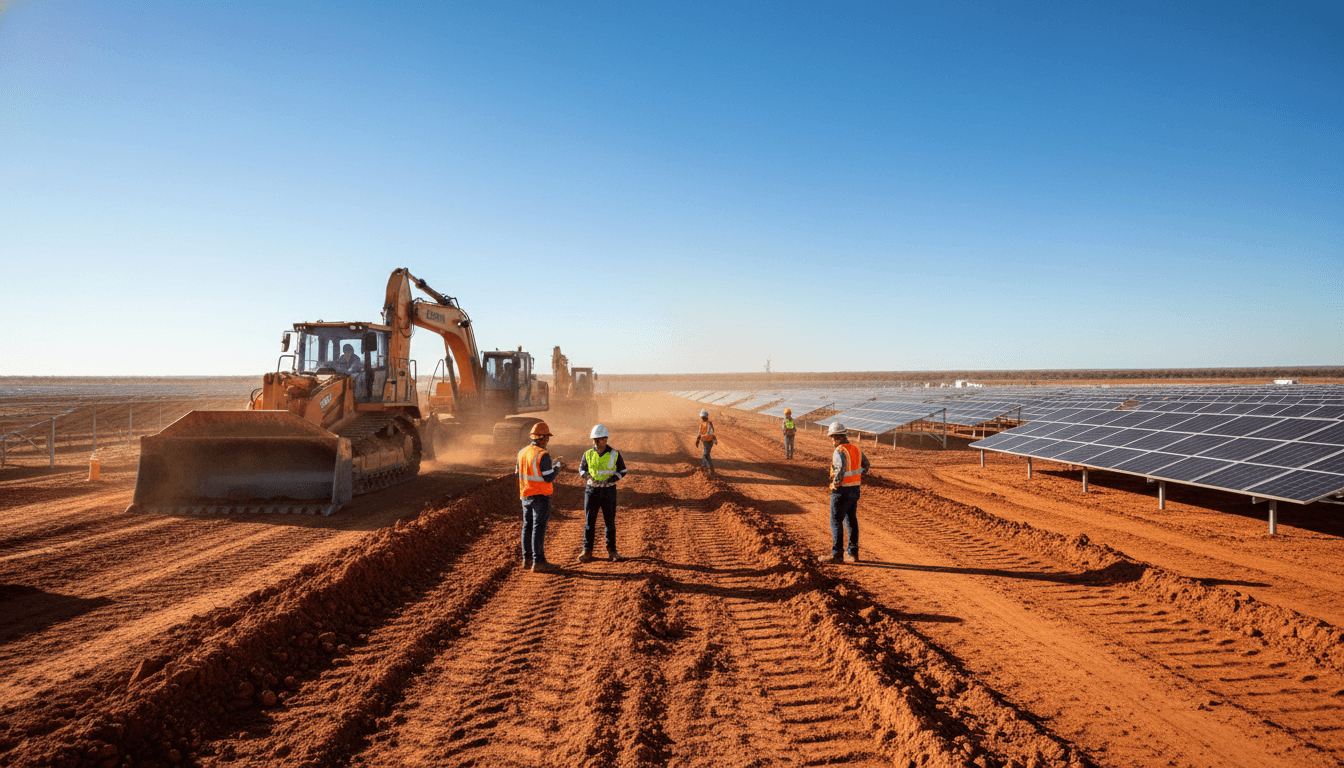
Fortescue Pilbara renewable grid acceleration is underway, as the mining giant announced on Tuesday, April 14, 2026, a significant ramp-up of its efforts to establish a vast renewable energy infrastructure across its Pilbara operations. This ambitious project aims to power its extensive mining activities entirely with green energy, marking a pivotal moment in the decarbonisation of heavy industry.
Fortescue, a major player in the global iron ore market, is at the forefront of this transformation. The acceleration signifies a deepening commitment to its decarbonisation targets, moving beyond incremental changes to a wholesale shift in its energy consumption profile. The Pilbara region, known for its rich mineral deposits, is now set to become a proving ground for large-scale industrial renewable energy integration.
Impact Analysis
The Fortescue Pilbara renewable grid acceleration has profound implications for the broader environment and climate landscape. It demonstrates a tangible pathway for energy-intensive industries to transition away from fossil fuels, setting a precedent for other mining companies and heavy industries globally. By leveraging the abundant solar and wind resources of the Pilbara, Fortescue is not only reducing its own carbon footprint but also contributing to the development of a robust renewable energy supply chain in a remote and challenging environment.
This move is particularly significant given the scale of Fortescue’s operations. Mining, by its nature, is an energy-intensive process, from excavation and crushing to transportation. Powering these operations with renewables will lead to a substantial reduction in Scope 1 and Scope 2 emissions, directly contributing to global climate goals. Furthermore, the investment in such a large-scale grid could stimulate innovation in energy storage solutions and grid management technologies, which are crucial for the widespread adoption of intermittent renewable energy sources.
“The Fortescue Pilbara renewable grid acceleration represents a critical step in demonstrating that net-zero operations are not just an aspiration but an achievable reality for even the most demanding industrial sectors.”
The project also carries economic benefits, potentially stabilising energy costs for Fortescue in the long term, insulating it from the volatility of global fossil fuel markets. This economic rationale, coupled with environmental imperatives, strengthens the business case for other corporations to follow suit. For more insights on corporate decarbonisation strategies, see our related environment & climate articles.
Context & Background
Fortescue’s journey towards decarbonisation has been a gradual yet determined one. The company has previously outlined ambitious targets to achieve net-zero emissions across its operations, and this latest announcement serves as a concrete manifestation of those commitments. The Pilbara region, with its vast, flat landscapes and high solar irradiance, is ideally suited for large-scale solar power generation, while coastal areas offer significant wind resources.
Historically, mining operations in remote areas like the Pilbara have relied heavily on diesel generators and gas-fired power plants due to the lack of established grid infrastructure. The challenge for Fortescue has been to not only build a renewable generation capacity but also to integrate it into a resilient and reliable grid capable of meeting the fluctuating power demands of its complex mining processes. This involves significant investment in transmission lines, substations, and potentially battery energy storage systems.
What’s Next
The acceleration of the Fortescue Pilbara renewable grid suggests a rapid development phase in the coming years. Future implications include the potential for Fortescue to become a net exporter of green energy, or to attract green hydrogen production facilities to the region, leveraging its abundant renewable power. We can anticipate further announcements regarding specific project milestones, financing structures, and technological partnerships as the grid takes shape.
Upcoming decisions will likely revolve around the precise mix of solar, wind, and storage technologies, as well as the optimal integration strategies with existing conventional power sources during the transition phase. The success of this project could also influence government policy regarding renewable energy incentives and infrastructure development in remote industrial zones, potentially paving the way for a broader green industrial revolution across Australia.
Why This Matters
The Fortescue Pilbara renewable grid acceleration matters immensely because it showcases a viable path for heavy industry to achieve deep decarbonisation. It moves beyond pledges and pilot projects to a full-scale industrial transformation, demonstrating that economic growth and environmental stewardship can be pursued simultaneously. This initiative provides a powerful example for global industries grappling with their own carbon footprints, proving that with strategic investment and commitment, a future powered by clean energy is not just possible, but actively being built.
This dramatic shift in Fortescue’s energy strategy will undoubtedly have a ripple effect, encouraging competitors and other sectors to re-evaluate their own decarbonisation timelines and investment strategies. It underscores the growing understanding that climate action is not merely a regulatory burden, but a strategic imperative and an opportunity for long-term resilience and competitive advantage in a rapidly changing global economy.