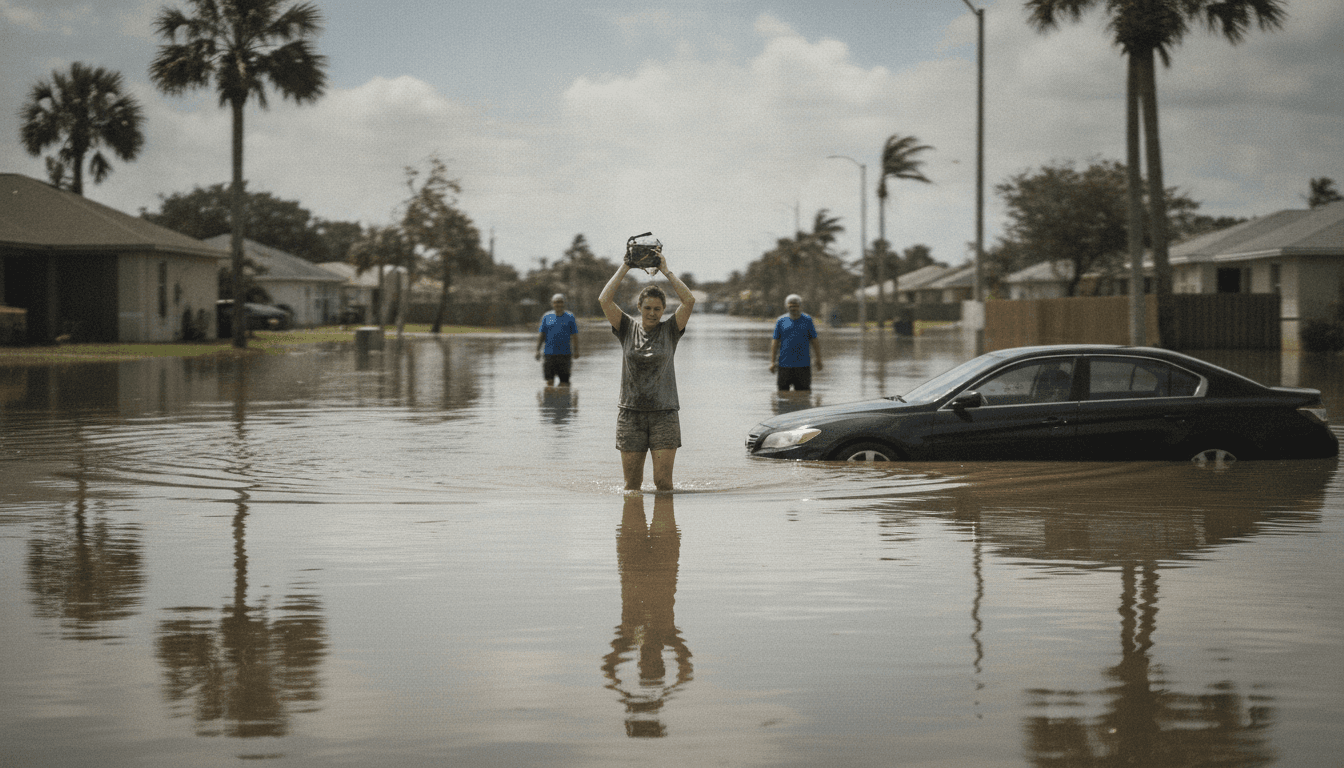
Flooding claims first weather fatality in Cocke County since Hurricane Helene, marking a grim milestone for the Tennessee region and underscoring the escalating human cost of extreme weather events. The tragic incident, reported on Friday, May 29, 2026, by The Watchers, highlights the persistent vulnerability of communities to the intensifying impacts of climate change, even in areas not directly in the path of a named hurricane.
Details surrounding the fatality remain sparse, but the confirmation of a weather-related death due to flooding in Cocke County is a stark reminder of the immediate and often devastating consequences of heavy rainfall and subsequent inundation. This event is particularly significant as it represents the first such fatality in the county since Hurricane Helene, suggesting a potential shift in the pattern or intensity of local weather hazards.
Impact Analysis: A Shifting Climate Burden
The death in Cocke County due to flooding claims first weather fatality in Cocke County, serves as a poignant indicator of the broader environmental and climate landscape. While hurricanes typically garner significant attention for their destructive power, localized flooding, often exacerbated by a changing climate, is emerging as a more pervasive threat across various regions. This incident underscores how even areas seemingly removed from direct coastal hurricane impacts are increasingly susceptible to severe weather phenomena.
For businesses and insurers, this event adds another data point to a growing trend of increased climate risk. The financial implications of such localized disasters extend beyond immediate property damage, affecting supply chains, agricultural output, and local economies. The need for robust climate adaptation strategies and resilient infrastructure becomes ever more critical. Related environment & climate articles frequently discuss the escalating costs of inaction against climate change.
“The increasing frequency and intensity of localized flooding events, even in inland areas, demand a recalibration of our risk models and a renewed focus on community-level resilience,” says a leading climate risk analyst.
The incident also brings into sharp focus the human element of climate change – the direct loss of life. Beyond economic metrics, these fatalities represent profound societal costs that are often overlooked in broader climate discussions. The fact that this is the first weather-related fatality in Cocke County since Hurricane Helene suggests a potential benchmark for assessing the evolving nature of climate hazards in the region.
Context & Background: A History of Vulnerability
Cocke County, like many parts of Tennessee, is no stranger to severe weather. However, the specific mention of Hurricane Helene as the last benchmark for a weather-related fatality due to flooding claims first weather fatality in Cocke County, indicates a significant gap in time and a potential change in the nature of the threat. Hurricane Helene, while a major storm, would have had a distinct atmospheric signature and widespread impact. The current flooding, however, could be attributed to more localized, intense rainfall events – a pattern consistent with climate change projections for many regions.
Industry trends show a clear increase in flash flood warnings and incidents across the United States, even in areas historically less prone to such events. This is often linked to warmer atmospheric temperatures holding more moisture, leading to heavier downpours when conditions are right. Infrastructure, often designed for historical weather patterns, struggles to cope with these new extremes, leading to overwhelmed drainage systems and tragic outcomes.
What’s Next: Adapting to New Realities
The immediate aftermath of this fatality will likely see local authorities in Cocke County review existing flood preparedness protocols and emergency response mechanisms. Beyond the immediate, however, this incident should prompt a broader conversation about long-term climate resilience. This includes investment in updated flood mapping, improved early warning systems, and infrastructure upgrades designed to withstand future climate scenarios. Decisions on land use planning, particularly in floodplains, will also become increasingly critical.
For financial markets, the growing frequency of such events translates into higher insurance premiums, greater demand for climate-resilient investments, and increased scrutiny of companies’ climate risk disclosures. Investors are increasingly looking for entities that are proactively addressing climate vulnerabilities, not just reacting to disasters. Our recent coverage has highlighted how climate resilience is becoming a key factor in credit ratings.
Key Takeaway: The Unfolding Cost of Inaction
The tragic loss of life in Cocke County, the first weather-related fatality in the area since Hurricane Helene due to flooding claims first weather fatality in Cocke County, serves as a stark and somber reminder of the escalating human cost of climate change. It underscores that the impacts are not confined to distant shores or future generations but are unfolding here and now, affecting real communities and claiming lives. This incident calls for urgent, concerted action – from local flood defenses to global emissions reductions – to mitigate future risks and build more resilient societies in the face of an increasingly unpredictable climate.