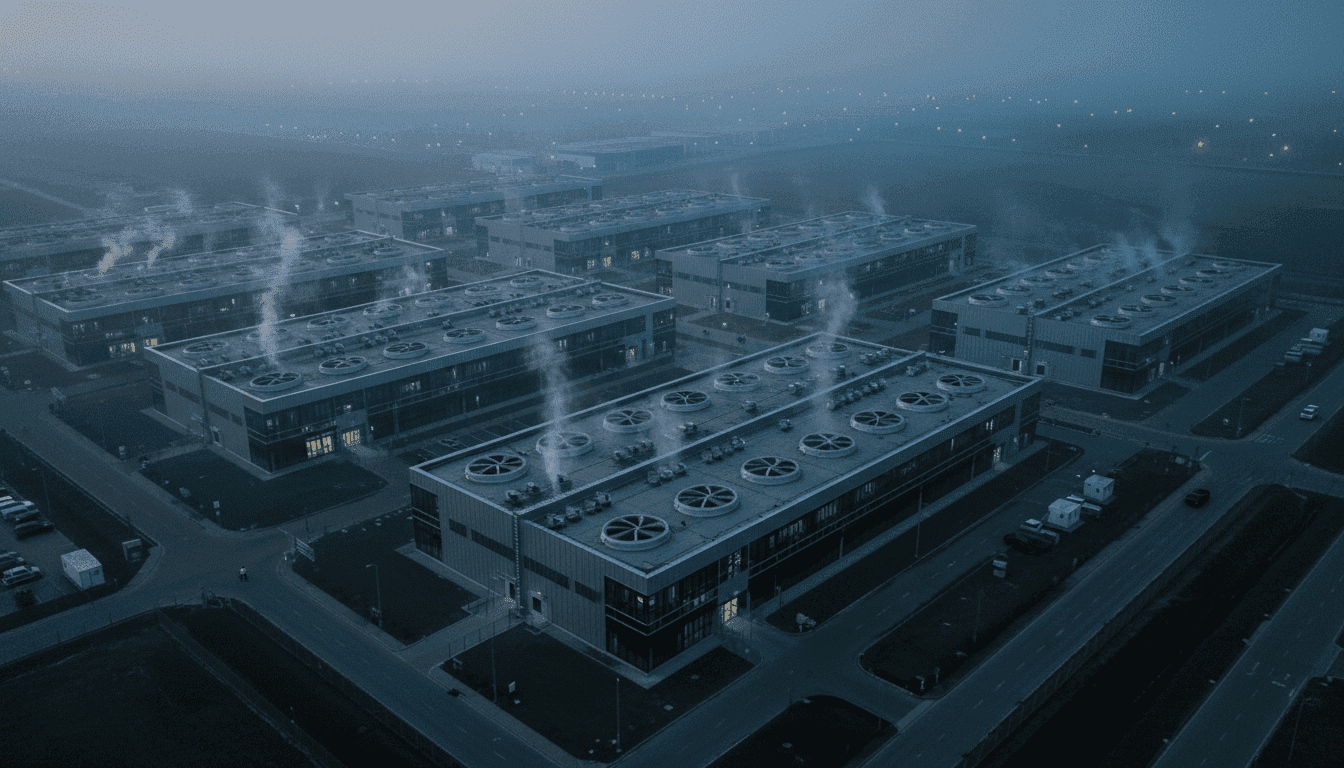
Data centers, air pollution, and their complex climate math are emerging as a significant concern following discussions at a recent climate and education conference on Monday, May 11, 2026. The rapid expansion of digital infrastructure, while seemingly benign, is revealing a critical nexus between technological advancement, energy consumption, and localized environmental degradation, particularly in the form of increased air pollution.
The Story: Unpacking the Digital Footprint
The conference, as reported by The Hechinger Report, brought into sharp focus the often-overlooked environmental consequences of the burgeoning data center industry. While the immediate climate impact of data centers is typically framed around their substantial electricity demand and associated carbon emissions, new scrutiny is being applied to their direct contribution to air pollution. This includes emissions from backup generators, which often run on diesel, as well as the broader strain they place on local power grids, potentially leading to increased reliance on fossil fuel power plants.
Discussions highlighted that the sheer scale of data center development, often concentrated in specific geographic regions, amplifies these localized impacts. Communities hosting these facilities are increasingly experiencing a deterioration in air quality, a direct consequence that often goes unaddressed in broader climate policy dialogues. The ‘climate math’ presented at the conference sought to quantify not just the carbon footprint, but also the particulate matter, nitrogen oxides, and other harmful pollutants released into the atmosphere, posing immediate health risks to nearby populations.
Impact Analysis: Beyond Carbon Emissions
The revelation that data centers significantly contribute to air pollution broadens the scope of environmental accountability for the tech sector. Traditionally, the focus has been on Scope 1 and 2 greenhouse gas emissions, pushing companies to invest in renewable energy sources for their operations. However, the conference underscored that this approach, while vital, may not fully capture the complete environmental burden. The localized impact of air pollution from data centers introduces a new dimension to environmental justice, as these facilities are often sited in areas that may already face disproportionate environmental burdens.
This adds pressure on regulatory bodies and tech giants to consider a more holistic environmental impact assessment for new data center projects. It moves the conversation beyond just renewable energy procurement to include stringent air quality controls, robust monitoring, and potentially, a re-evaluation of siting strategies. The implications extend to public health, with increased risks of respiratory and cardiovascular diseases in communities adjacent to these digital hubs. For more insights on this intersection, see our related environment & climate articles.
Context & Background: A Growing Digital Demand
The exponential growth of the internet, cloud computing, artificial intelligence, and streaming services has fueled an insatiable demand for data centers. These facilities are the physical backbone of the digital economy, operating 24/7 and requiring immense amounts of power for computing and cooling. While many tech companies have made public commitments to power their operations with 100% renewable energy, the transition is complex and often relies on purchasing renewable energy credits rather than direct grid decarbonization at the point of consumption. This distinction becomes critical when considering localized air pollution from data centers.
Historically, the environmental discussion around data centers centered on their water consumption and energy efficiency. However, as renewable energy integration improves, the focus is shifting to other externalities. The conference’s emphasis on air pollution represents a maturing understanding of the full environmental lifecycle of digital infrastructure, moving beyond a singular focus on carbon. This shift also reflects a growing awareness of the immediate, tangible health impacts on communities, rather than just the long-term, global threat of climate change.
“The true ‘climate math’ of data centers must account not only for global carbon emissions but also for the localized air pollution that directly impacts human health and environmental justice in host communities.”
What’s Next: Policy and Technological Innovation
The insights from the climate and education conference suggest that future policy and industry practices will need to adapt significantly. Expect increased calls for more rigorous environmental impact assessments for new data center constructions, including detailed analyses of projected air quality impacts. This could lead to stricter permitting requirements, mandating advanced emission control technologies for backup generators and exploring alternative, cleaner backup power solutions like battery storage or hydrogen fuel cells.
Furthermore, there may be a push for greater transparency from data center operators regarding their localized emissions and their contributions to air pollution. This could empower communities to advocate more effectively for their environmental health. On the technological front, research into more energy-efficient server technologies and innovative cooling solutions that reduce reliance on water or energy-intensive systems will likely accelerate. The challenge will be to balance the relentless demand for digital services with the imperative to protect local environments and public health.
Key Takeaway: Reassessing Digital Infrastructure’s True Cost
The discussion around data centers, air pollution, and climate math underscores a critical message: the digital revolution, while transformative, is not without its environmental costs. As the world becomes increasingly reliant on digital infrastructure, a comprehensive and nuanced understanding of its ecological footprint – extending beyond just carbon emissions to include localized air pollution – is paramount. This requires a collaborative effort from policymakers, industry leaders, and environmental advocates to develop sustainable solutions that ensure technological progress does not compromise the health of our planet or its inhabitants. The conference serves as a potent reminder that our digital future must be built on a foundation of environmental responsibility.