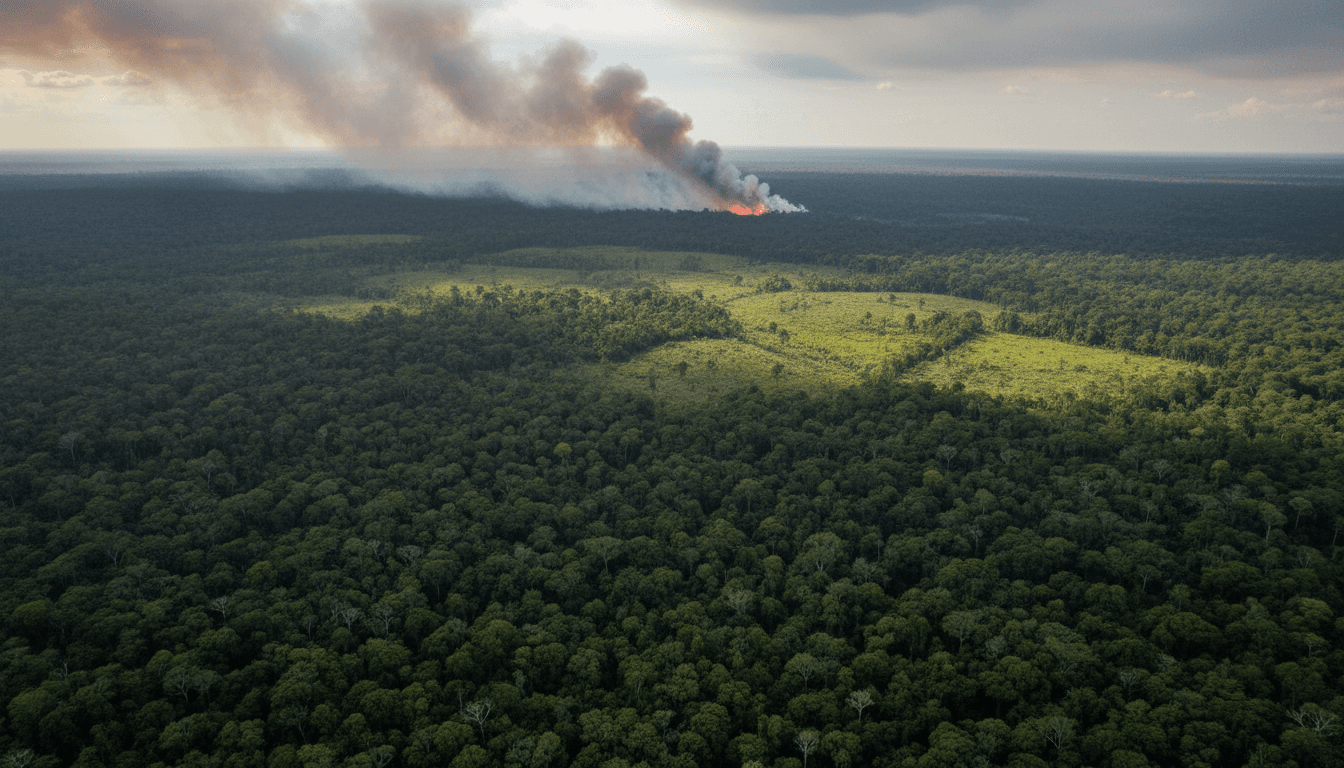
Amazon deforestation has reached an eight-year low, with the Brazilian Amazon experiencing a significant 36 percent reduction in deforested kilometers between August 2025 and March 2026 compared to the previous year. This marks the lowest figure since 2018, with a total of 1,460 square kilometers (564 square miles) of land cleared during this period, according to a recent report by the Brazilian Human and Environment Amazon Institute (Imazon).
Paulo Brando, a researcher and associate professor at the Yale School of the Environment, highlighted the positive implications of these figures.
“In general, when you see not only a pattern, but a trend in reducing deforestation, it means that sort of the actions taken by the government usually are in the right direction,”
he stated, suggesting effective management by national leaders.
Regional Shifts in Deforestation
The decline in Amazon deforestation was not uniform but showed remarkable improvements in historically high-deforestation states. Pará saw a substantial 52 percent drop, equating to 467 square kilometers (180 square miles) less clearing. Mato Grosso, a major soybean producer, also experienced a significant 38 percent reduction, or 163 square kilometers (63 square miles) less. Even Amazonas, the largest Brazilian state in the heart of the rainforest, recorded a decline, with 219 square kilometers (85 square miles) cleared, down from 335 square kilometers (129 square miles) in the previous period.
Ana Clis Ferreira, a spokesperson for Greenpeace Brazil, attributed these positive trends to the environment department under Minister Marina Silva. She specifically cited the restoration and strengthening of the First Action Plan for the Control of the Environment in the Amazon, improved fire management, and enhanced operations with Ibama, Brazil’s environment and renewables institute, as decisive factors. However, Clis Ferreira cautioned against complacency, noting the fragility of these gains: “History shows us that this decrease can be fragile, and that destruction occurs quicker than protection.” She also pointed to the upcoming election year and the potential for political shifts and congressional actions to undermine environmental protection efforts.
Wildfires and Persistent Threats
Despite the overall reduction in Amazon deforestation, the first months of 2026 brought a concerning increase in wildfires across the entire biome, up by a third. Furthermore, the Imazon report indicated a 17 percent increase in deforestation in March alone compared to the previous year, rising from 167 square kilometers in 2025 to 196 square kilometers in 2026. This uptick serves as a stark reminder of the ongoing challenges.
Roraima stands out as a critical exception to the overall positive trend. This state, generally drier than other Amazonian regions, saw a 21 percent increase in deforestation, losing 222 square kilometers (86 square miles) of forest. A separate report by INPE, the Brazilian space agency, recorded the most fire outbreaks from January to April in Roraima, with seven of the top ten most affected municipalities located there. Caracaraí, a municipality in Roraima, has been a consistent hotspot for fire outbreaks for at least three years and is under federal police investigation for illegal fires.
Larissa Amorim, a researcher at Imazon, emphasized the need for continued vigilance: “The March numbers should serve as a sign for governments to further intensify the fight against illegal deforestation, with oversight and punishment for the offenders.” She also advocated for strengthening bioeconomic initiatives, such as the production of açaí and Brazil nuts, and designating unused areas for conservation.
The Broader Environmental Landscape
The report also highlighted vulnerabilities within designated conservation areas. The Triunfo do Xingu environmental protection area in Pará, for instance, lost 35 square kilometers (14 square miles), placing it among the five most affected municipalities in the study. This underscores the persistent pressure on protected lands and the need for robust enforcement.
Stephen Porder, a professor of ecology at Brown University, acknowledged the encouraging decline but stressed that the ultimate goal must be zero deforestation. “We have to be aware that moving from cutting the size of Connecticut every year to cutting the size of my home state of Rhode Island every year is progress, but it’s still going to mow down the rest of the forest eventually,” he cautioned. Both Brando and Porder underscored the critical role of remote sensing technologies, like Imazon’s satellite-based system, in monitoring deforestation almost daily, providing essential data for policy formulation. Related environment & climate articles often emphasize the importance of such technological advancements in conservation efforts.
While the current trend is positive, Ana Clis Ferreira of Greenpeace Brazil noted that it is too early to definitively declare 2026 as a year of historic reduction. Historically, deforestation in the Amazon and other biomes tends to increase in the second half of the year, coinciding with the dry season and greater accessibility for clearing new areas. However, if the patterns from the last year persist, “the scenario points to a possible historic reduction in the annual deforestation rate in the Amazon.” This period of decreased Amazon deforestation offers a crucial window for Brazil to solidify its environmental protection policies and accelerate sustainable development initiatives.