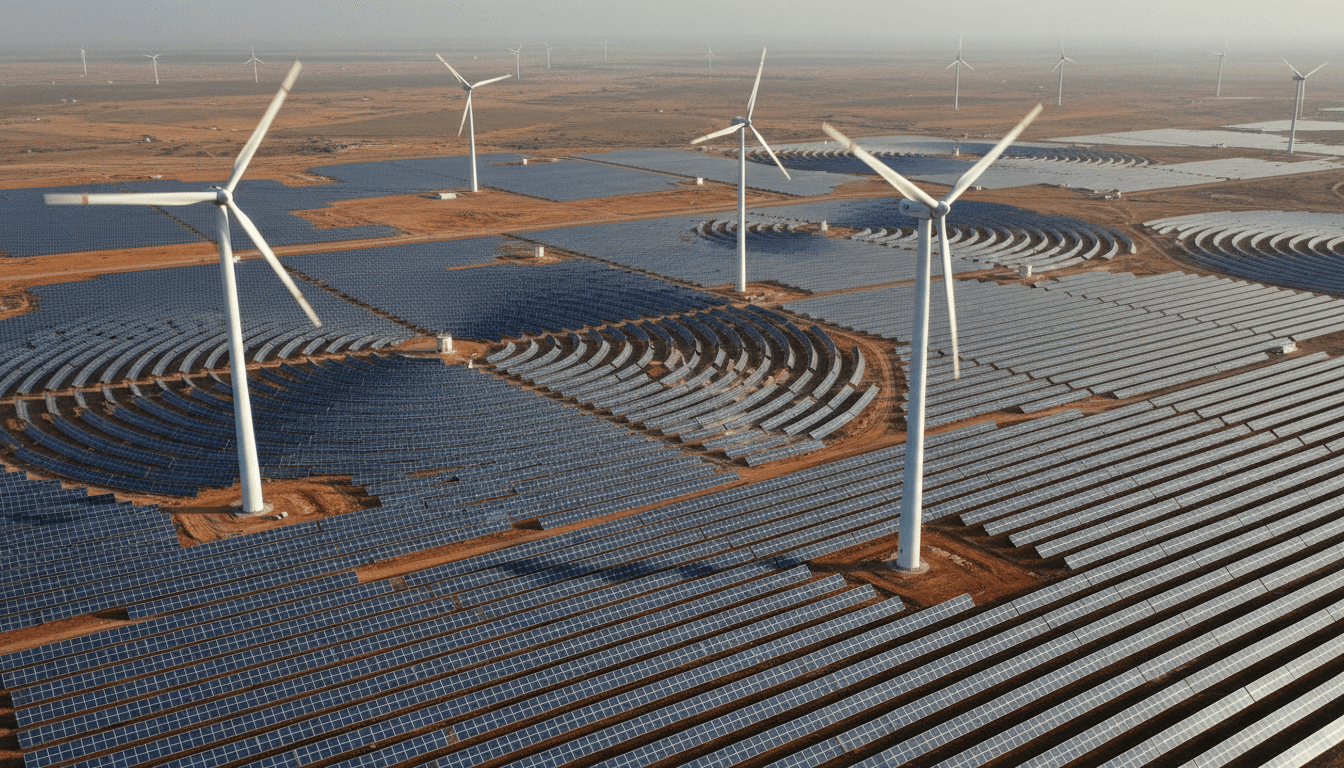
A 500 MWp wind-solar hybrid project has been commissioned by AMPIN Energy in Rajasthan, significantly strengthening India’s clean energy push. This landmark development, announced on Wednesday, May 6, 2026, marks a substantial step forward in the nation’s ambitious renewable energy targets and signals a growing trend towards integrated power generation solutions.
The Story: A Hybrid Powerhouse in Rajasthan
The commissioning of the 500 MWp wind-solar hybrid project in Rajasthan by AMPIN Energy represents a pivotal moment for India’s renewable energy sector. This large-scale facility leverages the complementary nature of wind and solar power, ensuring more consistent and reliable energy generation compared to standalone projects. Rajasthan, with its abundant solar insolation and significant wind potential, provides an ideal location for such a hybrid venture.
AMPIN Energy, a key player in the Indian renewable energy landscape, has successfully brought this massive project online, contributing substantially to the grid’s capacity for clean power. The combined output of 500 MWp underscores the scale of investment and technological integration required for such an undertaking, positioning it as one of the significant renewable energy projects in the country.
Impact Analysis: Strengthening India’s Clean Energy Push
This new hybrid project has profound implications for India’s clean energy push. By adding 500 MWp of renewable capacity, it contributes directly to the nation’s goal of achieving 500 GW of non-fossil fuel electricity capacity by 2030. The hybrid nature of the project also addresses the intermittency challenges often associated with singular renewable sources. Solar power peaks during the day, while wind power often strengthens during evenings and nights, providing a more stable supply profile.
“The integration of wind and solar at this scale is crucial for grid stability and reliability, moving India closer to its decarbonization goals while ensuring energy security.”
Furthermore, the project’s location in Rajasthan, a state at the forefront of India’s renewable energy transition, reinforces the region’s role as a green energy hub. Such developments attract further investment, foster local job creation, and drive technological advancements in the renewable sector.
Context & Background: India’s Renewable Trajectory
India has been aggressively pursuing renewable energy expansion to meet its growing energy demands and combat climate change. The country has set ambitious targets, including significantly increasing its non-fossil fuel energy share. Previous initiatives have seen a rapid expansion in both solar and wind capacities, but hybrid projects like AMPIN Energy’s 500 MWp wind-solar hybrid project are becoming increasingly important for optimizing land use, transmission infrastructure, and energy output.
The government’s supportive policies, including renewable purchase obligations and various incentive schemes, have created a conducive environment for private sector investment in the clean energy space. This project is a direct outcome of such policy frameworks, demonstrating the viability and scalability of large-scale renewable energy solutions in the Indian market. The synergy between wind and solar in Rajasthan is a natural fit, allowing for enhanced capacity utilization and improved financial returns on investment.
What’s Next: The Future of Hybrid Renewables
The successful commissioning of this 500 MWp wind-solar hybrid project is expected to catalyze further investment and development in similar integrated renewable energy projects across India. As the nation continues its clean energy push, the focus will likely shift towards optimizing grid integration, energy storage solutions, and smart grid technologies to manage the influx of renewable power. Future developments may also explore multi-hybrid models, incorporating battery storage or other emerging technologies to further enhance reliability and dispatchability.
The operational success of projects like AMPIN Energy’s will provide valuable data and best practices for future large-scale renewable deployments, guiding policy decisions and technological innovations. The trend towards hybrid systems is not just about increasing capacity but also about building a more resilient and sustainable energy infrastructure.
Key Takeaway: A Model for Sustainable Growth
The commissioning of the 500 MWp wind-solar hybrid project by AMPIN Energy in Rajasthan is more than just an addition to India’s energy grid; it is a testament to the nation’s commitment to sustainable development and a blueprint for future clean energy endeavors. This project significantly strengthens India’s clean energy push by demonstrating the efficacy of integrated renewable solutions, paving the way for a greener, more secure energy future for the country and providing valuable lessons for global energy transitions.