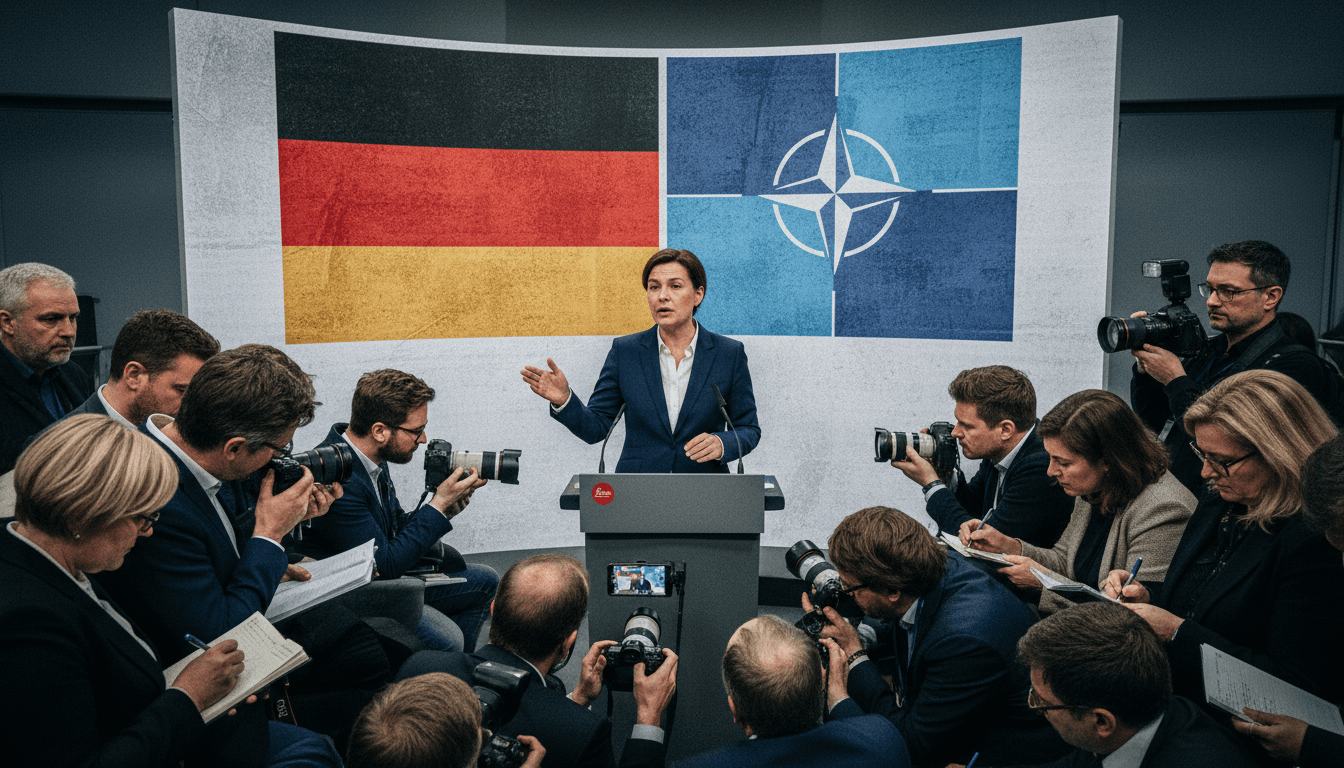
Germany’s government views a potential US troop withdrawal as ‘foreseeable,’ a development that has prompted NATO to seek clarification regarding the future of American military presence in Europe. This statement, issued on Sunday, May 3, 2026, signals a significant shift in transatlantic security dynamics and raises questions about the long-term stability of the alliance’s eastern flank.
The announcement from Berlin comes amidst increasing speculation and internal discussions within the alliance regarding Washington’s commitment to its European deployments. While the exact scale and timeline of any potential withdrawal remain undisclosed, Germany’s preemptive acknowledgment suggests that advanced diplomatic channels may have already conveyed preliminary intentions, or that Berlin is preparing for such an eventuality.
The Story: Shifting Sands of Alliance
The core of this unfolding narrative involves the United States, Germany, and NATO. Germany, a cornerstone of European security and host to a significant contingent of US forces, has publicly stated that a US troop withdrawal is ‘foreseeable.’ This declaration from Berlin is not merely a passive observation but a proactive statement that underscores the seriousness with which European powers are approaching potential changes in American foreign policy and defense posture. NATO, the bedrock of collective security for its member states, has responded by seeking clarification, indicating a degree of uncertainty and a need for direct communication from Washington to understand the implications for alliance strategy and readiness. The timing of this development, Sunday, May 3, 2026, places it firmly in the current geopolitical calendar, demanding immediate attention from international observers and policymakers.
Impact Analysis
The potential US troop withdrawal would profoundly impact the broader world news landscape, particularly in Europe. For NATO, it necessitates a re-evaluation of its collective defense capabilities, especially concerning deterrence in Eastern Europe. Member states bordering Russia, already apprehensive about regional security, would likely increase calls for greater European autonomy in defense. Economically, host nations like Germany could face both challenges and opportunities: the loss of US military spending would be a blow, but it could also spur indigenous defense industries and greater European defense integration. Geopolitically, a reduced US presence might be perceived by adversaries as a weakening of the transatlantic bond, potentially emboldening assertive actions in various theaters. It also places immense pressure on European leaders to demonstrate a unified and robust defense strategy, moving beyond reliance on American military might. This situation could accelerate discussions on European strategic autonomy, a concept gaining traction in recent years.
Context & Background: A Shifting Transatlantic Bargain
The idea of a US troop withdrawal is not entirely new. Throughout the post-Cold War era, and particularly in recent years, debates have periodically surfaced in Washington about the cost and strategic necessity of maintaining large troop deployments abroad. Previous administrations have sometimes signaled intentions to rebalance global military presence, often citing a desire to focus resources on emerging threats or to encourage allies to shoulder a greater share of the defense burden. Industry trends have also pointed towards a future where technology and rapid deployment capabilities might reduce the need for static, large-scale garrisons. However, the specific context of Germany’s ‘foreseeable’ assessment suggests a more concrete and imminent possibility than previous discussions. This is happening at a time when global tensions are high, and the role of alliances is under constant scrutiny.
US Troop Withdrawal: What’s Next?
The immediate future will likely involve intense diplomatic activity. NATO’s request for clarification underscores the urgency for Washington to communicate its intentions clearly. Allies will be keen to understand the scope, timeline, and strategic rationale behind any US troop withdrawal. Germany, as a key host nation, will be particularly interested in the specifics, as it will need to plan for logistical, economic, and security adjustments. Future implications include a potential acceleration of European defense initiatives, possibly leading to increased military spending by European nations and greater integration of their armed forces. There might also be a renewed focus on multilateral defense agreements within Europe, independent of direct US command structures. Predictions suggest that if a significant withdrawal occurs, it could fundamentally alter the balance of power in Europe and redefine the nature of the transatlantic alliance for decades to come.
“The ‘foreseeable’ nature of this potential withdrawal suggests that the tectonic plates of transatlantic security are already shifting, demanding a proactive and unified response from European capitals.”
The long-term consequences could see Europe taking on a more prominent and independent role in its own defense and international security. This pivotal moment could either strengthen European unity or expose existing fault lines within the continent. The global implications extend beyond Europe, as other US allies around the world will be closely watching how this situation unfolds, potentially reassessing their own security arrangements and strategic dependencies. The decision on a US troop withdrawal will undoubtedly be one of the most significant foreign policy moves of the mid-2020s, with reverberations felt across continents. The implications for global defense spending and alliance structures cannot be overstated.