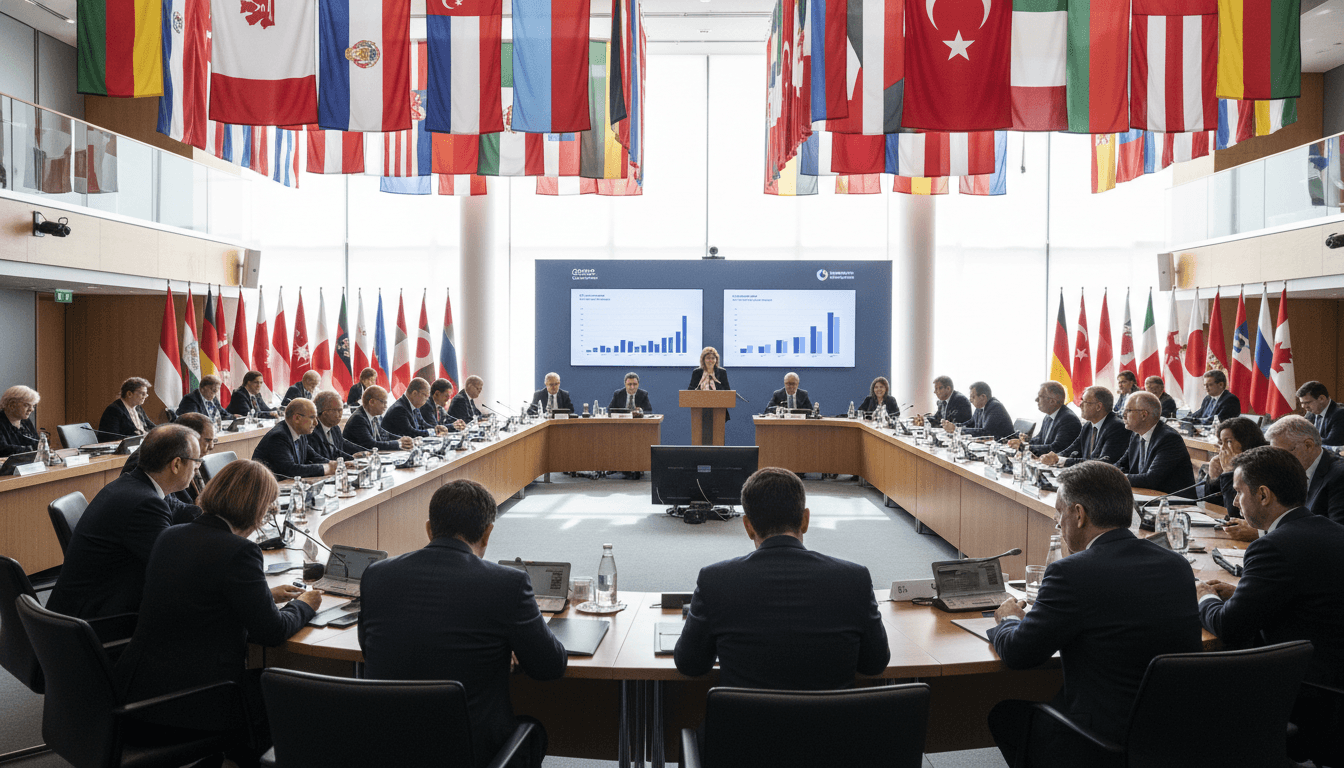
Türkiye urges rules-based trade, warning against a rising tide of protectionism at the annual OECD Ministerial Council Meeting in Paris on Friday. Turkish Trade Minister Ömer Bolat, speaking at the two-day summit chaired by Finland, championed trade liberalization as the singular path to economic development and global prosperity, pointing to Türkiye’s two decades of export-driven growth as a testament to successful industrial policy liberalization. He underscored that collaborative efforts and initiatives fostering free trade are indispensable for the global economy, cautioning that restrictive measures would impede, rather than bolster, recovery efforts.
Türkiye Urges Rules-Based Trade
Minister Bolat’s address at the OECD Ministerial Council Meeting (MCM) highlighted Ankara’s unwavering commitment to the rules-based multilateral trade system, with the World Trade Organization (WTO) at its core. This stance comes amidst growing global anxieties over supply chain vulnerabilities and national economic interests, which have led several nations to explore more protectionist policies. Türkiye, a nation deeply integrated into global trade networks, views such measures as counterproductive to long-term stability and growth. Bolat’s emphasis on cooperation and initiatives promoting free trade signals Türkiye’s ambition to position itself as a vocal advocate for open markets and international economic collaboration.
Beyond the plenary sessions, Minister Bolat engaged in a series of critical bilateral meetings, shaping Türkiye’s future economic partnerships. A significant discussion revolved around the pending Türkiye-Ukraine Free Trade Agreement (FTA) with Ukrainian Deputy Premier Taras Kachka. Ankara ratified the agreement three years prior, and Kyiv is now in the final stages of its own ratification.
“We hope that the Türkiye-Ukraine FTA can enter into force without much delay,”
Bolat stated, reflecting the urgency and strategic importance of the agreement for both nations, particularly in the context of Ukraine’s post-conflict reconstruction. In a tangible show of support, Türkiye offered to host the third Ukraine Reconstruction Forum this September, an offer readily accepted by the Ukrainian delegation.
On the North American front, Bolat held comprehensive talks with Canadian International Trade Minister Maninder Sidhu, focusing on expanding aviation links. Weekly flights between Türkiye and Canada have recently seen a substantial increase from 12 to 21, indicating growing bilateral ties. The ministers also reviewed ongoing discussions between their respective energy ministries concerning a March agreement for the construction of CANDU-type nuclear reactors, alongside acknowledging significant Canadian investor interest in Türkiye’s mining sector. Separately, the Turkish Trade Minister met with US Trade Representative Jamieson Greer to address outstanding issues in Türkiye-US trade relations, though specific agreements from this meeting were not disclosed.
Regional Trade and Customs Cooperation
In a crucial regional engagement, Bolat met with Bulgarian Deputy Economy Minister Krasimir Yakimov to discuss strategies for boosting their annual trade volume from $9 billion towards a $10 billion target. A primary focus of their discussion was easing congestion at the three major customs crossings, a perennial challenge, especially during the summer months when Turkish immigrants traveling through Bulgaria contribute to increased traffic. Bolat specifically requested additional measures to expedite crossings during this period. The next Türkiye-Bulgaria Joint Customs Committee meeting is scheduled to convene in Sofia next week, indicating concrete steps towards resolving these logistical hurdles. Earlier in his visit, Bolat also held discussions with French Foreign Trade Delegate Minister Nicolas Forissier and engaged with members of the French Business and Industry Association (MEDEF) alongside Turkish business representatives under the World Turkish Business Council (DTIK), signaling efforts to strengthen trade and investment ties within the European Union.
The emphasis on the World Trade Organization and multilateral trade frameworks by Türkiye at the OECD summit underscores a broader geopolitical trend. As global economies grapple with inflation, geopolitical instability, and the lingering effects of supply chain disruptions, the debate between open markets and national protectionism intensifies. Türkiye’s advocacy for a rules-based system reflects its strategic economic positioning and its reliance on export-led growth. The bilateral engagements with Ukraine, Canada, the US, and Bulgaria demonstrate a multi-pronged approach to securing economic partnerships and addressing specific trade impediments, from FTAs and reconstruction efforts to aviation links and customs facilitation. These discussions are not merely transactional but are indicative of Türkiye’s proactive diplomacy in navigating a complex global trade landscape. The outcomes of these bilateral and multilateral talks will undoubtedly shape Türkiye’s economic trajectory and contribute to the ongoing discourse on the future of global trade.