Sudan’s borders are straining under a dramatic refugee crisis, with over a million Sudanese refugees in neighboring Chad facing severe funding cuts that threaten essential food, shelter, and support. As the conflict in Sudan approaches its three-year mark, the UN refugee agency (UNHCR) and the World Food Programme (WFP) have issued a stark warning: without an urgent injection of $428 million, vital assistance will be drastically scaled back, deepening an already dire humanitarian situation.
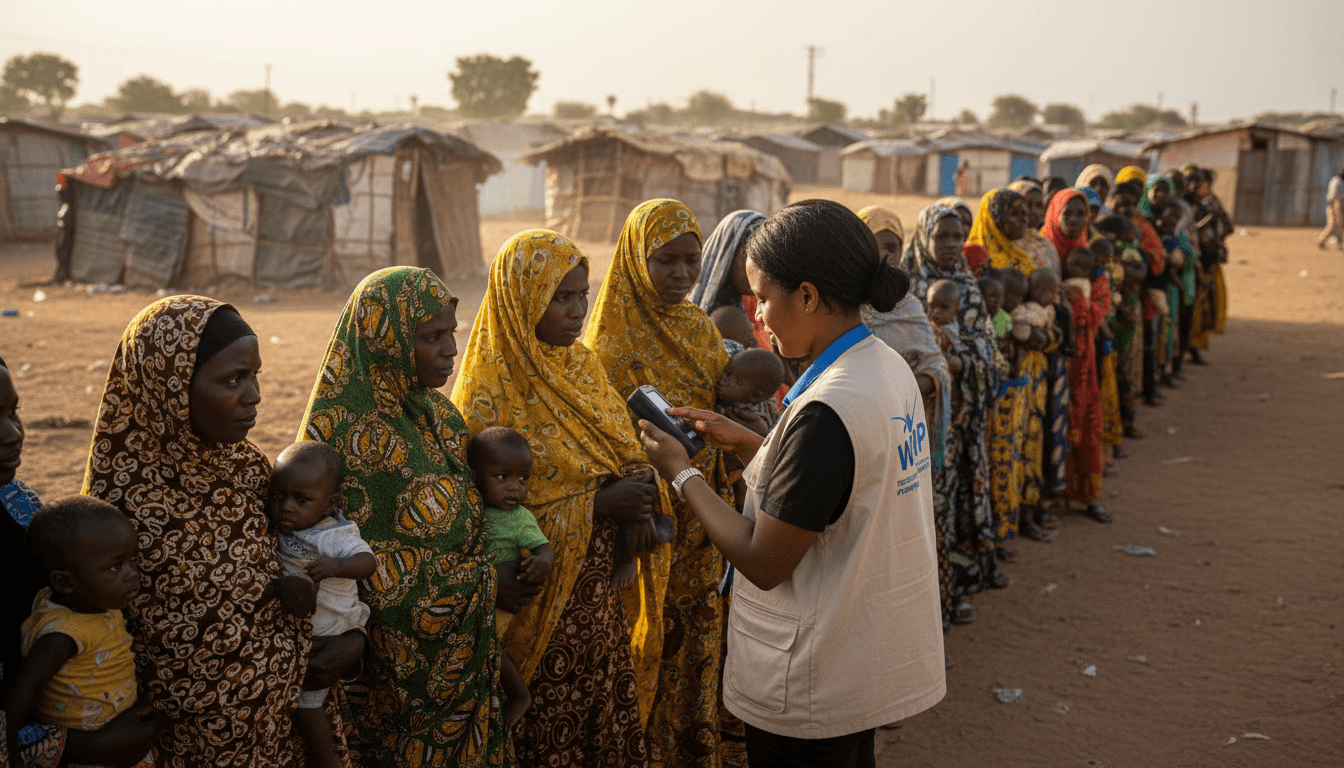
Chad, a nation already contending with its own developmental challenges, has become a reluctant host to some 1.3 million people displaced by the Sudanese war. A staggering 900,000 of these individuals have arrived since April 2023, fleeing the brutal conflict between rival militaries. The influx continues unabated, with nearly 15,000 new arrivals recorded since the start of 2026, further stretching the resources of host communities. The image of Sudanese refugees queuing for food aid, their identities confirmed by biometric tests in Adré, Chad, underscores the immense scale of this ongoing humanitarian effort, now jeopardized by financial shortfalls.
Alarming Child Trafficking Crisis in South Sudan
Further south, South Sudan is grappling with an alarming child trafficking crisis, exacerbated by escalating conflict and massive displacement. Siobhán Mullally, the UN Human Rights Council-appointed Special Rapporteur on trafficking in persons, has described the situation as a “dire humanitarian crisis,” with widespread attacks on civilians disproportionately impacting children. The confluence of nearly two million internally displaced South Sudanese and 1.4 million people fleeing the war in neighboring Sudan has created a fertile ground for exploitation.
Ms. Mullally highlighted a disturbing “normalisation” of conflict-related sexual violence. Girls are being trafficked for sexual slavery and forced into pregnancies, while boys face forced recruitment into combat roles. These abductions for sexual slavery, forced recruitment, child and forced marriage, and sexual exploitation constitute grave violations of international law, potentially amounting to war crimes. The pervasive culture of impunity is a significant barrier to justice. Ms. Mullally has urgently called for the operationalization of the African Union-mandated Hybrid Court to ensure accountability and provide justice for survivors.
Burundi Investigates Mystery Illness
In Burundi, health authorities, with support from the UN World Health Organization (WHO), are in a race against time to identify a mystery illness that has claimed five lives in the Mpanda district, near the border with the Democratic Republic of the Congo. The outbreak, first reported on March 30, has sickened 28 people, primarily affecting members of the same household. Patients have exhibited severe symptoms including fever, vomiting, diarrhea, and blood in their urine, with some cases progressing to jaundice and anemia.
Initial tests for highly infectious diseases such as Ebola and Marburg virus diseases have returned negative, but further laboratory analyses are underway. The WHO is actively assisting Burundi’s Ministry of Health to bolster disease surveillance, field investigation, clinical care, and laboratory diagnosis. A joint team of experts has been deployed to the affected area to coordinate the response and sustain critical operations aimed at containing the spread of this unknown pathogen. The swift, coordinated effort underscores the global health community’s vigilance against emergent infectious diseases.
Serbia’s Democratic Erosion: A Growing Concern
Meanwhile, in Europe, UN human rights chief Volker Türk has voiced “very worrying” concerns over a dramatic erosion of civic space and democratic freedoms in Serbia. Türk highlighted increasing restrictions on civil society, continuous attacks against critical voices, and significant constraints on media freedom as indicators of a declining democratic environment. Recent local elections were reportedly marred by voter intimidation, procedural irregularities, and police raids on opposition premises, raising serious questions about the integrity of the electoral process.
The continued targeting of journalists and mounting pressure on independent media outlets further underscore the deteriorating situation. Türk urged Serbian authorities to uphold the fundamental rights to freedom of expression and peaceful assembly. He called for concrete steps to restore public trust in national institutions through transparent and impartial investigations into human rights violations, emphasizing that accountability for any wrongdoing is paramount. This pattern of democratic backsliding in Serbia resonates with broader global trends where civic liberties are increasingly under threat.
“The erosion of civic space, marked by continuing attacks against critical voices, restrictions on media freedom and broader constraints on democratic expression, are very worrying,” Türk stated, underscoring the gravity of the situation in Serbia.
The multifaceted challenges highlighted by the UN—from humanitarian crises in Africa to democratic backsliding in Europe—paint a complex picture of global instability. The funding shortfalls for Sudanese refugees, the horrific child trafficking in South Sudan, the emergent health threat in Burundi, and the diminishing freedoms in Serbia collectively represent a significant test for international cooperation and human rights advocacy. Addressing these issues requires not only immediate humanitarian aid but also sustained political will and robust accountability mechanisms to protect vulnerable populations and uphold democratic principles worldwide. The interconnectedness of these crises demands a holistic and coordinated international response to prevent further destabilization and human suffering.