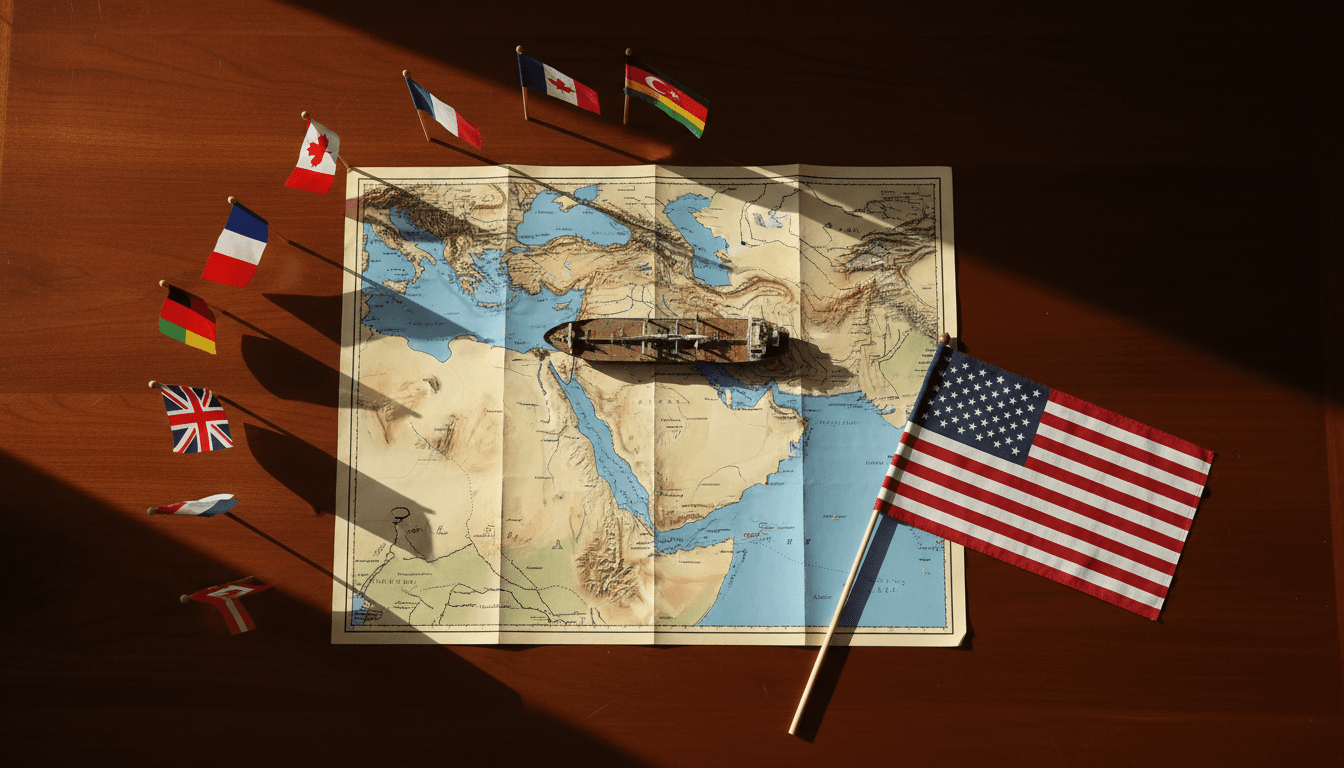
NATO allies refuse Trump’s Strait of Hormuz blockade, a stunning development announced on Monday, April 13, 2026, by The New Arab. This collective decision by key Western powers marks a significant diplomatic setback for the United States and raises profound questions about the coherence of the transatlantic alliance in navigating critical geopolitical flashpoints in the Middle East.
The refusal comes amidst escalating tensions in the region, with the U.S. administration, under President Trump, reportedly pushing for a naval blockade of the strategic Strait of Hormuz to exert maximum pressure on a regional adversary. While the specific adversary was not named in the initial report, the Strait of Hormuz has long been a choke point for global oil shipments and a frequent flashpoint in regional power struggles. The proposed blockade would have aimed to halt maritime traffic through the narrow waterway, a move that would undoubtedly have severe implications for international trade and energy markets.
Impact Analysis
The immediate impact of NATO allies refusing to join the proposed blockade is a clear demonstration of divergence within the alliance on strategic military and diplomatic initiatives. This is not merely a logistical disagreement but a fundamental split on the approach to regional security and the use of coercive measures. It signals a reluctance among European and other NATO members to be drawn into potentially escalatory confrontations without a broader consensus or perceived threat directly impacting their core security interests. This decision could embolden states targeted by U.S. foreign policy and complicate future attempts by Washington to forge multilateral coalitions for military action or economic sanctions.
Furthermore, the economic ramifications of a blockade, even one supported by the U.S. alone, would be substantial. The Strait of Hormuz is critical for the global oil supply, and any disruption, real or perceived, could send crude oil prices soaring, impacting consumers and industries worldwide. The refusal by NATO allies to participate suggests a deep concern among these nations about exacerbating global economic instability and potentially triggering a broader regional conflict.
Context & Background
The current diplomatic rift is not without historical precedent. Tensions between the U.S. and some European allies regarding Middle East policy have simmered for years, particularly concerning approaches to Iran, the Israeli-Palestinian conflict, and the broader regional security architecture. Previous U.S. administrations have also faced challenges in securing full allied participation in military interventions or stringent economic measures. However, the explicit refusal by NATO allies to join Trump’s Strait of Hormuz blockade on such a critical and high-stakes issue represents a significant escalation of these historical divergences.
The Strait itself has been a focal point of international security concerns for decades. Its strategic importance lies in its role as the only sea passage from the Persian Gulf to the open ocean, through which roughly one-fifth of the world’s total oil supply passes. Past incidents, including tanker attacks and naval confrontations, underscore the fragility of the peace in this vital waterway and the potential for rapid escalation. The U.S. Fifth Fleet, based in Bahrain, routinely patrols the Strait, underscoring its commitment to ensuring freedom of navigation.
NATO Allies Refuse Strait Blockade
The decision by NATO allies to refuse Trump’s Strait of Hormuz blockade underscores a broader trend of shifting geopolitical alliances and the increasing assertion of independent foreign policy agendas by traditional U.S. partners. This move by the allies reflects a careful calculation of their national interests, weighing the potential economic and security costs of participation against the benefits of alignment with U.S. policy. It highlights the growing challenges for any U.S. administration in rallying international support for unilateral or highly assertive foreign policy actions, particularly when those actions carry significant risks of escalation.
This development will inevitably prompt a reassessment within Washington regarding its alliance strategies and its approach to engaging with key partners on matters of global security. It also raises questions about the long-term viability of NATO as a unified front in addressing threats beyond its traditional European theater.
What’s Next
Looking ahead, the immediate implications will be a period of intense diplomatic maneuvering. The U.S. administration will likely seek alternative ways to implement its strategy, potentially through bilateral agreements with willing partners or by acting unilaterally, albeit with increased international isolation. NATO allies, meanwhile, will need to articulate a coherent alternative strategy for de-escalating regional tensions and securing global maritime trade routes without resorting to blockades.
The global energy markets will be closely watching for any further developments, as the potential for disruption remains high. Decisions made in the coming weeks and months will shape not only the future of the Strait of Hormuz but also the dynamics of international alliances and the balance of power in the Middle East. The long-term impact on transatlantic relations could be profound, potentially leading to a more multipolar approach to global security challenges where traditional alliances are tested and redefined. Related world news articles will undoubtedly continue to track these evolving dynamics.
Key Takeaway
“The refusal by NATO allies to join Trump’s Strait of Hormuz blockade is a watershed moment, signaling a clear divergence in strategic priorities and a challenge to U.S. leadership in critical regions. It forces a re-evaluation of how international coalitions are formed and sustained in an increasingly complex geopolitical landscape.”
This incident is a stark reminder that even the most enduring alliances are subject to strain when national interests diverge on issues of war, peace, and economic stability. The path forward will require nuanced diplomacy and a recognition that unilateral actions, even by a superpower, carry significant limitations without broad international buy-in. The ripple effects of this decision will resonate across global security, economic, and diplomatic spheres for the foreseeable future, necessitating careful monitoring by international affairs observers.