Myanmar protesters reject embassy propaganda in London, challenging the narrative put forth by the nation’s diplomatic mission on Friday, May 15, 2026. The demonstration underscores the deep international division surrounding Myanmar’s political landscape, particularly the legitimacy of its current ruling authority born from a military coup.
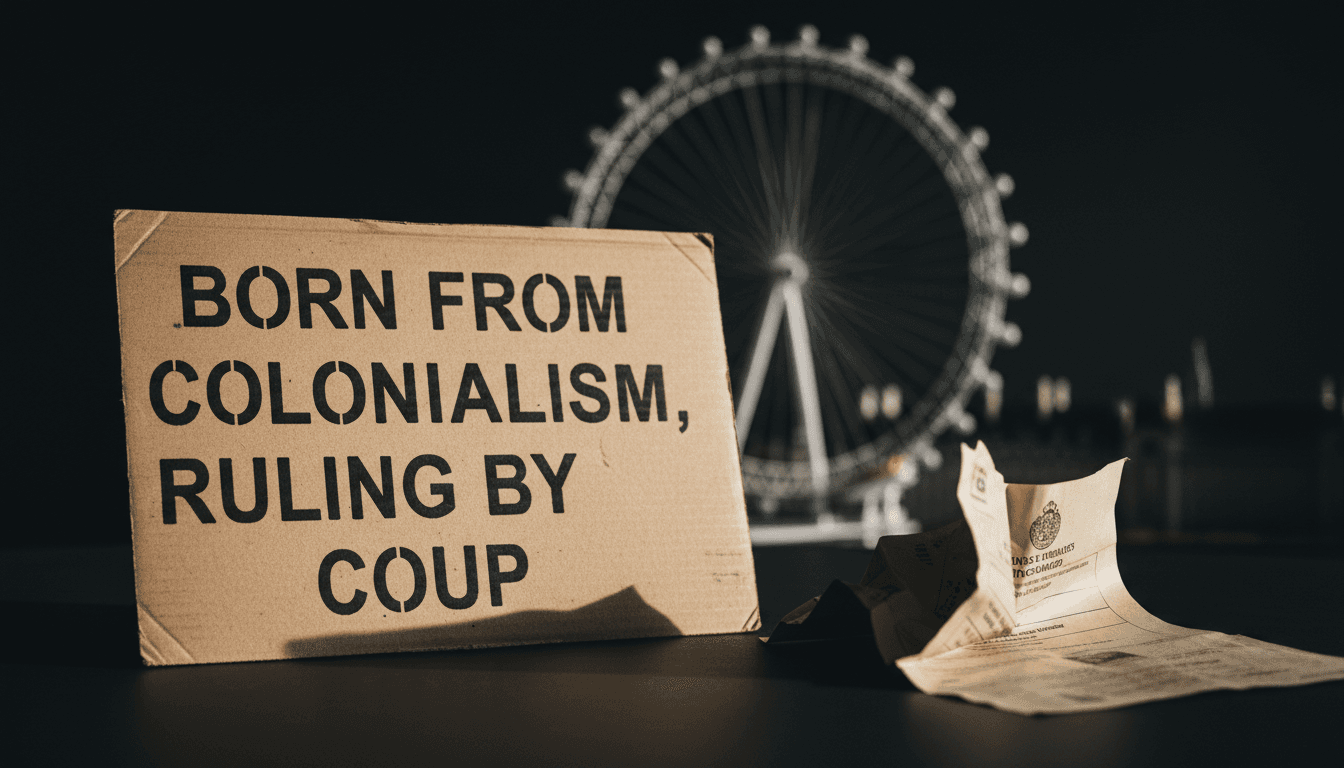
The protest in London directly confronted the messaging emanating from the Myanmar embassy, which has been perceived by many as an attempt to legitimize the military junta that seized power. Demonstrators highlighted the historical parallels between the junta’s rule and Myanmar’s colonial past, drawing a direct line from “Born from colonialism, ruling by coup.” This powerful slogan encapsulates the sentiment among many overseas Myanmar nationals and international observers who view the current regime as an illegitimate continuation of oppressive governance structures.
The specific details of the propaganda being rejected by the protesters were not detailed in the source, but the very act of public rejection at a diplomatic outpost signifies a concerted effort by the diaspora to counter official state narratives. Such demonstrations often involve public speeches, informational leaflets, and visual displays designed to educate the public and garner international support for the pro-democracy movement within Myanmar. The scene at the embassy would likely have been one of determined, peaceful resistance, aiming to amplify the voices suppressed within their home country.
Impact Analysis
This public rejection of Myanmar embassy propaganda in London carries significant weight in the broader world news landscape. Diplomatic missions are intended to represent their home governments, and when their messaging is actively and publicly refuted by their own citizens abroad, it exposes the deep internal fractures within the nation. For the international community, such protests serve as a visible reminder of the ongoing crisis and the widespread opposition to the military regime. It complicates the ability of the junta to project an image of control and legitimacy on the global stage, especially in key capitals like London.
The incident also highlights the critical role of diaspora communities in international affairs. Often serving as the primary advocates for change when direct action within their home country is suppressed, these groups leverage their freedom of expression to keep global attention on humanitarian and political crises. Their actions can influence public opinion, pressure foreign governments to adopt stronger stances against authoritarian regimes, and contribute to the moral and financial support for resistance movements. The continued presence of Myanmar protesters reject embassy propaganda globally reinforces the international isolation of the junta.
Furthermore, the phrasing “Born from colonialism, ruling by coup” is a potent rhetorical tool. It frames the current situation not merely as an internal political struggle but as a legacy of external domination and internal oppression. This historical framing resonates with broader anti-colonial movements and can garner sympathy and support from diverse international groups, including those advocating for self-determination and human rights. This narrative strengthens the argument that the coup is not just an interruption of democracy but a perpetuation of historical injustices.
Context & Background
Myanmar’s political trajectory has been marked by periods of military rule interspersed with brief democratic openings since its independence from British colonial rule in 1948. The legacy of colonialism profoundly shaped the nation’s institutions and ethnic dynamics, contributing to a complex political landscape often exploited by military factions. The most recent coup, which occurred in February 2021, overthrew the democratically elected government of Aung San Suu Kyi, plunging the country into a severe humanitarian and political crisis. This event sparked widespread protests within Myanmar and a robust resistance movement, alongside international condemnation and sanctions.
Since the coup, the military junta has faced significant domestic opposition, manifested through a civil disobedience movement and armed resistance. Internationally, many governments have refused to recognize the junta’s legitimacy, maintaining diplomatic ties with representatives of the overthrown government or downgrading relations. The incident in London on May 15, 2026, is part of a continuing global effort by Myanmar diaspora communities and human rights organizations to challenge the junta’s legitimacy and advocate for the restoration of democracy. This ongoing struggle often sees diplomatic missions becoming focal points for protest and counter-narrative efforts, as seen when Myanmar protesters reject embassy propaganda.
The use of propaganda by authoritarian regimes is a well-documented tactic aimed at controlling information, shaping public perception, and legitimizing their rule both domestically and internationally. In response, opposition movements, particularly those operating from outside the country, often prioritize countering these narratives. This dynamic is a recurring feature in conflicts involving non-democratic governments and their exiled opposition. For a deeper understanding of similar related world news articles, particularly those concerning diplomatic protests and diaspora activism, The Financial Standard has provided extensive coverage. The battle for narrative control is as crucial as any military or political struggle, especially in the age of global information flow.
“The persistent efforts of diaspora communities to challenge official narratives at diplomatic missions are crucial in preventing the international normalization of illegitimate regimes.”
What’s Next
The incident of Myanmar protesters rejecting embassy propaganda in London signals a continued and likely intensified campaign by the diaspora to influence international opinion and policy. We can anticipate further protests at Myanmar’s diplomatic missions in other major world capitals, particularly as the political situation within Myanmar remains unresolved. These actions will continue to pressure host governments to maintain or increase sanctions against the junta and to provide support to the pro-democracy movement.
The junta, in turn, is expected to double down on its own propaganda efforts, attempting to project stability and control, while simultaneously seeking to suppress dissent both at home and abroad. This could involve increased digital censorship, attempts to discredit protest movements, and diplomatic maneuvers aimed at securing recognition from sympathetic nations. The ongoing struggle for international legitimacy will be a key battleground, with incidents like the London protest serving as critical flashpoints.
Future implications include potential shifts in international diplomatic recognition, increased humanitarian aid for displaced populations, and possibly, coordinated international efforts to facilitate a return to democratic rule. The sustained pressure from groups like the Myanmar protesters who reject embassy propaganda is a vital component in keeping the crisis on the global agenda and preventing it from fading into obscurity.
Key Takeaway
The May 15, 2026, protest in London, where Myanmar protesters reject embassy propaganda, powerfully underscores the enduring international opposition to Myanmar’s military junta and the critical role of diaspora communities in challenging authoritarian narratives. This event is not merely a localized demonstration but a significant symbol of the global struggle for democratic legitimacy against a regime born from a colonial past and sustained by a modern coup. It highlights how the fight for control over information and historical narrative is central to the broader political conflict, influencing international policy and public perception.