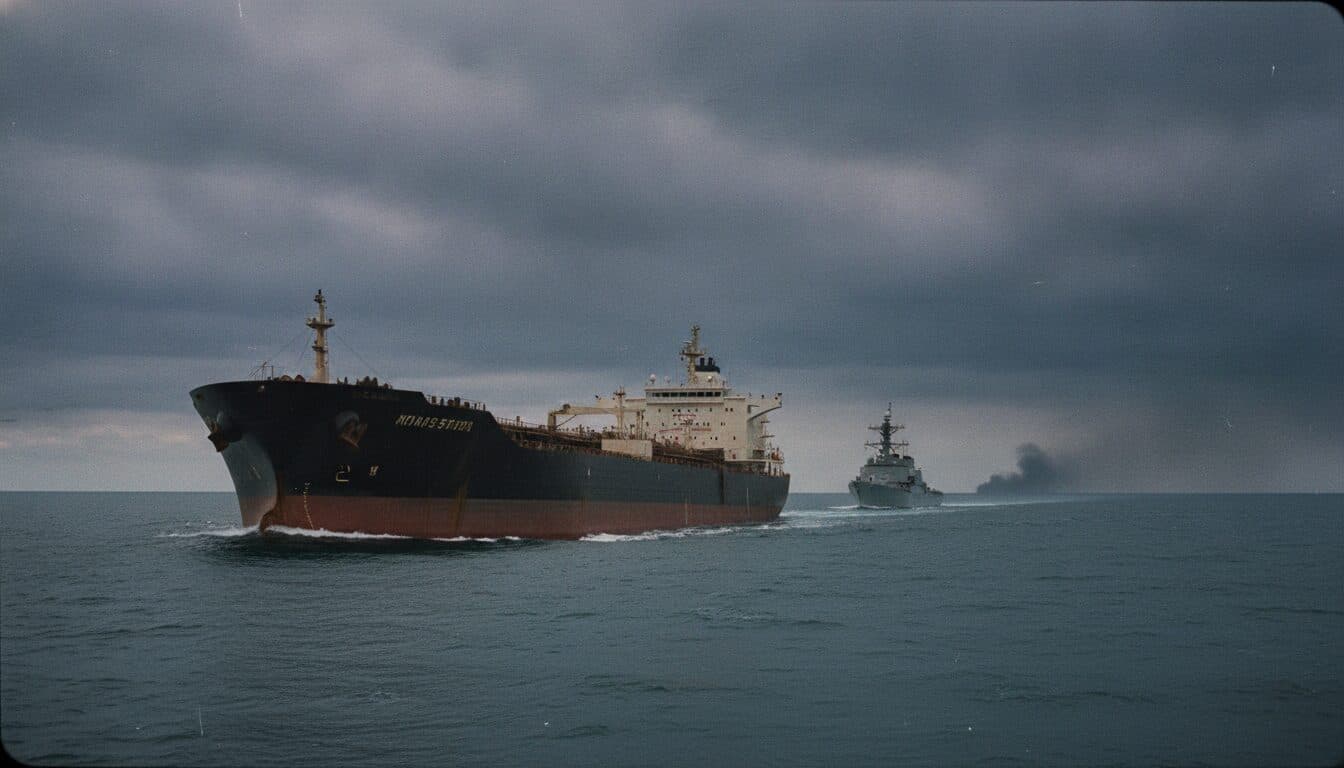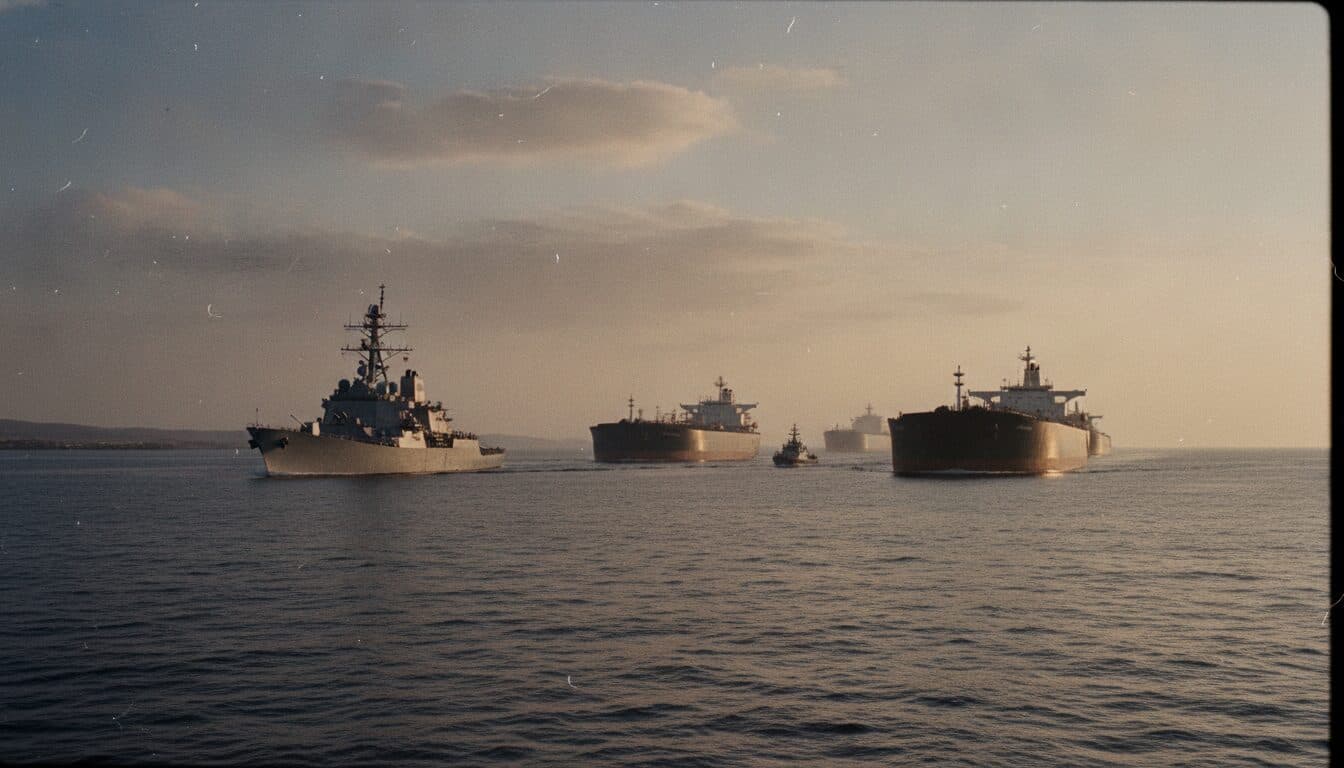
The global economy is bracing for significant disruption as the United States and Iran engage in a dramatic escalation of military conflict, centering on control of the vital Strait of Hormuz. This renewed confrontation has sent global oil prices surging and ignited widespread concern over economic stability and the potential for a broader regional conflagration.
The current crisis intensified on Monday, July 13, 2026, when Iran’s Persian Gulf Strait Authority (PGSA) declared the Strait of Hormuz closed, citing “recent hostile actions by the US forces” and deeming passage “currently unfeasible.” The PGSA asserted that permits for passage could only be obtained through its website. This declaration follows earlier Iranian attacks on vessels on July 6 and 7, 2026, marking a direct challenge to international maritime law and freedom of navigation.
Conversely, the United States has vehemently rejected Iran’s claim. U.S. Central Command (CENTCOM) stated on Sunday, July 12, 2026, that “Iran does not control” the vital shipping lanes. President Donald Trump, speaking on Monday, July 13, 2026, to Fox News, affirmed the U.S. commitment to keeping the Strait open, declaring, “we’re going to keep the Strait, and we’ll probably run it.” He further announced the reinstatement of a U.S. blockade on Iran and imposed a 20% fee on cargo shipments through the Strait to cover security costs, proclaiming the U.S. as “THE GUARDIAN OF THE HORMUZ STRAIT.” Despite Iran’s assertions, maritime tracker Kpler reported that while traffic was significantly disrupted on Sunday, July 12, 2026, the Strait was not completely closed, with 14 vessels crossing, half of which were Iran-flagged. On Monday, at least three commodity vessels had reportedly crossed.
The military engagements have been swift and severe, following a breakdown of a ceasefire agreed upon last month. The U.S. has conducted multiple nights of airstrikes against Iranian targets. CENTCOM reported striking dozens of Iranian targets on Sunday, July 12, 2026, utilizing U.S. fighter aircraft, naval vessels, and for the first time, one-way attack aerial and sea drones. Targets included military air-defense systems, coastal radar sites, missile and drone capabilities, and small boats. Earlier strikes on July 7 and 8, 2026, hit over 80 Iranian targets, including air defenses, radar sites, anti-ship missile sites, and more than 60 Islamic Revolutionary Guard Corps (IRGC) small boats. On July 9, 2026, U.S. forces reportedly hit nearly 90 military targets along the Iranian coast, bringing the total to over 300 targets over three nights. These U.S. strikes reportedly resulted in two fatalities and three injuries in southwest Iran on Monday, July 13, 2026.
In retaliation, Iran’s Revolutionary Guards claimed strikes against five regional countries. On Monday, July 13, 2026, Iran reported targeting U.S. military facilities in Bahrain and Kuwait, destroying radar systems in Oman, and striking fuel tanks and ammunition depots at Prince Hassan Air Base in Jordan. The Jordanian military confirmed shooting down four Iranian missiles over the country on Monday, July 13, 2026. Bahrain also reported its air defense systems intercepting several Iranian missile and drone attacks. Qatar condemned Iranian attacks on Jordan, Bahrain, and Kuwait.
The financial ramifications of the escalating Strait of Hormuz conflict are already significant. Brent crude futures were up over 3% to $78.48 per barrel, and U.S. West Texas Intermediate crude was up over 3% to $73.76 a barrel on Monday, July 13, 2026. Brent crude had previously jumped nearly 6% to over $80 a barrel on July 8, 2026, after Iran’s initial attacks on tankers. The Strait of Hormuz is a critical chokepoint for global oil trade, with approximately one-fifth of the world’s oil and gas traffic passing through it daily before the current disruption. The significant increase in crude oil prices reflects market anxiety and the potential for severe supply chain disruptions globally.
“The disruption in the Strait of Hormuz is a direct threat to global energy security and could trigger significant inflationary pressures worldwide.”
The international community has voiced deep concern. UN Secretary-General Antonio Guterres raised the alarm over both U.S. strikes on Iran and Tehran’s attacks on shipping and its neighbors. The foreign ministers of Germany, France, and Britain condemned Iran’s attacks on commercial shipping and regional countries, calling for a restoration of the ceasefire and resumption of negotiations. Mediators, including Pakistan, Qatar, and Oman, are continuing efforts to de-escalate tensions and broker a lasting agreement.
Looking ahead, the immediate future hinges on whether diplomatic efforts can regain traction or if the military escalation will continue. The U.S. stance on maintaining control and imposing fees on Strait traffic, coupled with Iran’s determined claims of sovereignty, creates a volatile standoff. Investors and consumers alike face uncertainty regarding oil prices and the stability of global trade routes. The potential for a wider regional conflict involving multiple nations remains a significant concern, making this a critical situation for global economic and political stability.