“`json
{
“headline”: “US, Iran Clash Over Strait of Hormuz Control”,
“content”: “
The global economy faces a renewed threat of energy crisis and regional destabilization as the United States and Iran engage in a direct confrontation for control over the vital Strait of Hormuz. Tensions, long simmering, have boiled over into open hostilities, transforming a cycle of retaliation into a high-stakes struggle for access to the critical maritime corridor. The implications for global energy markets and geopolitical stability are profound, drawing urgent concern from world leaders.
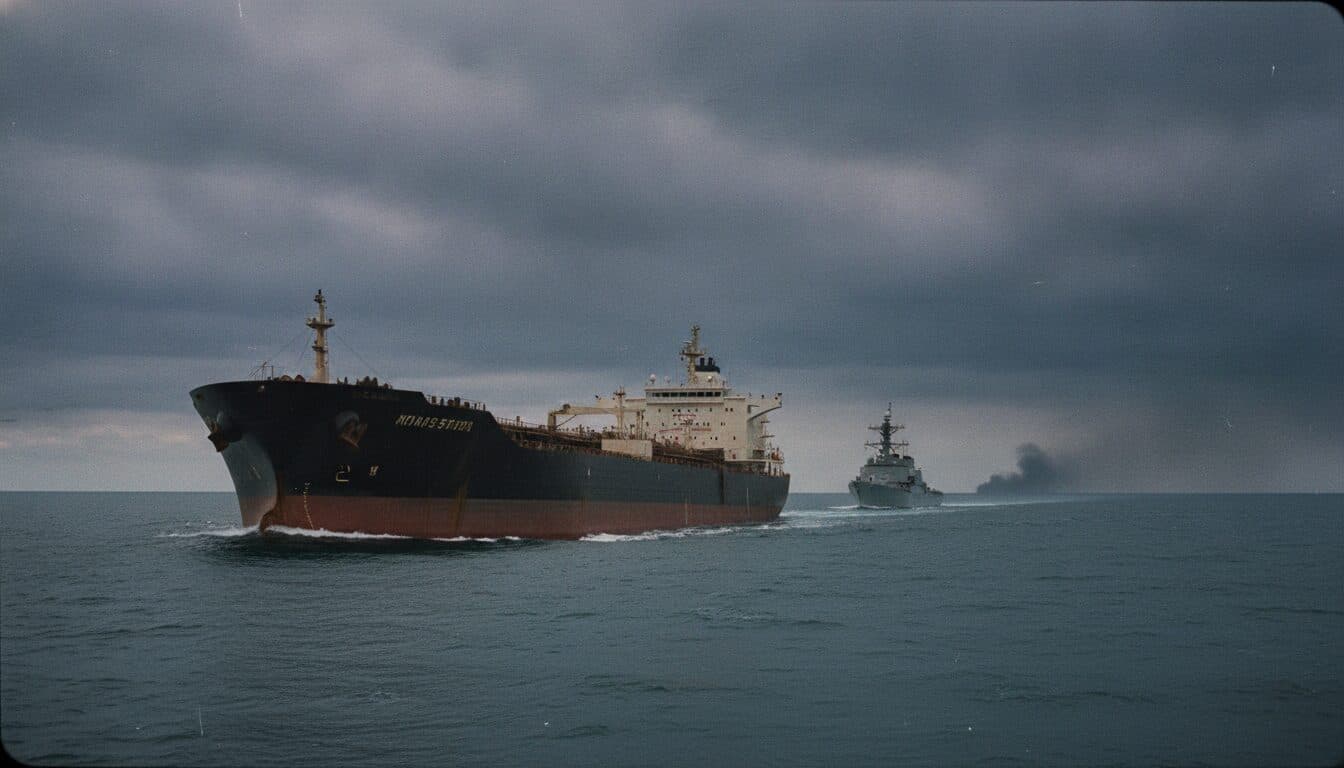
The current escalation began with an Iranian attack on a container ship in the Strait of Hormuz on Sunday, July 12, 2026, which left the vessel ablaze and one crew member missing. This act prompted a swift and overwhelming response from the US military. President Donald Trump described the retaliatory strikes as \”bomb[ing] the hell out of them,\” with US Central Command (CENTCOM) hitting approximately 140 Iranian military targets on Sunday alone. These targets included missile and drone launch sites, ammunition dumps, and communication facilities. A new wave of strikes continued into Monday, July 13, 2026, targeting air defense systems, radar sites, and small boats in southern Iranian port cities like Bandar Abbas, Sirik, and Jask, aiming to degrade Iran’s capacity to attack civilian mariners. Iranian state media acknowledged at least one death.
Iran’s Islamic Revolutionary Guard Corps (IRGC) retaliated with equal ferocity, launching missile and drone attacks on US military bases across the Persian Gulf region on both Sunday and Monday. US facilities in Kuwait, Jordan, Bahrain, Qatar, and Oman were targeted. The IRGC claimed hits on missile silos and fuel tanks at Prince Hassan Air Base in Jordan, helicopter maintenance centers and a P-8 surveillance aircraft hangar at the US base in Sheikh Isa, Bahrain, and a fuel depot, Patriot air defense system, and FPS radar facility at US bases in Kuwait. While Jordan reported intercepting four missiles and Kuwait’s military stated it was intercepting \”hostile aerial targets,\” Bahrain sounded missile alert sirens multiple times, underscoring the widespread nature of the attacks.
At the heart of this escalating conflict is the **Strait of Hormuz control**. Following their attack on the commercial ship, Iran’s Revolutionary Guards declared the strait \”closed until further notice,\” asserting, \”The Strait of Hormuz is our territory, and we will not allow a rogue and child-killing army from the other side of the world to continue its illegal interference in it.\” CENTCOM, however, firmly countered this declaration, stating, \”The Strait of Hormuz is a vital maritime corridor for global trade. Iran does not control it.\” This direct challenge to sovereignty over one of the world’s most critical chokepoints marks a dangerous new phase in US-Iran relations.
The Strait of Hormuz is not merely a geopolitical flashpoint; it is an economic artery. It provides the only sea passage from the Persian Gulf to the open ocean, with approximately 20% of the world’s liquefied natural gas (LNG) and 25% of seaborne oil trade transiting through it annually. Disruptions in this waterway have been ongoing since the start of the conflict, with Iran repeatedly targeting commercial vessels. The US military has been providing support to vessels using a southern route hugging the Omani coastline to circumvent Iran’s chokehold, a route that has also fallen victim to Iranian attacks, highlighting the pervasive threat. This direct confrontation for Strait of Hormuz control sends shockwaves through global markets, immediately reflected in rising oil prices. Brent crude surged to $79.07 per barrel, and US-traded oil reached $74.53, signaling deep market apprehension.
The renewed violence casts a dark shadow over recent diplomatic efforts. An interim US-Iranian agreement, signed just last month, had aimed to reopen the strait and end the war after 60 days of negotiations. Iran’s Foreign Ministry stated that the latest attacks have \”rendered futile\” all diplomatic efforts, effectively collapsing the fragile pathway to de-escalation. World leaders are now expressing grave concern that the conflict could devolve into full-scale hostilities. United Nations Secretary-General António Guterres articulated his \”deeply concerned by the serious escalation,\” urging an immediate end to all attacks and emphasizing that \”A return to full-scale hostilities would have catastrophic consequences for the peoples of the region and beyond, as well as the global economy.\” The European Union’s top diplomat, Kaja Kallas, echoed these concerns, calling for the strait to be open and for freedom of navigation to be respected, underscoring the global imperative of maintaining this critical trade route.
“A return to full-scale hostilities would have catastrophic consequences for the peoples of the region and beyond, as well as the global economy.”
Looking ahead, the immediate future appears fraught with peril. The direct contestation of the Strait of Hormuz control means that any significant incident in the narrow waterway could trigger a wider regional conflict. Energy markets will remain highly volatile, with the specter of severe supply disruptions looming large. Businesses reliant on global supply chains will need to brace for potential delays and increased shipping costs. Diplomatically, the breakdown of the interim agreement means that avenues for peaceful resolution are severely constrained, leaving the international community with few immediate options beyond urgent calls for de-escalation that have so far fallen on deaf ears. The world watches anxiously as the US and Iran stand on the brink, their struggle for the Strait of Hormuz control threatening to ignite a far larger conflagration.
For investors and global citizens alike, the key takeaway is the profound and immediate risk to global stability and economic prosperity. The Strait of Hormuz is not just a strategic waterway; it is a barometer of geopolitical tension, and its current state signals severe turbulence ahead. The direct confrontation over its control ensures that this conflict will remain a dominant force shaping global events, demanding constant vigilance and strategic foresight.
“,
“excerpt”: “The US and Iran are locked in a direct confrontation for control of the Strait of Hormuz, escalating tensions and threatening global energy supplies. Recent strikes and counter-strikes have shattered diplomatic efforts, raising fears of a wider conflict.”,
“keywords”: [“Strait of Hormuz”, “US-Iran conflict”, “energy crisis”, “Persian Gulf”, “geopolitical tensions”],
“seoTitle”: “US and Iran Clash Over Strait of Hormuz Control Amid Escalating Strikes”,
“seoDescription”: “The US and Iran are in direct conflict over the Strait of Hormuz, with escalating strikes threatening global energy supplies and regional stability. Diplomatic efforts have collapsed, raising fears of a wider war.”,
“focusKeyphrase”: “Strait of Hormuz control”,
“slug”: “us-iran-clash-strait-hormuz-control”,
“imageAlt”: “Container ship ablaze in the Strait of Hormuz with military vessels in the distance”,
“imageScene”: “A burning container ship in a narrow strait, with US and Iranian naval ships visible on the horizon under a tense, cloudy sky.”
}
“`