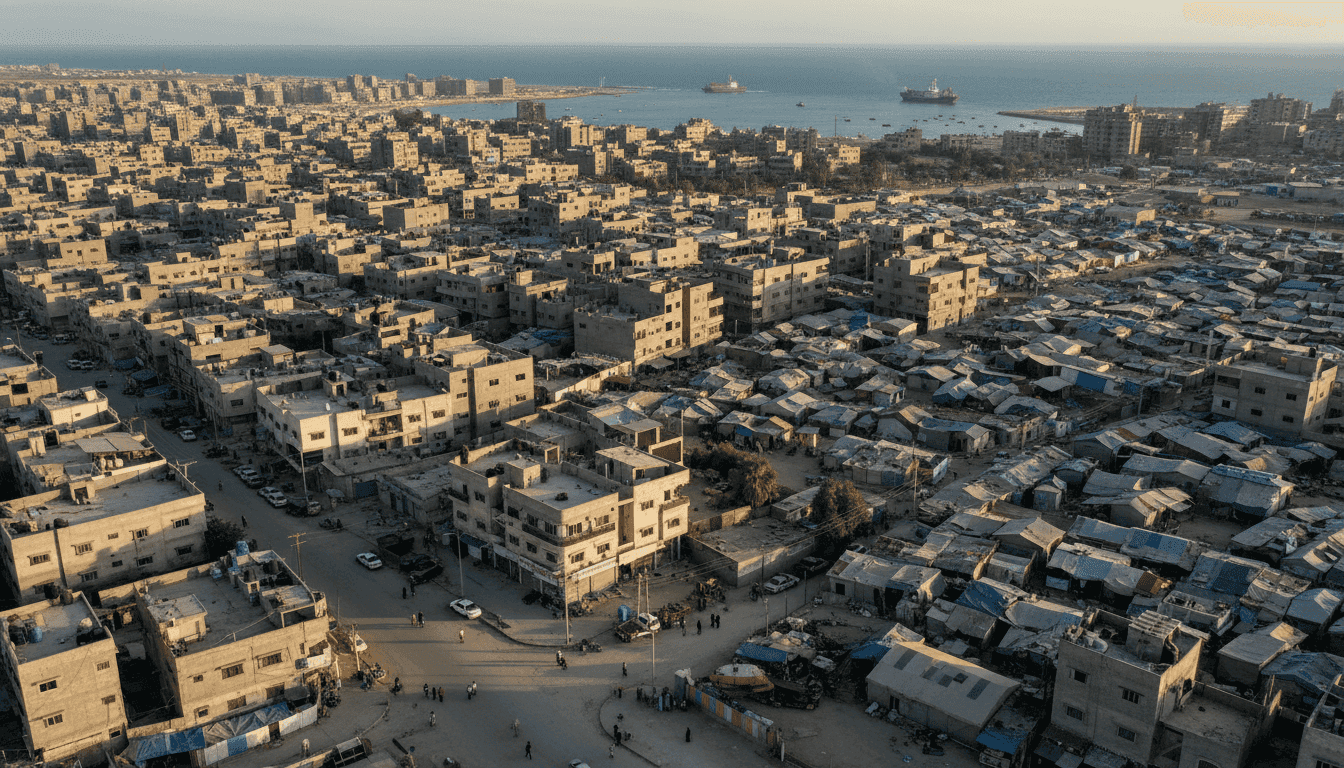
A second Israel-Hamas ceasefire, orchestrated under a Trump peace plan, has brought a fragile cessation to hostilities in October 2025, marking a critical juncture after two years of intense conflict and failed previous attempts at de-escalation. The comprehensive agreement aims to stabilize the Gaza Strip and introduce a new governance structure, reflecting a significant international diplomatic push to end the protracted war that erupted on October 7, 2023.
The Trajectory of Conflict and Ceasefire Efforts
The conflict’s genesis lies in the devastating October 7, 2023, attack, which plunged the region into an immediate and brutal war. The initial year, from 2023 to 2024, saw an intense air campaign by Israel in October 2023, followed by a ground invasion from October 2023 to January 2024. Efforts for a ceasefire began early, but proved largely unsuccessful amidst escalating military operations. The looming invasion of Rafah dominated headlines from February to June 2024, culminating in the actual Rafah invasion and Operation Arnon in May–June 2024, intensifying pressure for a resolution. Ceasefire negotiations reached an impasse between July and September 2024, demonstrating the deep-seated divisions and distrust between the warring parties.
A significant shift occurred in mid-September–mid-October 2024 with the decapitation of Hezbollah and the killing of Yahya Sinwar, a key Hamas leader. This period marked a critical turning point, leading to renewed dialogue between mid-October and December 2024, even as the International Criminal Court (ICC) issued a warrant for Israeli Prime Minister Netanyahu. These developments set the stage for a brief period of hope.
A first ceasefire and hostage exchange materialized between January and March 2025. The implementation of its first phase saw the release of hostages, offering a glimpse of potential peace. However, this fragile truce quickly broke down, leading to a return to hostilities from March to October 2025, highlighting the immense challenges in sustaining any peace agreement without robust oversight and enforcement mechanisms.
The Trump Peace Plan and Board of Peace
The breakthrough for a lasting Israel-Hamas ceasefire arrived in October 2025 with the introduction of the Trump peace plan. This initiative led to the establishment of the Board of Peace, an international body chaired by U.S. President Donald Trump himself. Endorsed by the United Nations Security Council the following month, the board’s primary mandate is to oversee the ceasefire and supervise a transitional Palestinian technocratic government in the Gaza Strip. This new entity, named the National Committee for the Administration of Gaza (NCAG), is headed by Ali Shaath, a former Palestinian Authority (PA) official born in the Gaza Strip, signaling an attempt at local, technocratic leadership.
The Board of Peace is also tasked with the ambitious goals of disarming Hamas and deploying the International Stabilization Force (ISF). The ISF is envisioned as a peacekeeping mission comprising international armed personnel, charged with training a new Palestinian police force. After months of intricate discussions, the formation of the board was announced in January 2026, ahead of the annual World Economic Forum (WEF) in Davos, where its inaugural meeting was scheduled. The board’s charter indicates a global scope, underscoring the international community’s profound interest in resolving the conflict.
“The establishment of the Board of Peace, chaired by President Trump, represents an unprecedented international commitment to not only halt hostilities but to fundamentally reshape the governance and security landscape of the Gaza Strip,” noted a senior diplomat involved in the negotiations.
Beyond the immediate Gaza conflict, the broader region has also been destabilized. The conflict spilled over into the West Bank, with a large-scale Israeli offensive launched in August 2024. Furthermore, tensions escalated significantly with Iran’s Axis of Resistance. Israel and Iran exchanged direct strikes in April 2024, and escalation continued with Hezbollah in Lebanon and Houthi forces in Yemen. The “decapitation of Hezbollah” in mid-September–mid-October 2024, alongside the killing of Yahya Sinwar, indicates a concerted Israeli effort to dismantle key adversaries. These regional dimensions underscore the complexity of achieving comprehensive stability.
Future Implications and Regional Stability
The success of this second Israel-Hamas ceasefire hinges on several critical factors, including the effective disarmament of Hamas, the successful training and deployment of the ISF, and the ability of the NCAG to establish legitimate governance in Gaza. The involvement of a high-profile international body, led by a former U.S. President, signals a significant shift in diplomatic strategy, moving beyond traditional mediation to direct oversight and nation-building efforts. The global reaction to the war has been varied, with widespread calls for peace and humanitarian aid, but also sharp divisions along geopolitical lines. This new framework aims to address not just the cessation of violence, but the underlying conditions that have fueled decades of conflict.
The coming months will be crucial in determining whether the Trump peace plan can deliver lasting stability or if it will follow the path of previous, ultimately failed, ceasefire attempts. The world watches closely as the Board of Peace embarks on its daunting mission to transform the war-torn region and foster a durable peace.