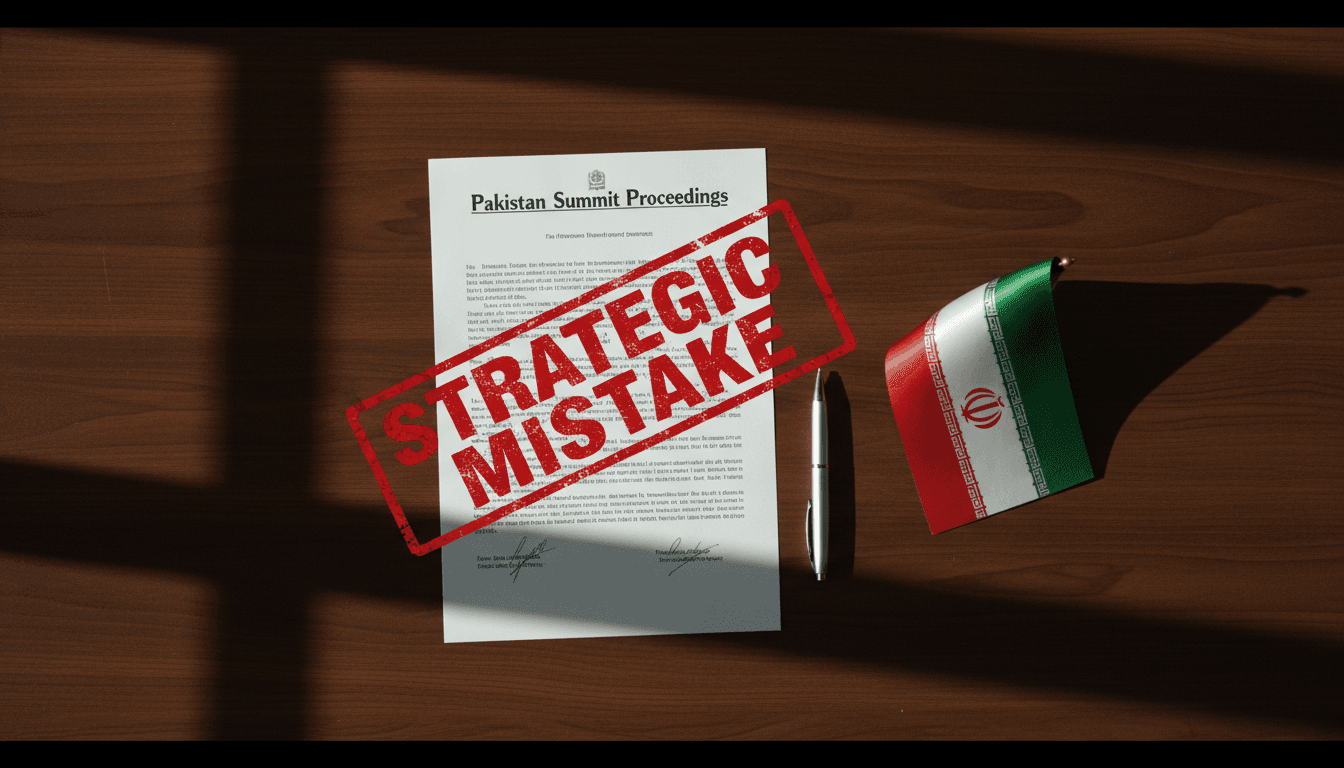
An Iranian lawmaker has publicly criticized the recent Pakistan Summit, labeling it a diplomatic error that could have significant repercussions for Tehran’s foreign policy. The condemnation, reported on Friday, April 24, 2026, by Mathrubhumi English, signals internal discontent within Iran regarding its engagement with Pakistan and potentially broader regional alliances.
The Story: A Summit Under Scrutiny
While specific details of the Pakistan Summit itself remain undisclosed in the provided information, the lawmaker’s strong disapproval highlights a perceived misstep in Iranian foreign relations. The unnamed Iranian official’s statement, describing the summit as a ‘strategic mistake,’ suggests that the outcomes or the very nature of Iran’s participation have drawn serious internal criticism. This public rebuke from within the Iranian legislative body indicates a divergence of opinion on the nation’s diplomatic strategy, particularly concerning its engagement with neighboring countries. The timing of this criticism, nearly a week after the summit, allows for an initial assessment of its implications to surface.
The core of the lawmaker’s argument appears to revolve around the notion that the summit constituted a diplomatic error. This could imply a range of issues: from a failure to secure Iranian interests, to inadvertently alienating other allies, or perhaps even a misjudgment of Pakistan’s strategic alignment. Without further details on the summit’s agenda or participants, the exact nature of this ‘strategic mistake’ remains open to interpretation, but its public acknowledgment by an Iranian official underscores its perceived gravity.
Impact Analysis: Regional Repercussions
The lawmaker’s candid assessment of the Pakistan Summit as a diplomatic error carries substantial weight, potentially impacting Iran’s standing and future engagements in the region. Such public criticism from within the political establishment can signal internal divisions, which adversaries might exploit, or it could prompt a re-evaluation of Iran’s foreign policy direction. For Pakistan, the criticism, while indirect, could complicate future bilateral relations, especially if Iran perceives the summit’s outcomes as detrimental to its strategic interests. The broader world news landscape will be watching closely to see if this internal dissent leads to a shift in Iran’s diplomatic posture or if it remains an isolated, albeit significant, critique.
“This public condemnation signals a potential recalibration of Iran’s regional strategy and could prompt closer scrutiny of its diplomatic overtures, particularly with immediate neighbors.”
Context & Background: Shifting Sands of Diplomacy
Iran’s foreign policy has long been characterized by a complex interplay of regional rivalries, economic pressures, and a desire to project influence. Its relationship with Pakistan, while generally stable, has seen periods of tension, often related to border security or differing geopolitical alignments. The ‘strategic mistake’ mentioned by the lawmaker could be viewed against a backdrop of evolving power dynamics in the Middle East and South Asia, where various nations are constantly recalibrating alliances and seeking to secure their interests. Previous events, such as regional security conferences or bilateral trade agreements, often lay the groundwork for understanding the implications of more recent diplomatic engagements like the Pakistan Summit.
The internal critique of a diplomatic error also speaks to the nature of political discourse within Iran, where differing viewpoints on foreign policy, while not always overtly public, do exist. The lawmaker’s willingness to openly challenge the summit’s outcome suggests a significant level of concern that transcends typical political posturing, indicating a genuine belief that the summit was a misstep for Iranian diplomacy. This incident could also be seen as part of a wider trend where nations are increasingly scrutinizing the efficacy and impact of their multilateral engagements in a volatile global environment.
What’s Next: Repercussions and Reassessments
The immediate future will likely see observers analyzing whether this lawmaker’s criticism of the Pakistan Summit is an isolated incident or if it reflects a broader consensus within Iranian political circles. Tehran may be compelled to offer a public clarification or defense of its participation in the summit, or it might quietly adjust its diplomatic approach to address the concerns raised. Future bilateral meetings between Iran and Pakistan, or multilateral forums involving both nations, will be scrutinized for any signs of altered dynamics resulting from this public rebuke. The incident could also trigger an internal review process within Iran regarding its diplomatic decision-making, potentially leading to more cautious engagement in future regional summits. This perceived diplomatic error could thus serve as a catalyst for a re-evaluation of strategic priorities.
Key Takeaway: The Cost of a Diplomatic Error
The Iranian lawmaker’s condemnation of the Pakistan Summit as a ‘strategic mistake’ underscores the intricate and often fraught nature of international diplomacy. It highlights how even seemingly routine diplomatic engagements can become flashpoints for internal political dissent and can have far-reaching implications for a nation’s foreign policy trajectory. This incident serves as a critical reminder that the success or failure of diplomatic endeavors is often judged not only by external outcomes but also by internal political consensus and the perceived alignment with national interests. The full ramifications of this diplomatic error will unfold in the coming months, shaping Iran’s regional interactions and potentially influencing its broader international relations.